A Rigorous Financial Audit of A2 UV Printers Reveals Hidden Costs and Workflow Inefficiencies
The Industrial Reality
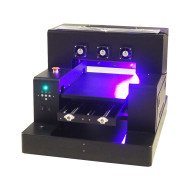
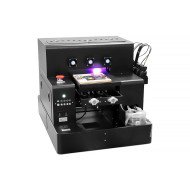
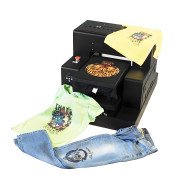
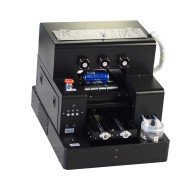
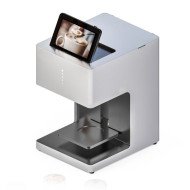
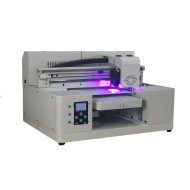
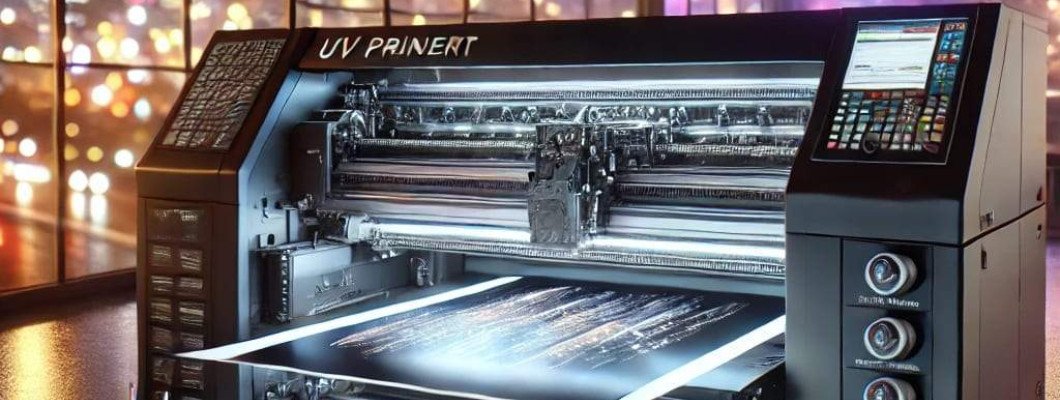
The deployment of an A2 size UV printer specializing in embossed glossy printing represents an intersection of high-fidelity output and compact industrial hardware. Despite its promising print dimension and finishing capabilities, critical operational bottlenecks often emerge, particularly around cost management and throughput sustainability. Consider an urban print shop integrating this device to fulfill short-run, high-detail production demands. At face value, the printer’s asset value appears justified by the output quality and the embossed effect on substrates, valued in decorative and promotional print sectors.
However, hidden challenges arise in lifecycle maintenance, consumable consumption, and on-the-fly job switching. The embossed glossy effect demands exacting UV curing cycles, precise ink layering, and often multiple passes to achieve consistent gloss and textural depth. This inherently increases run-time, which conflicts with the expectation of rapid turnaround. Moreover, the gloss finish necessitates a robust maintenance regime to prevent printhead nozzle clogging compounded by the viscous ink chemistry.
Financial controllers face opaque operational expenses including accelerated wear of pump systems, UV lamps with finite lumen hours, and substrate-specific pre-conditioning costs. Depreciation schedules become complicated when factoring in the reduced resale values due to technology obsolescence and hardware fragility under industrial strain. The amalgamation of these factors paints a complex financial picture far beyond the initial capital expenditure.
Technical Deep-Dive on Financial Impact and Hardware Correlation
Capital Expense Versus Consumable and Maintenance Costs
The initial investment for an A2 UV embossed glossy printer ranges between $50,000 to $70,000 USD, depending on vendor and configuration. Consumables primarily include UV-curable inks, specialized embossing materials, and UV lamps with an effective lifespan of 8000 to 12000 operational hours. Lamp replacements cost approximately $600 each, with an average requirement of one replacement per 2000 operational hours under high-duty cycles.
Consumable ink usage rates average 0.5 liters per 1000 prints but fluctuate based on embossed area coverage and gloss density settings. Ink cost per liter is approximately $350. Therefore, consumable ink contributes roughly $0.175 per print solely on ink, excluding auxiliary materials.
Operational Throughput and Cost per Square Meter
The printer operates nominally at 720 dpi resolution with a maximum print speed of 8 m2/hour under standard gloss settings. Embossing doubles the print duration due to multi-layer passes and extended UV curing, reducing throughput to approximately 4 m2/hour. Assuming labor cost at $25/hour, energy consumption of 1.8 kW during print, and overheads, the cost per square meter inflates significantly.
| Specification | Standard Gloss Printing | Embossed Gloss Printing |
|---|---|---|
| Throughput (m2/hour) | 8 | 4 |
| Ink Consumption (liters/1000 prints) | 0.5 | 0.85 |
| Labor Cost per m2 ($) | 3.13 | 6.25 |
| Energy Cost per m2 ($, assuming $0.12/kWh) | 0.027 | 0.054 |
| Maintenance Cost Allocation per m2 ($) | 0.80 | 1.60 |
Depreciation and Asset Depreciation Considerations
Asset depreciation follows a declining balance method over a 5-year lifespan with aggressive write-offs in year 1 and 2 due to technological advancements and wear from UV lamp cycles, printhead usage, and mechanical stress. The effective resale value at year 3 can drop below 35% of the initial capital cost, impacted further by physical condition especially if maintenance cycles are irregular or suboptimal.
Comparative Analysis Between Two Printers with Different Embossing Mechanisms
| Feature | Thermal Embossing UV Printer | Pressure-Embossed UV Printer |
|---|---|---|
| Capital Cost ($) | 65,000 | 58,000 |
| Embossing Precision (microns) | 50 | 30 |
| Print Speed (m2/hour) | 4 | 5 |
| Maintenance Frequency (hours) | 1500 | 1200 |
| Average Maintenance Cost per Cycle ($) | 850 | 1000 |
Ink Chemistry and Nozzle Wear Correlation
Embossed glossy effects utilize inks with increased viscosity and pigmentation density, which significantly affect nozzle lifespan. Nozzle clogging rates increase by approximately 15% compared to flat UV prints, requiring more frequent cleaning cycles and higher maintenance labor. This factor directly impacts uptime and operational efficiency, which in turn influences cost per unit and scheduling predictability.
Scenario Analysis of Business Use-Cases Impacting ROI and Workflow
Small-Scale Boutique Print Shop
With limited run volumes and diverse print substrates, the low throughput and high maintenance cost of embossed glossy UV printing strain profitability. Initial investment and consumable expenditure must be balanced against premium pricing strategies for aesthetics, with careful management of operational downtime essential to maintain liquidity.
Medium-Sized Promotional Goods Manufacturer
High-frequency jobs with consistent substrate types benefit from optimized maintenance schedules and bulk ink procurement, enabling marginally improved ROI. The embossed gloss finish provides differentiation, but throughput limitations require workflow automation upstream and downstream to maintain competitive delivery timelines.
Large-Scale Industrial Print Production
Here, economies of scale markedly offset elevated consumable and maintenance costs. However, the embedded operational bottlenecks introduced by embossing cycles necessitate sophisticated job scheduling and potential capital investment in auxiliary finishing equipment to sustain output levels. The financial audit identifies cost centers likely to erode margins under less rigorous operational regimes.
Expert FAQ
What is the optimal maintenance frequency for balancing print quality with operational costs?
It is recommended to perform printhead cleaning and UV lamp inspection every 1200 operational hours; however, for high gloss embossed workflows, this should be reduced to 1000 hours to mitigate clogging and degradation.
How does embossed printing affect the printhead lifespan compared to non-embossed printing?
Embossed printing typically reduces printhead lifespan by approximately 20% due to increased ink viscosity and layering demands, which accelerate nozzle wear and clogging.
What energy profiles should be considered for UV curing during embossed glossy printing?
The UV curing system operates at approximately 1.5 to 2.0 kW continuously during embossing passes, doubling the energy consumption relative to flat prints, an important factor in cost-per-print calculations.
Are there substrate limitations that disproportionately increase operational expenses?
Non-porous and thick substrates require pre-treatment and longer curing cycles, leading to up to 25% increased energy consumption and slower throughput; this must be accounted for in job costing.
How do different embossing mechanisms influence long-term financial depreciation?
Thermal embossing mechanisms tend to have higher upfront costs but lower maintenance frequency; pressure embossing has lower capital costs but higher maintenance intensity, affecting total cost of ownership distinctly.
Strategic Verdict
The financial audit of A2 size UV printers with embossed glossy capabilities exposes a complex balance of capital outlays, consumable expenditure, and operational rigors. While they deliver unmatched visual and tactile print quality, their integration demands rigorous cost tracking and maintenance discipline to preserve asset value and to prevent throughput bottlenecks. Future iterations should focus on ink chemistry optimization and curing efficiency to reduce wear and energy consumption. As pricing pressures tighten in print sectors, these printers must evolve through engineering refinements that enhance uptime and streamline lifecycle costs or risk marginalization in favor of less specialized but more cost-efficient alternatives.