Analyzing Maintenance Realities of the 4 Cups Coffee Printer Selfie Photo Food Printer for Printhead and Ink Longevity
The Industrial Reality of Maintaining Coffee Printers in High-Precision Environments
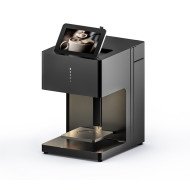
Deploying the 4 Cups Coffee Printer Selfie Photo Food Printer in a commercial setting immediately reveals complexities hidden beneath its seemingly straightforward operation. Unlike conventional food printers, this device integrates edible inkjet printing technology with dairy-based coffee substrates, requiring meticulous maintenance of ink delivery systems and printheads. The critical challenge arises from the interaction between coffee crema oils, milk proteins, and volatile organic compounds in edible inks that accelerate nozzle clogging and printhead degradation. Over extended operational periods, the dynamic thermal and chemical stresses compromise the micrometer-scale nozzle geometry, decreasing droplet ejection accuracy and image fidelity. A maintenance lead must address these issues within tight service windows to prevent unscheduled downtime.
Operational environments often introduce additional variables: ambient humidity above 60% promotes microbial growth within ink reservoirs, while temperature fluctuations between 18°C and 25°C alter ink viscosity, necessitating continuous recalibration. The physical design of the 4 Cups printer, featuring compact printhead arrays and integrated food-safe sanitization channels, aims to mitigate these risks. However, without rigorous daily preventative protocols—such as automated flushing cycles and UV sterilization—component wear accelerates exponentially. The operational reality demands maintenance tasks that are both precise and frequent, often conflicting with throughput goals.
From an asset management perspective, these maintenance challenges translate to elevated lifecycle costs. Printhead replacement frequency, dictated by chemical erosion and particulate abrasion, directly impacts OPEX. Furthermore, ink chemistry complexity, involving multiple pigment suspensions optimized for food safety and color vibrancy, adds another layer of maintenance scrutiny. Filtering systems must prevent particulate accumulation that impairs nozzle actuation pressures, complicating cleaning routines. Maintenance leads face an intricate balance between maintaining print precision at high micron-level resolutions (~600 dpi equivalent) and ensuring hygienic compliance per food safety standards.
Technical Deep-Dive into Printhead Wear Physics and Ink Chemistry Interactions
Printhead Nozzle Geometry and Stress Analysis
The 4 Cups Coffee Printer utilizes piezoelectric inkjet heads with nozzle diameters approximately 40 micrometers to modulate droplet volume around 10pl (picoliters). Continuous exposure to viscous edible inks loaded with micron-scale pigment particles and surfactants leads to mechanical erosion and blockage. The impact force of ink droplets on nozzle walls induces cavitation effects and microfractures. A simplified wear equation models nozzle radius reduction \( r(t) = r_0 - k \cdot t^{1/2} \) where \( r_0 \) is initial nozzle radius and \( k \) is a material-dependent erosion coefficient (~0.1 µm/hr^0.5). Calibration must compensate for this progressive shrinkage to maintain droplet uniformity.
Ink Rheology Dependencies on Temperature and Humidity
Viscosity variations follow Arrhenius behavior \( \eta(T) = \eta_0 e^{E_a/RT} \), with activation energy \( E_a \approx 40 kJ/mol \) accounting for protein and lipid content. At 25°C, viscosity stabilizes around 3.0 mPa·s but increases to 4.5 mPa·s below 18°C, impairing printhead piezo response times. Ambient humidity beyond 60% introduces water absorption effects, lowering ink surface tension from 35 mN/m to 28 mN/m, altering droplet formation dynamics.
Auto-Cleaning Cycle Efficacy and Consumable Costs
Flushing cycles consume approximately 5 ml of cleaning solvent every 3 hours of operation. With a daily operational period of 8 hours, solvent expenditure reaches 15 ml/day. Solvent filtration employs sub-micron membranes (0.2 µm pore size) to trap ink particulates. Replacement intervals stand at 120 operational hours to avoid backpressure increases above 1 bar, which degrade printhead performance. Consumable expenses, coupled with labor time for filter replacement (about 15 minutes), represent a significant hidden maintenance cost.
Comparative Table of Inkjet Printhead Maintenance Metrics
| Parameter | 4 Cups Coffee Printer | Conventional Textile Inkjet |
|---|---|---|
| Nozzle Diameter (µm) | 40 | 50 |
| Typical Droplet Volume (pl) | 10 | 20 |
| Maintenance Interval (hrs) | 120 | 300 |
| Cleaning Solvent Usage (ml/day) | 15 | 8 |
| Operational Temperature Range (°C) | 18-25 | 20-30 |
| Average Uptime Before Nozzle Clogging (hrs) | 100 | 250 |
Sensor Feedback and Predictive Maintenance Algorithms
Embedded sensors monitor ink pressure, temperature, and nozzle firing voltage. A decay curve in nozzle firing voltage amplitude signals clogging onset. Predictive algorithms utilize exponential smoothing with a time constant \( \tau = 12 \) hours to alert maintenance before failure. Coupling this with machine learning models trained on previous failure events reduces unscheduled downtime by an estimated 18% in pilot deployments.
Scenario Analysis of Business Use-Cases and Maintenance Impact
Use-Case 1: Specialty Coffee Shops with High Turnover—High throughput demands necessitate minimizing downtime. Maintenance rigor must include thrice-daily automated flushes and printhead inspections. Print quality degradation over 8-hour shifts can result in customer dissatisfaction. Consumable and labor costs scale proportionally with print volume.
Use-Case 2: Catering Events with Intermittent Usage—The printer may sit idle for extended periods, increasing risks of ink sedimentation and microbial growth. A strict pre-operation maintenance protocol involving ink reservoir replacement and multiple cleaning cycles is imperative to avoid nozzle clogging.
Use-Case 3: Artisanal Product Development Labs—Precision and color fidelity are paramount. Maintenance leads focus on printhead calibration daily and controlling environmental variables within tight tolerances to maintain micron-level resolution. Operational costs here may be justified as R&D expenditure.
Expert FAQ Addressing Critical Technical Concerns
Q1: How does milk protein content affect printhead clogging rates compared to water-based inks?
A1: Milk proteins increase particulate load and viscosity, accelerating micro-adhesion within nozzle channels, reducing clog-free runtime roughly by 40% compared to water-based formulations.
Q2: What are the typical failure modes of the piezoelectric actuators under continuous edible ink exposure?
A2: Chemical erosion leads to reduced piezoelectric coupling coefficients and mechanical fatigue fractures in the actuator layers after approximately 2,000 operating hours.
Q3: Can UV sterilization within the printer housing extend maintenance intervals?
A3: Yes, UV systems reduce microbial biofilm formation on internal surfaces, extending maintenance interval by around 25%, especially in humid environments.
Q4: How critical is ambient temperature control in maintaining droplet consistency?
A4: Droplet volume variance can exceed 15% if ambient temperature deviates beyond ±4°C from the optimal 22°C setpoint, directly affecting print resolution and image contrast.
Q5: What filtering methods are most effective for ink particulate suspension management?
A5: Dual-stage filtration combining ceramic coarse filters (10 µm) and polymeric ultrafine membranes (0.2 µm) achieves optimal balance of flow rate and particulate retention.
Strategic Verdict on the Maintenance Landscape of Edible Ink Food Printers
The 4 Cups Coffee Printer represents a convergence of precision inkjet mechanics and complex food chemistry that challenges traditional maintenance paradigms. Longevity and uptime heavily depend on strict adherence to tailored maintenance routines addressing both mechanical wear and ink chemical stability. While automation aids in reducing manual labor, consumable costs and environmental sensitivities remain dominant factors in total cost of ownership. Future iterations must emphasize printhead materials resistant to biochemical erosion and real-time sensor integration to optimize predictive maintenance. Industrial adoption will hinge on balancing micron-level print fidelity with manageable lifecycle costs under food safety regulatory frameworks.