Analyzing lifecycle maintenance costs of the A3 T-shirt printing machine DTG printer with industrial precision
The Industrial Reality of Lifecycle Maintenance Costs in A3 DTG Printing
In the demanding environment of direct-to-garment (DTG) printing, particularly with compact A3 T-shirt printers, maintenance cost management is a pivotal concern. Unlike bulk industrial print systems, the smaller A3 format DTG printer targets niche production scales that emphasize versatility and quick turnarounds. This creates a set of unique technical challenges that impact lifecycle maintenance costs, directly influencing total cost of ownership (TCO) and operational uptime.
Consider a high-output small-scale print operation processing approximately 100 shirts per day. The printer's key maintenance points include printhead wear, ink system integrity, and mechanical subsystem lubrication. Printheads, typically piezoelectric drop-on-demand types ejecting ink droplets sized between 8 and 12 picoliters, undergo gradual clogging and nozzles degradation due to pigment sedimentation and repetitive thermal cycling. Unplanned downtime triggered by partial printhead failure can reduce output capacity by up to 30%, inflating operational costs through dead time and restart procedures.
Furthermore, the ink delivery system, including dampers, cap tops, and ink lines, demands routine flushing cycles and filter replacements. Failure to adhere strictly to these procedures results in particulate build-up that exacerbates flow inconsistencies and color fidelity loss, producing rejected prints and wasted substrate. Periodic mechanical realignment is also mandatory to maintain micron-level print accuracy across the 320mm print width at resolutions upwards of 1200 dpi, translating to a 21-micron dot pitch. Misalignment beyond 50 microns leads to visible banding and color shifts, undermining product quality.
These maintenance requirements incur recurring costs that are sometimes underestimated in initial capital expense evaluations. Consumables replacement frequency, labor hours for preventative maintenance, and the risk of extended service downtime must be incorporated into lifecycle cost models to avoid operational bottlenecks and asset depreciation accelerated by neglect.
Technical Deep-Dive into Lifecycle Maintenance Components
Printhead Wear and Replacement Economics
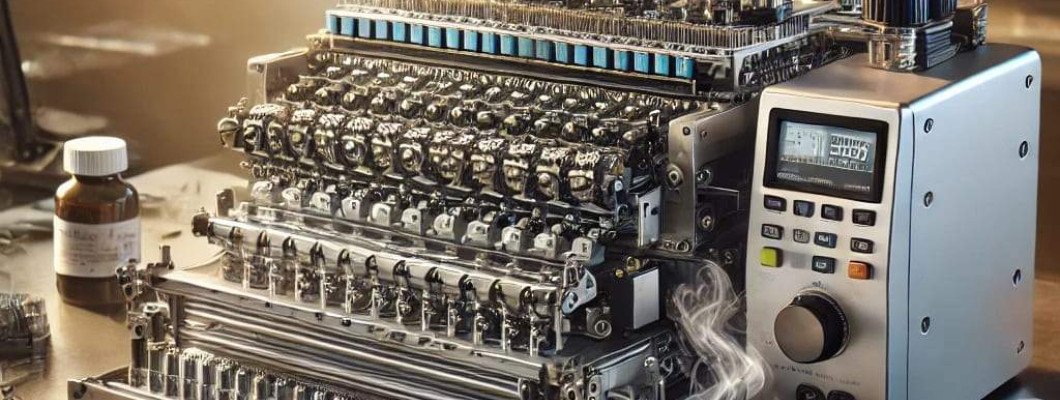
The heart of the A3 DTG printer is a piezoelectric printhead array with 1,280 nozzles per head operating at a frequency of 15 kHz. Over typical usage, each nozzle experiences mechanical stress from repeated piezoelectric flexing and exposure to pigmented aqueous inks with pH around 7.5. Clogging occurs primarily due to pigment agglomeration and drying during standby periods.
Empirical data suggest nozzle failure rates increase exponentially after 1,000 operational hours, with a 0.8% failure per 100 hours beyond this threshold. For typical daily cycles of 8 hours, this indicates a practical printhead lifespan of approximately 5 months under continuous use. Replacement cost averages $450 per head, with labor adding an estimated 1 hour per replacement at $60/hour technician wage. Factoring planned preventive maintenance (cleaning routines every 24 hours requiring 10 minutes operator time), the annualized printhead maintenance cost approximates:
Annual printhead cost = (2 replacements/year * $450) + (8 hours preventive * $60) = $900 + $480 = $1,380
Ink System Integrity and Filter Replacement
Ink flow consistency depends on filters with pore sizes around 5 microns and regular flushing cycles every 48 hours to prevent sediment buildup. Filter cartridges cost $35 each and have an effective life of 30 flush cycles. Flushing consumes approximately 0.5 liters of maintenance solution per cycle at $12/liter. For continuous operation, monthly filter and flushing costs tally up as:
Filters/month = (30 cycles / 30 days) = 1 filter/ month = $35
Flushing solution/month = 15 flushes * 0.5 liters * $12 = $90
Combined consumables monthly cost: $125, annually $1,500, exclusive of labor.
Mechanical Alignment and Calibration Precision
Maintaining geometric accuracy is critical. The printer employs sub-micron stepper motors with linear encoders calibrated every 500 print cycles. Misalignment beyond 50 microns manifests as visible color registration errors. Periodic calibration requires precision measurement tools and specialized software diagnostics, consuming around 3 hours monthly by a skilled technician.
Assuming technician labor at $60/hour, calibration costs approximate $180/month or $2,160 annually.
Energy Consumption for Maintenance Modes
The maintenance cycles activate heater elements to prevent ink drying, consuming approximately 150 Watts during flushing and cleaning for roughly 1 hour per cycle daily. Over a month, this equates to:
Energy use = 150 W * 30 hours = 4.5 kWh
At industrial rates of $0.12/kWh, monthly maintenance energy cost is $0.54, negligible but cumulative over lifecycle.
Comparative Cost Analysis Table of Maintenance Strategies
| Maintenance Item | Preventive Schedule | Annual Cost (USD) | Downtime Risk | Quality Impact |
|---|---|---|---|---|
| Printhead Replacement | Every 5 months | $1,380 | Low if scheduled | High if delayed |
| Ink Filter & Flushing | Every 48 hours | $1,500 | Moderate | Medium |
| Mechanical Calibration | Monthly | $2,160 | Low | Critical |
Scenario Analysis Based on Business Use-Cases
Scenario 1: Small Boutique Apparel Producer
For a boutique operation producing 50 shirts daily, maintenance costs represent a significant percentage of operational expenses. The frequency of printhead replacements and flushing cycles must be carefully weighed. Over-maintenance may increase costs unnecessarily; under-maintenance risks costly downtime. Choosing a strict preventive maintenance plan optimized for lower throughput can extend printhead life by 25%, reducing TCO.
Scenario 2: Rapid Prototyping for Fashion Designers
High precision and color fidelity are paramount, favoring frequent calibration and more aggressive flushing despite higher costs. The ability to identify and adjust for micron-level misalignments rapidly improves output quality. The cost premium is justified by reduced rejects and enhanced client satisfaction.
Scenario 3: On-Demand E-commerce Fulfillment Center
Throughput and uptime dominate the equation. Automated maintenance alerts integrated with the printer’s firmware can minimize unscheduled downtime. Scheduled printhead replacements and calibration, synchronized with production cycles, optimize asset utilization. Investment in staff training to reduce labor time for these tasks further improves return on maintenance investment.
Expert FAQ
What are the critical indicators for printhead performance degradation?
Monitor nozzle drop consistency via baseline test patterns for drop volume variance beyond 15%, increased missing nozzles, and print density fluctuations exceeding 5%.
How does ink chemistry influence maintenance frequency?
Inks with higher pigment loading and acidic pH accelerate sedimentation and nozzle clogging, necessitating more frequent flushing and filter changes.
What physics principles govern alignment tolerance in DTG printers?
Sub-micron linear displacement and rotational deviations cause color misregistration due to diffraction limits and pixel oversampling, thus strict adherence to stepper motor precision is crucial.
How to mathematically predict downtime impact from maintenance cycles?
Downtime (DT) per cycle multiplied by maintenance frequency and average labor cost per hour estimates the direct operational cost. DT = (time per cycle hours) * (frequency per year) * (hourly labor cost).
What environment factors affect lifecycle maintenance costs?
Ambient temperature and humidity influence ink drying rates and component wear, affecting the frequency of cleaning cycles needed to avoid clogging and mechanical stress.
Strategic Verdict on Lifecycle Cost Management for A3 DTG Printers
Lifecycle maintenance cost management in A3 DTG printers is a linchpin for sustainable operation within small to mid-scale print businesses. While initial capital expenditure may appear modest compared to larger industrial DTG systems, the cumulative annual maintenance expenses are significant and must be rigorously planned. Advances in predictive maintenance technology promise reduction in unplanned downtime and more intelligent consumable usage. However, the mechanical and chemical wear fundamentals defined by current hardware and ink formulations set a baseline that can only be marginally improved through procedural enhancements. Operators must pursue a balanced approach between aggressive maintenance protocols and operational throughput optimization to maintain asset longevity and ROI.