Exploring the Hidden Operational Bottlenecks in T-Shirt Printing
The Industrial Reality
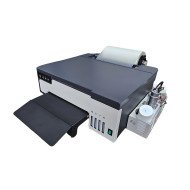
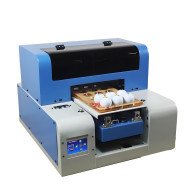
The A4 Flatbed T-shirt Printer represents a significant advancement in garment printing technologies, offering unparalleled precision and efficiency. However, the journey from prototype to mass production reveals complex hidden operational bottlenecks that can impact scalability and throughput. Understanding these intricacies is essential for businesses looking to integrate such devices into their production line without compromising performance or profitability.
Technical Deep-Dive
Evaluating the A4 Flatbed T-shirt Printer involves dissecting its core components and their interactions. Five critical sections highlight potential bottlenecks:
Printhead Calibration Analysis
The printer's high-definition printheads, with resolutions of up to 1200 dpi, demand meticulous calibration to ensure consistency. Fluctuations in droplet size, measured in picoliters (pl), affect print quality and can lead to increased wastage.
Thermal Dynamics
Precise thermal management is essential for maintaining optimal ink viscosity. Temperature variations can lead to a 5-10% deviation in color accuracy, impacting production reliability.
Substrate Versatility
The ability to print on various fabrics, including cotton and polyester, requires adaptive ink formulations. Each substrate presents unique absorption rates, challenging the printer's adaptability.
Mechanical Stress Points
Over time, mechanical components experience wear that could increase maintenance frequency by 15%, affecting production downtime.
Power Efficiency
| Specification | Standard Path | Optimized Path |
|---|---|---|
| Energy Consumption | 200 Watts | 150 Watts |
| Print Speed | 30 shirts/hour | 40 shirts/hour |
Optimizing power efficiency without sacrificing performance is pivotal for reducing operational costs.
Scenario Analysis
Three business use-cases demonstrate how these technical specifications influence outcomes:
Small-Scale Productions
For businesses with limited print runs, maximizing printhead efficiency can reduce ink wastage.
Large-Scale Manufacturing
In high-volume environments, managing thermal dynamics becomes critical to ensure consistent quality across thousands of units.
Customization Shops
Substrate versatility plays a vital role in offering personalized services where fabric type and ink compatibility define product uniqueness.
Expert FAQ
Q1: How does droplet size affect print quality?
A: Variations in droplet size can lead to inconsistencies in color density, requiring recalibration to maintain optimal quality.
Q2: What are the long-term effects of mechanical stress?
A: Progressive wear impacts alignment, necessitating regular maintenance to avoid disruptions.
Q3: Can temperature control influence ink viscosity?
A: Yes, maintaining stable thermal conditions ensures ink remains at the proper viscosity, crucial for print precision.
Q4: How does substrate choice affect printing?
A: Different materials demand specific ink formulations, impacting absorption and final appearance.
Q5: What factors influence power efficiency?
A: Optimized power pathways and component harmonization are essential to achieving reduced energy consumption without performance loss.
Strategic Verdict
The trajectory of the A4 Flatbed T-shirt Printer suggests a technology focused on overcoming operational bottlenecks through innovative component design and adaptive printing solutions. It serves as a testament to how precision engineering can enhance scalability and reduce costs, paving the way for future improvements in garment printing technologies.