The Print Shop Owner’s Ultimate Guide: Unlocking Profit with UV Printers in 2026

The Unfiltered Guide to Commercial UV Printing in 2026: Margins, Adhesion, and Spot Varnish Secrets
Let’s cut through the noise. Spend just a few minutes in printing forums or social media groups and you’ll encounter sharply divided opinions on UV printers. One faction heralds these machines as goldmines that turned side hustles into seven-figure businesses. The other dismisses them as overpriced gadgets that clog endlessly and damage substrates.
The truth? It lies with both camps.
The difference between a thriving UV print shop and one that struggles isn’t luck—it’s deep expertise. Understanding ultraviolet curing physics, mastering substrate adhesion, and leveraging premium features like 3D embossing are essential. Today’s customers expect more than a simple print—they want tactile, durable, layered visual experiences enhanced by advanced technology and informed buying decisions.
If you’re a seasoned printer or planning a major investment in flatbed UV printing, this guide strips away hype. We’ll explore UV ink chemistry, share professional substrate compatibility insights, and reveal workflow tactics to maximize profits.
The Chemistry of the Cure: Why UV Printing Stands Apart
Thinking of a UV printer as just another inkjet is a mistake. Traditional aqueous or solvent inks rely on evaporation: the liquid dries and leaves color behind. This requires porous or specially coated substrates to absorb the pigment.
UV ink operates on a different principle. It’s a liquid monomer combined with photoinitiators. When hit by a narrow band of high-intensity UV light (around 365–395 nm), a swift photopolymerization occurs. Liquid monomers instantly cross-link into a solid, durable plastic film.
This instantaneous curing is UV printing’s superpower—it hardens instantly without soaking in. That’s why UV printers can print on glass, metal, wood, leather, acrylic, and ceramics, with the ink physically bonding to microscopic surface textures.
However, this power requires precise substrate preparation. On greasy surfaces, polished mirrors, or low-energy plastics like untreated silicone, the ink cures but lacks true adhesion and peels off easily, resembling cheap stickers.
Mastering Substrates: The Adhesion Matrix
Common complaints like "My ink scratches off" aren’t printer faults but prep failures. Adhesion fundamentally depends on surface energy, which must be adapted with primers for challenging materials.
Primers act as molecular adhesives—they bond to the substrate and create a receptive surface for UV inks.
| Substrate Material | Surface Energy | Primer Requirement | Pro-Tip for Maximum Adhesion |
|---|---|---|---|
| Wood & MDF | High (Porous) | None needed | Wood rapidly absorbs ink. Use a dense white underbase first to maintain vibrant CMYK colors and prevent grain bleed. |
| Acrylic & PVC | Medium | Rarely needed | Clean surfaces with 99% isopropyl alcohol to eliminate static and oils causing ink misting. |
| Metals (Aluminum, Steel) | Low | Strictly required | Use specialized metal primers. For ultra-smooth metals like polished brass, lightly scuff before priming. |
| Glass & Ceramic | Very Low (Non-porous) | Strictly required | Apply volatile glass primer in well-ventilated areas. Wait 3–5 minutes for it to flash off before printing immediately. |
| Leather (Real & Faux) | Medium | None needed | Use flexible/soft UV inks to prevent cracking when the leather bends. |
Following this matrix ensures your prints withstand intense scratching, weather, and everyday use—transforming cheap novelties into premium, retail-quality products.
The "Triple Layer" Workflow: Elevating Prints with Spot UV and 3D Embossing
Putting flat logos on plastic is a price war you can’t win against mass manufacturers. To capture lucrative B2B deals, you need to create tactile, sensory experiences that command premium prices.
Modern UV RIP software and multi-channel printheads unlock powerful workflows like CMYK + White + Varnish (C + M + Y + K + W + V).
1. The Foundation: White Underbase
UV color inks are translucent. Printing yellow onto black, for example, results in dull colors. To fix this, a precisely aligned opaque white layer prints first, making subsequent CMYK colors pop on any background.
2. The Texture: 3D Embossing
Reprinting white ink layers multiple times builds height, creating raised braille, embossed lettering, or textured brushstroke effects. This turns a simple $5 print into a $45 premium art piece.
3. The Premium Finish: Spot UV Varnish
Spot UV applies glossy varnish selectively instead of coating the whole surface. Imagine a matte business card with a raised, shiny logo that catches light or a wooden box with natural grain and a smooth glass-like printed dome. This instantly upgrades perceived value, shifting client questions from cost to volume and turnaround.
The Economics of Uptime: Choosing Industrial-Grade Hardware for Profitability
Thousands of attempts to save by buying consumer-level printers fail spectacularly. Profit happens only when your machine runs, prints, and delivers consistently.
UV white inks with titanium dioxide are notoriously harsh on printheads. Without industrial-grade circulation, pigments settle, clogging nozzles in hours and costing you time and ink in cleaning cycles.
To scale, invest in commercial equipment featuring:
- Automated White Ink Agitation: Continuous stirring prevents sedimentation, extending printhead lifespan drastically.
- Dedicated Varnish Channels: Essential for flawless Spot UV gloss effects, with printheads designed specifically for clear inks.
- Precision Vacuum Beds: Prevent warping on thin or acrylic substrates by perfectly flattening materials, avoiding costly printhead collisions.
- Automated Height Detection: Infrared sensors ensure optimal distance to substrate, eliminating blurry prints or crashes from guesswork.
The customization market grows rapidly, but expectations for durability, visual depth, and fast service have surged. Without robust hardware, you’re fighting daily fires, losing premium pricing capability.
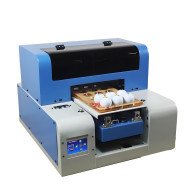
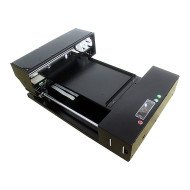
Equipping your shop with intelligently designed, heavy-duty UV printers frees your focus to expand sales, innovate designs, and increase scale. For those ready to transform flat, uninspired prints into textured, glossy masterpieces, consider machines like the GNFEI A3 Spot UV Printing Machine—engineered to minimize downtime and maximize profits per print.