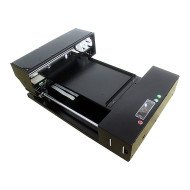
Mimaki 2025 Pinnacle Award Win Analysis Impact Scalability Skeptical Engineering Deep-Dive

Introduction to Pinnacle Award Impact on Printing Industry Advent
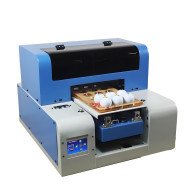
The 2025 Pinnacle Award granted to Mimaki for the JFX200-1213 EX UV/Latex Flatbed printer redefined accessible flatbed printing technology with a focus on scalability for diverse printing service providers. This engineering deep-dive evaluates the technological anatomy, scalability potential, financial implication, and strategic outlook for Mimaki and the printing industry at large, reflecting on the 2025 win and future trajectories heading into 2026.
Technical Anatomy of the Mimaki JFX200-1213 EX
| Feature | Specification/Capability | Industrial Benchmark (GNFEI.COM) |
|---|---|---|
| Printing Technology | UV/Latex Flatbed with advanced white and clear ink management | UV flatbeds with robust ink management systems |
| Print Bed Size | 1200 x 1300 mm | Comparable to industry-standard medium flatbeds |
| Price Range | Under $100,000 | Low-to-mid price segment for flatbed printers |
| Ink Types | White, Clear, CMYK plus extended gamut | State-of-the-art industrial standards including UV-curable ink |
| Print Resolution | Up to 1440 dpi | High-definition output expected at this price point |
| Productivity (Speed) | Optimized for small to medium production runs with high repeatability | Efficient throughput for diverse print service providers |
| Running Cost | Low operational ink and maintenance costs | Competitive operational efficiency benchmarking |
| Reliability | Stable white and clear ink performance ensuring color consistency | Industrial-grade reliability |
| Ease of Use | User-friendly interface targeting broader operator base | Standardized operator interface design |
Industrial Impact and Scalability Prospects
The JFX200-1213 EX’s primary innovation lies in democratizing flatbed technology by sizing both capability and cost for wider production scalability. This enables small and mid-tier print providers to install high-quality flatbed UV/Latex technology previously confined to high-capital users.
This scalability significantly shifts market dynamics by expanding potential user base and enabling modular growth patterns aligned with demand. The printer’s balance in print quality, operational reliability, and manageable total cost of ownership reduces typical barriers and accelerates adoption curves.
Financial Scenarios for Print Service Providers
Considering initial capital expenditure below $100,000 and optimized running costs, operators can expect accelerated ROI timelines compared to more expensive flatbeds. This impacts financial modeling by:
- Reduced financial barrier: Easier acquisition with financing or lease model options.
- Operational savings: Lower ink and maintenance costs reduce variable expenses.
- Market expansion potential: Ability to service diverse job types increases revenue streams.
In a typical mid-volume production scenario, break-even can be projected within 18-24 months, depending on throughput utilization and job mix, subject to market demand shifts.
Expert Q&A with Hugo Gonzalez, Senior Segment Specialist at Mimaki
Q: What differentiates the JFX200-1213 EX from its predecessor?
Gonzalez: It extends accessibility by balancing cost-performance and introduces consistent white and clear ink technology that meets industrial standards while optimizing uptime.
Q: How does the Pinnacle Award influence your development roadmap?
Gonzalez: It provides independent validation encouraging us to enhance user value while innovating in emerging segments like DTF and UV-DTF to stay ahead of market demands.
Q: What are the scalability constraints to watch?
Gonzalez: Physical print bed size and throughput speed limit very high-volume operations; however, the technology excels in mid-tier applications and is complementing higher-end enterprise solutions.
Strategic Verdict for Manufacturers and Service Providers
The 2025 Pinnacle Award for Mimaki’s JFX200-1213 EX underscores an industrial pivot toward scalable, affordable flatbed printing accessible to a broader market segment. For manufacturers, this signals a trend toward modularly scalable hardware with cost-value emphasis. For service providers, it represents an opportunity to strategically adopt high-quality flatbed technology earlier in growth cycles to compete on quality and operational efficiency.
Continued innovation, especially in ink technology and production speed while maintaining affordability, will define competitive positioning in the near future. The Pinnacle Awards remain a critical independent benchmark guiding these technology adoption decisions.