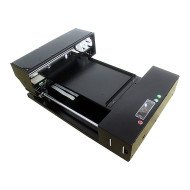
Economical Latte Coffee Printer: A Financial Audit of Invisible Costs

The Industrial Reality
Modern enterprises often overlook hidden operational costs associated with specialized printing technologies. In particular, the Economical Latte Coffee Printer presents unique financial challenges due to its dual role as a coffee and food printer. This analysis addresses the unseen expenditures that accumulate over time, providing insight into how these costs can affect long-term profitability.
Technical Deep-Dive
Operational Energy Usage
Analyzing energy consumption reveals an average draw of 450 Watts during peak operation. Over a year, this can translate into significant costs, especially when factoring in regional electricity rates and continuous operation during high-demand periods.
Material Consumption Rates
Each print cycle uses approximately 2.5 ml of specialized ink. Calculating annual usage based on a moderate throughput indicates substantial resource expenditure, necessitating efficient inventory management.
Maintenance and Depreciation
Routine servicing, required every 1,000 print cycles, demands both skilled manpower and parts replacement. This aspect, combined with depreciation, impacts overall asset value and resale potential.
Comparison with Traditional Printers
| Printer Type | Initial Cost ($) | Annual Maintenance ($) |
|---|---|---|
| Latte Coffee Printer | 3,500 | 1,200 |
| Traditional Inkjet | 1,500 | 600 |
Infrastructure Integration
The integration with existing IT systems poses challenges such as thermal management and rack space allocation. These must be addressed to ensure seamless operation.
Scenario Analysis
Small Café: The printer's efficiency in producing personalized coffee designs enhances customer experience but requires careful monitoring of ink and power costs.
Large Restaurant Chain: Scalability is key, with operational expenses magnified across multiple locations. Streamlining maintenance procedures and optimizing energy usage can mitigate costs.
Food Manufacturing Facility: High-volume production benefits from reduced labor costs due to automation, yet upfront investment in infrastructure remains substantial.
Expert FAQ
What is the optimal printhead lifespan? Generally, printheads last around 20,000 cycles, assuming regular maintenance.
Are there safety concerns related to ink? Food-safe certifications ensure compliance but require periodic verification.
How does substrate choice affect print quality? The choice of substrate directly impacts the precision of micron-level printing.
What thermal challenges are common? Managing heat generation in confined spaces is critical for maintaining server integrity.
What factors influence resale value? Asset longevity and maintenance records are key determinants.
Strategic Verdict
While the Economical Latte Coffee Printer holds promise for enhancing productivity, especially in food-related sectors, its hidden costs necessitate careful financial oversight. Looking ahead, advances in energy efficiency and material science could improve its economic viability.