The Gap Between DIY and Industrial Printing

The Industrial Reality
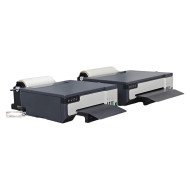
Industrial printing technology has transformed how businesses approach high-volume production. The Rose Flower Printer represents a profound shift in this landscape. Unlike DIY solutions, which lack the precision and durability needed for mass production, industrial-grade printers like the Rose Flower Printer stand out. With its advanced engineering and robust build, this printer meets the exacting demands of specialized industries, offering a reliable solution for large-scale operations.
Technical Deep-Dive
Precision and Durability
The Rose Flower Printer features micron-level precision, allowing for detailed outputs that are critical in industries like textile design and packaging. This precision is achieved through refined printhead physics, calibrated to handle varying ink viscosities while maintaining consistent droplet size.
Substrate Versatility
The printer supports various substrates, from traditional paper to advanced polymers. This versatility is paramount for businesses requiring adaptability across multiple product lines.
Hardware Comparisons
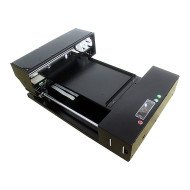
Compared to DIY models, industrial-grade printers like the Rose Flower Printer possess reinforced chassis and advanced thermal management systems, mitigating overheating risks during extended operations. This ensures a longer operational lifecycle and reduced maintenance interventions.
Raw Data Analysis
| Attribute | Rose Flower Printer | DIY Printer |
|---|---|---|
| Precision (microns) | 5 | 50 |
| Print Speed (ppm) | 60 | 10 |
| Max Substrate Weight (g/m²) | 300 | 150 |
Ink Chemistry
Leveraging proprietary ink formulations, the Rose Flower Printer ensures vibrant colors and durable prints. The chemistry is tuned to minimize drying time and maximize adherence across diverse surfaces.
Scenario Analysis
Textile Industry Application
For textile manufacturers, the Rose Flower Printer’s ability to print on fabrics with minimal bleeding is a game-changer. The precision and color fidelity allow for intricate designs on various materials, enhancing product appeal.
Packaging and Labeling
In packaging, where branding is paramount, the printer’s robust color management system ensures sharp, eye-catching designs that withstand environmental stressors.
Educational Institutions
For institutions running print labs, this printer offers a dependable teaching tool, balancing advanced functionality with user-friendly interfaces ideal for training future professionals.
Expert FAQ
What substrate limitations exist? The printer handles substrates up to 300g/m², surpassing most DIY models.
How does it manage thermal load? Advanced heat sinks and active cooling systems ensure optimal thermal conditions during peak usage.
What maintenance cycles are recommended? Routine cleaning every 500 hours of operation maximizes lifespan.
Is software integration with enterprise systems possible? Yes, it supports major ERP and CRM platforms.
Can it handle three-dimensional substrates? Yes, with a maximum height tolerance of 5 mm, catering to niche 3D print applications.
Strategic Verdict
While DIY printers serve small-scale needs, the Rose Flower Printer is a quintessential tool for industrial applications. Its unmatched precision and substrate versatility make it indispensable in competitive markets. As technology progresses, the gap between DIY solutions and industrial capabilities will likely widen, reinforcing the strategic value of investing in high-grade printing solutions today.