Unveiling the Technical Mechanics of A2 UV Printing

Industrial Precision Challenges
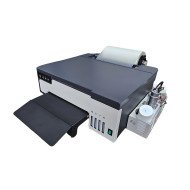
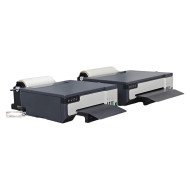
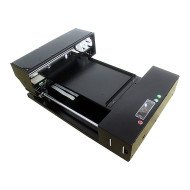
The industrial-grade A2 Size UV Printer offers unique deployment challenges that distinguish it from other printing technologies. This printer caters to the demand for high-resolution, embossed, and glossy outputs that require meticulous precision and stringent operational discipline.
Technical Deep-Dive
Optical and Printing Mechanisms
The A2 UV printer leverages advanced optical systems to achieve resolution up to 1440 dpi. This high precision is a result of sophisticated nozzles capable of ejecting ink droplets as small as 3 picoliters.
Material Compatibility and Adaptability
Versatility in substrate compatibility is critical. The printer supports a range of mediums from paper to acrylic, enabling a wide spectrum of industrial applications.
UV Ink Chemistry and Curing Dynamics
UV inks form the fundamental element allowing rapid curing and durability. The polymerization process is activated under UV light exposure, ensuring scratch-resistant finishes.
Thermal Management Systems
Efficient thermal regulation is maintained through built-in cooling systems, which are crucial for maintaining print quality over extended operational hours.
Infrastructure and Integration Challenges
Integrating such machinery into existing infrastructure involves considerations around physical space, power supply (typically around 750 Watts), and compliance with environmental regulations.
Scenario Analysis
Industrial Manufacturing Use-Case
In a high-output factory setting, the printer’s precision enables efficient production lines, though it demands strict maintenance cycles to prevent nozzle clogs.
Artisanal Production Use-Case
For artisans, the printer’s ability to reproduce fine art with detailed color gradients offers significant leverage. Here, its substrate versatility is a major asset.
Commercial Printing Services Use-Case
Commercial service providers benefit from its speed and quality, although they must invest in proper training to manage its technological complexity effectively.
Expert FAQ
- What is the typical lifespan of UV printheads? UV printheads generally last between 6-18 months, varying with usage intensity.
- How does UV printing efficiency compare to solvent-based alternatives? UV printing offers faster curing times and higher environmental compliance, although it may involve higher capital costs.
- What are the key environmental considerations? Compliance with VOC emissions is less stringent due to rapid curing, reducing environmental impact.
- Is there a significant difference in maintenance needs? Yes, regular cleaning of nozzles and UV lamps is essential to maintain print quality.
- What is the impact on energy consumption? Peak consumption hovers around 750 Watts, which is competitive given its output capabilities.
Strategic Verdict
The A2 Size UV Printer stands as a robust industrial tool that amalgamates precision and versatility. While its integration requires careful planning, the benefits of speed, quality, and adaptability can dramatically enhance production capabilities in both large and small-scale operations.