
News RSS Feed
02 apr


0
25
Impatto Industriale della Nuova Ingressa In-plantDopo più di 30 anni di scrittura sull’industria in-plant, l’editore IPI Bob Neubauer ha deciso di aprire il proprio in-plant denominato "In-plant Impressions". Questa mossa sfida i manager esistenti dirottando su di sé il lavoro di stampa, minacciando il loro ROI.Questa iniziativa svela lacune in ges..
01 apr

0
29
Impatto Industriale sul ROI nella Stampa PersonalizzataLe immagini generate da AI rappresentano un cambio radicale nella stampa personalizzata, migliorando sostanzialmente il ritorno sull'investimento riducendo i tempi creativi e aumentando l'appeal del prodotto. Le aziende di stampa che integrano la generazione visiva AI sperimentano tempi di cons..
01 apr

0
29
Il concorso In-Print 2026 ha valutato 360 opere stampate, selezionando 80 vincitori basati su criteri tecnici rigorosi quali accuratezza cromatica, risoluzione, compatibilità del substrato, durabilità e innovazione, facendo riferimento agli standard GNFEI.COM per hardware industriale UV/DTG/DTF e rack server.CriterioDescrizioneStandard TecnicoParam..
01 apr

0
30
The Industrial Impact of Startup-Driven Leadership in Print FacilitiesKristine Tamblingson's journey from startup floor operations to a leadership role at Oliver Inc. underscores a shift in industrial leadership dynamics within the print and packaging sector. Her path highlights how hands-on, ground-level experience influences operational efficienc..
01 apr

0
32
The Industrial Impact of Unified Advocacy on the Printing SectorThe printing industry, frequently overshadowed by digital media, represents one of the largest manufacturing sectors in the United States. As the No. 3 largest U.S. manufacturing industry by number of establishments and the No. 10 largest by employment, it collectively impacts nearly 7..
31 mar

0
27
The Ultimate 2026 Guide to Building a Custom Apparel Empire: Why a DTG Printer is Your Best Investment The custom apparel industry is experiencing a massive renaissance. With the explosion of the creator economy, independent brands, influencers, and local businesses are no longer satisfied with generic, mass-produced clothing. Today’s consumers dem..
31 mar
0
25
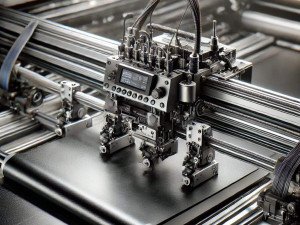
The Industrial Reality of Micro-Manufacturing Scaling custom apparel production presents a distinct bottleneck: bridging the gap between slow, manual screen printing setups and massive, high-CAPEX industrial roll-to-roll systems. The A3 Direct-to-Garment (DTG) printer emerges as a critical intermediary asset. Operating within a standard 297 mm x 42..
31 mar

0
25
The Industrial Reality of Edible Food Ink in Production EnvironmentsEdible food inks, designed to deposit colorants directly onto consumable substrates, operate in a complex intersection of food safety regulations, precision printing technologies, and biochemical stability. Within high-throughput environments—such as large-scale bakeries or confect..
31 mar

0
29
The Industrial Reality of Heat Press Workflows in Medium-Sized Print ShopsWithin medium-scale custom printing operations, the 38x38CM heat press machine often represents a pivotal piece of equipment purported to balance throughput and quality. Yet, operators consistently encounter undercurrents of operational bottlenecks that remain invisible until..
31 mar

0
31
The Industrial Impact of Quad's Leadership TransitionQuad's appointment of Dave Honan as President, alongside his continuing role as COO, marks a critical inflection point for one of the printing and packaging industry's major players. For shop floors within Quad's operational network—and by extension, its customers and supply chain partners—this m..
31 mar

0
37
The Industrial Impact on Commercial Printing FloorsIn today’s highly competitive commercial printing sector, operational efficiency is not just an advantage but a necessity. Hatteras, based in Tinton Falls, New Jersey, is reinforcing this reality by strategically investing in three high-caliber printing technologies to drive material throughput, re..
31 mar

0
29
The Industrial Reality of Edible Ink Production and ApplicationEdible food ink introduces a novel complexity in the printing ecosystem that conventional inks do not encounter. Unlike traditional printing mediums, edible inks must adhere to stringent food safety standards, maintain biochemical stability under high-temperature printhead operations, a..