Edible Food Ink Exposes Hidden Operational Bottlenecks in Precision Printing

The Industrial Reality of Edible Ink Production and Application
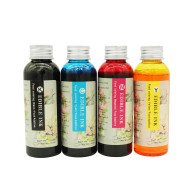
Edible food ink introduces a novel complexity in the printing ecosystem that conventional inks do not encounter. Unlike traditional printing mediums, edible inks must adhere to stringent food safety standards, maintain biochemical stability under high-temperature printhead operations, and integrate seamlessly with specialized printing hardware designed for consumable substrates. Industrial-scale deployment reveals pervasive bottlenecks in throughput, material handling, and consistent output quality.
Consider a food packaging line integrating edible ink-based decorative printing on sugar sheets. Printhead clogging rates rise due to ink viscosity variations influenced by ambient temperature and humidity, leading to increased downtime and maintenance overhead. The limited chemical compatibility of edible inks with standard cleaning agents restricts rapid maintenance cycles. Additionally, substrate feed inconsistencies induce micro-registration errors exacerbated by the rapid drying kinetics of edible inks. These factors culminate in operational bottlenecks that reduce overall line efficiency and increase total cost per printed unit.
Precision colorimetric control within edible inks is challenging due to pigment solubility limits and the need to utilize natural, food-safe colorants. These constraints directly impact print pixel density and color gamut, causing quality variances that complicate quality assurance workflows. Such challenges underscore a fundamental gap between laboratory-grade formulations demonstrated in R&D and reproducible industrial performance metrics.
Technical Deep-Dive
Material Properties and Ink Rheology
The rheological behavior of edible inks diverges from conventional solvent or UV-curable inks. Typical edible inks have viscosities ranging between 5 to 20 mPa·s at 25°C, driven by aqueous or glycerol-based solvents to ensure food safety. However, these formulations exhibit non-Newtonian shear-thinning characteristics that complicate jetting dynamics in piezoelectric printheads. The ink’s surface tension (28-32 mN/m) must be balanced to avoid satellite droplet formation, which can cause printhead clogging and image artifacts.
Printhead Compatibility and Wear Mechanisms
Industrial piezoelectric printheads used in edible ink applications typically feature nozzle diameters between 20-35 μm, demanding precise ink formulations to prevent clogging. The bio-organic pigments and stabilizers in edible inks increase particulate deposition risks. Over extended runs, this exacerbates wear on nozzle plates and internal fluid channels. Hypothetically, if an ink particulate concentration increases by 0.5% mass fraction, nozzle clog rate may increase exponentially following a clogging probability model:
P_clog = 1 - e^(-k * C_particulate * t)
where k is a clog rate constant dependent on flow velocity, C_particulate is particulate concentration, and t is operating time in hours.
Thermal and Drying Dynamics
Edible inks dry primarily through evaporation of water-based solvents, requiring precise thermal regulation. Drying temperatures must remain below 60°C to avoid pigment degradation and substrate damage. A balance emerges where predicted drying time (t_d) is a function of solvent vapor pressure (P_v), ambient temperature (T_a), and airflow velocity (v_air):
t_d ≈ (L / v_air) * (1 / (P_v - P_a))
where L is substrate thickness and P_a ambient partial vapor pressure.
Inconsistent drying leads to ink bleeding or printhead pooling, negatively affecting image sharpness and reliability.
Colorimetric and Food Safety Constraints
Colorant selection is limited to FDA and EFSA-certified pigments and natural extracts, which typically penalize color saturation and durability. For example, beta-carotene (E160a) imparts orange hues but has limited lightfastness, restricting shelf life. Digital color profiles must therefore accommodate a reduced gamut (approximately 50% of the sRGB space), with dynamic compensation algorithms adjusting drop volumes and layering to approximate desired colors.
Comparative Table of Edible Ink Technical Paths
| Parameter | Aqueous Glycerol-Based Ink | Plant-Extract Pigment Ink |
|---|---|---|
| Viscosity (mPa·s) | 8-12 | 12-18 |
| Surface Tension (mN/m) | 30 | 28 |
| Nozzle Compatibility (μm) | 20-30 | 25-35 |
| Drying Temperature Limit (°C) | <60 | <55 |
| Color Gamut (% sRGB) | 45-50 | 40-45 |
| Particle Load (% mass) | 0.3 | 0.5 |
| Typical Printhead Clog Rate (events/100 hrs) | 3 | 7 |
Scenario Analysis on Business Use-Cases
Use-Case 1 Mass Production Candy Decoration
High throughput candy producers require rapid printing of multiple colors with minimal downtime. The operational bottleneck is printhead clogging due to particulate matter in plant-extract pigment inks. The increased maintenance reduces line uptime by 15%. Optimizing ink filtration and switching to lower particle load ink reduces downtime but constrains color depth and shelf life.
Use-Case 2 Customized Gourmet Cake Printing
Artisan cake decorators prioritize micron-level print precision and color fidelity. The aqueous glycerol-based inks provide better flow characteristics and reduced clog incidences but require slower line speeds to maintain drying consistency. This limits throughput but enhances visual quality, aligning with premium pricing models.
Use-Case 3 Packaging for Perishable Goods
In food packaging, edible inks must resist moisture and temperature fluctuations during transport. Plant-extract pigment inks provide more natural color but degrade faster under high humidity, complicating logistics. Aqueous inks have increased stability but reduced natural appearance, impacting brand positioning.
Expert FAQ
How does ink particulate size distribution influence nozzle wear?
Smaller particulates (<1 μm) typically pass without issue, but a tail in distribution above 5 μm exponentially increases micro-abrasion on nozzle ceramics, accelerating wear and clogging.
What thermal management strategies mitigate drying inconsistencies?
Using controlled laminar airflow combined with localized substrate heating below pigment degradation thresholds achieves optimal drying uniformity without inducing thermal stress.
Can digital color management compensate fully for the limited gamut of edible inks?
Not fully; compensation algorithms can maximize color accuracy within physical limits but cannot replicate saturated hues absent in the approved pigment palette.
What maintenance intervals are typical for edible ink printheads?
Under continuous 24/7 operation, cleaning cycles occur every 4-6 hours with full nozzle flushes and chemical cleaning every 48 hours to maintain uptime, adjusted based on ink formulation.
Are there risks of microbial growth in stored edible inks?
Yes, aqueous-based edible inks require preservation systems to inhibit bacterial and fungal proliferation, incorporating food-safe antimicrobials and refrigeration.
Strategic Verdict on Edible Ink Integration
Edible food ink technology faces intrinsic operational bottlenecks rooted in the biochemical and physical properties necessary for food safety compliance. These constraints manifest in maintenance overhead, throughput limitations, and color fidelity compromises. While current formulations offer viable solutions for niche and artisanal applications, scaling to mass production demands innovation in particle filtration, printhead materials, and drying technologies. Future advancements in pigment chemistry and hybrid ink systems that balance bio-compatibility with performance could alleviate these bottlenecks. However, the intersection of regulatory compliance and industrial throughput remains the primary challenge defining the adoption curve for edible ink printing technologies.