Uncovering Hidden Operational Bottlenecks in A4 UV Cylinder and Phone Case Printers
The Industrial Reality of Integrating A4 UV Cylinder and Phone Case Printers into Production Lines
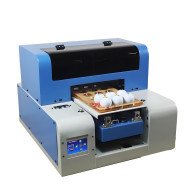
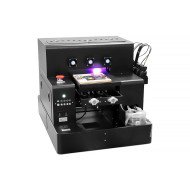
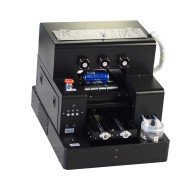
Consider a mid-size specialty printing operation tasked with producing customized phone cases and cylindrical objects using an A4 UV printer platform. This setup promises high resolution, substrate versatility, and relatively compact footprint. Yet, operators frequently encounter recurring throughput delays and quality inconsistencies that disrupt tightly scheduled workflows. Without detailed insight into operational bottlenecks, these issues accumulate unseen, inflating labor costs and eroding profit margins.
The core challenge arises from the convergence of complex substrate geometries—phones cases with curved edges and cylindrical items—and the A4 UV printer's precise ink deposition system. Achieving micron-level print uniformity across these shapes requires exact synchronization of substrate rotation, head motion, and UV curing timing. Minor deviations in any element lead to defects requiring costly reprints or manual touch-ups. Furthermore, maintenance intervals for printheads and UV lamps are often underestimated, causing unplanned downtime and throughput loss.
This scenario is representative of many small to mid-tier enterprises seeking flexible digital print solutions on non-flat substrates. The intrinsic mechanical complexity, compounded by ink chemistry requirements and thermal cycling effects on printheads, exposes operational bottlenecks not evident from surface-level specifications. Only a granular technical and data-driven analysis can reveal these friction points and formulate actionable mitigation strategies.
Technical Deep Dive into Bottlenecks and Performance Constraints
Synchronizing Printhead Motion and Substrate Rotation
Precision in cylindrical and phone case printing depends heavily on coordinating the linear movement of the printhead assembly with the rotational velocity of the substrate. Let r represent the radius of the cylinder, and ω the angular velocity (rad/s). The peripheral velocity v equals r × ω. To maintain a nominal dot pitch of 20µm in the printing direction, the printhead motion speed v_h must match v within ±1%. Given typical radii from 25mm to 40mm, angular speeds vary between 50 and 100 RPM to sustain throughput.
Any perturbation in rotational speed leads to dot misalignment and banding defects. Achieving this precision requires real-time closed-loop control using high-resolution encoders on the substrate holder, and servo motors with <0.01° positional accuracy. The printer controller’s ability to maintain this synchronization under variable load and thermal drift directly influences print quality consistency.
UV Lamp Intensity and Thermal Management
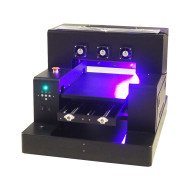
The curing process uses UV LED arrays whose intensity must remain stable to polymerize the ink layers effectively. Lamp intensity variability greater than ±3% can cause incomplete curing, particularly on curved surfaces where incident angles differ. Excessive heat generation raises substrate and printhead temperatures, leading to dimensional changes. Thermal expansion mismatch between metal rollers and plastic substrates can exceed 0.05mm, disrupting bed leveling and causing focal distance drift that reduces effective optical resolution from a nominal 1200 dpi to suboptimal levels.
Printhead Wear and Ink Chemistry Interactions
Piezoelectric printheads employed in UV printing systems typically have a specified service life of 2 billion actuations under ideal conditions. However, aggressive ink chemistries with high photoinitiator content accelerate nozzle clogging and diaphragm fatigue. Empirical data indicates that nozzle failure rates can increase by 30% in setups printing phone cases with flexible polyurethane substrates, demanding more frequent head cleans and replacements.
Data Throughput and Controller Processing Latency
To support high-resolution output on complex geometries, the printer controller processes raster data streams exceeding 2Gbps. Insufficient buffer memory or CPU throughput results in frame buffer underruns causing print pauses or pattern repetition artifacts. A comparative analysis of two controller architectures is shown in Table 1.
| Specification | Controller A (Legacy) | Controller B (Modern) |
|---|---|---|
| Max Raster Data Rate | 1.2 Gbps | 3.5 Gbps |
| Buffer Memory | 512 MB | 2 GB |
| Processing Latency | 15 ms | 4 ms |
| Supported DPI | 600 dpi | 1200 dpi |
Substrate Handling and Fixturing Challenges
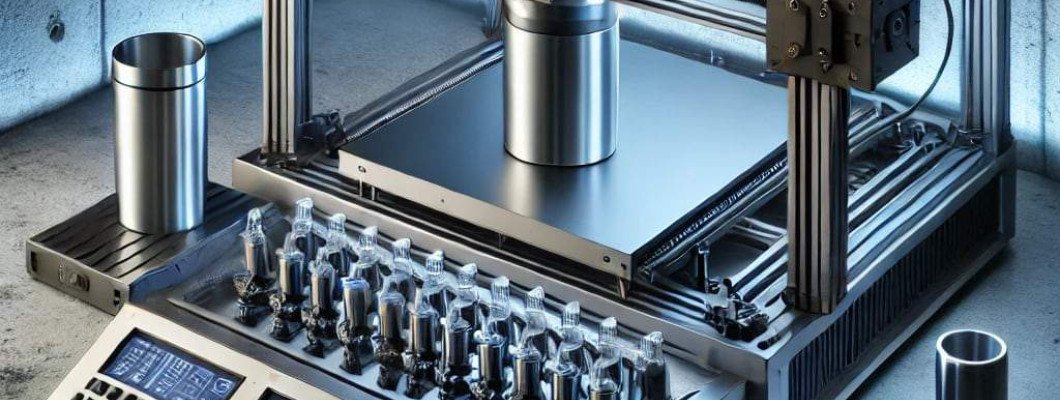
Consistent printhead-to-substrate distance is critical to maintaining print quality. Cylinders and phone cases require specialized fixturing with adjustable clamps to avoid deformation. Mechanical tolerances below 0.1mm in fixture repeatability are mandatory to ensure that once the substrate is loaded, the curvature focus remains within the ±0.2mm viable optical depth of field. Fixtures must also enable rapid loading/unloading to preserve throughput.
Scenario Analysis of Business Applications
High-Mix Custom Phone Case Production
For businesses focused on short-run, high-variety phone case printing, agility in substrate loading and reliable printhead durability are paramount. Downtime from nozzle clogging reduces the ability to meet tight turnaround times. Achieving stable printhead-substrate registration minimizes rejects. Controllers with lower latency and higher buffer capacity enable smoother printing of high-resolution, intricate artwork.
Medium-Volume Cylindrical Printing for Promotional Products
Enterprises printing branded cylindrical objects such as tumblers require a balance between rotational speed and curing intensity. Operational bottlenecks often emerge from thermal buildup causing substrate warping. Investments into enhanced UV LED arrays with dynamic intensity modulation can mitigate these issues, but increase system complexity and maintenance demands.
Mixed-Substrate Environments with Frequent Changeovers
Facilities handling both phone cases and cylindrical items must address the increased complexity of fixture swaps and recalibration routines. Automated fixturing and real-time sensor feedback reduce manual intervention but raise initial CAPEX and maintenance overhead. Robust synchronization algorithms and thermal compensation strategies are vital to minimize print defects and production downtime.
Expert FAQ on Avoiding Hidden Bottlenecks
How does substrate thermal expansion quantitatively impact printhead calibration?
Thermal expansion can shift substrate dimensions by up to 0.05mm per 10°C temperature rise, requiring printhead focal adjustments to maintain droplet placement accuracy within 20µm tolerance.
What are the failure modes of piezoelectric nozzles under UV ink exposure?
Chemical degradation of the nozzle diaphragm and particulate clogging from photoinitiator sedimentation cause pressure anomalies and jet instability, leading to inconsistent droplet size and misfires.
How can controller latency be minimized without increasing hardware costs?
Implementing optimized firmware with predictive raster caching and DMA memory management reduces bottlenecks within existing CPU and memory constraints.
What fixture materials minimize distortion during UV curing?
High-modulus carbon fiber composites with low thermal expansion coefficients provide stable support, reducing deformation compared to aluminum or plastic fixtures.
Which sensor technologies best enable closed-loop motion control synchronization?
High-resolution optical encoders coupled with Hall-effect sensors deliver precise feedback for both rotational and linear axes, enabling sub-micron positional correction in real time.
Strategic Verdict on Technical Trajectory
The A4 UV printer cylinder and phone case printing domain will increasingly demand integration of advanced mechatronics and intelligent control systems to overcome intrinsic substrate handling and curing challenges. Progress in compact, high-intensity UV LED arrays with active thermal management and next-generation printhead materials promises to extend maintenance intervals and fidelity. Controller architectures scaling raster throughput with low latency will be critical for sustaining high-resolution output on complex geometries. Businesses that rigorously quantify and address these hidden operational bottlenecks will gain superior uptime and print quality, defining competitive benchmarks in specialized digital printing. The path forward lies in precise real-time synchronization, adaptive curing processes, and fixture innovation tailored to varied substrate profiles, balancing throughput with reliability under tighter economic constraints.