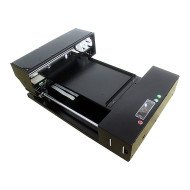
TX800 Head A3 UV Flatbed Printer Reveals Hidden Operational Bottlenecks for The Scalable Business Owner
The Industrial Reality of Scaling Print Operations with the TX800 Head A3 UV Flatbed Printer
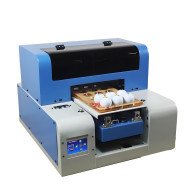
In high-throughput industrial printing environments, adopting new flatbed UV printers presents immediate operational challenges beyond mere specifications. Consider a mid-sized production facility looking to scale from prototype outputs to batch runs on rigid and flexible substrates. The TX800 Head A3 UV flatbed printer boasts advanced UV-curing technology and an A3 print surface, but real-world deployment unearths non-obvious bottlenecks that directly impact throughput and labor efficiency.
Despite high advertised print speeds, production managers frequently encounter buffer delays due to substrate loading and unloading ergonomics, printhead cooldown cycles, and intricate maintenance demands. These issues impose additional cycle time overhead, undermining throughput targets essential for profitability in automated workflows. Furthermore, substrate versatility comes at the cost of complex calibration routines to maintain image consistency, especially when switching between materials with varying thicknesses and absorption characteristics.
From a workforce perspective, the printer’s integration into lean manufacturing lines requires operators trained in nuanced head alignment and UV lamp calibration. Small deviations can result in color shifts or partial curing, leading to costly reworks or scrap rates that inflate operational expenses. These factors weave a complex fabric of hidden costs and workflow inefficiencies that pose significant challenges for scalable businesses reliant on rapid turnaround and minimal manual intervention.
Technical Deep-Dive into the TX800's Operational and Throughput Constraints
Printhead Architecture and Duty Cycle Physics
The TX800 employs a specialized UV LED curing system combined with precision piezoelectric printheads configured for A3 substrates. Printhead nozzle size averages around 10 pl (picoliter droplet volume), enabling fine resolution but creating a tradeoff in maximum firing frequency. At continuous high-speed runs, thermal dissipation within the head assembly hovers near 75 Watts, necessitating active cooling intervals that impose a theoretical duty cycle limit of approximately 85% over extended shifts.
Assuming a nominal print speed of 12 m2/hr and a 15-minute cooldown every 90 minutes, effective throughput is reduced to approximately 10.2 m2/hr. This offset illustrates the practical gap between peak and sustainable throughput in industrial settings.
Substrate Handling and Calibration Challenges
The flatbed supports substrates up to 15 mm thickness, but varying surface energy and reflectivity impact curing efficacy. Reflectance variance up to 15% between substrates demands dynamic UV intensity modulation, which the TX800 partially automates through sensor feedback loops. Nevertheless, operators must recalibrate exposure parameters when switching between substrates—a process averaging 20 minutes per job changeover, during which production halts.
Ink Chemistry Interactions and Maintenance Cycles
UV inks used with the TX800 rely on radical polymerization affected by curing lamp intensity and wavelength uniformity. Inadequate curing manifests as surface tackiness or poor adhesion, usually traced back to lamp aging or nozzle clogging. Routine maintenance includes cleaning cycles every 48 operational hours and lamp replacements after 2000 hours, creating predictable downtime windows.
Statistical maintenance logs from comparable printers indicate an unscheduled failure rate of 3-5% per 1000 operational hours, predominantly due to printhead nozzle degradation and ink sedimentation, which can escalate labor costs if not proactively managed.
Automation Integration and Workflow Impact
Integrating the TX800 into automated production lines exposes bottlenecks in job queuing and substrate transfer times. The flatbed design necessitates manual or semi-automated loading, which can extend job cycle times by up to 30 seconds per sheet compared to roll-to-roll printers. This delay aggregates significantly in high-volume environments, directly affecting labor allocation and machine idle times.
Comparative Throughput and Lifecycle Cost Table
| Parameter | TX800 Head A3 UV Flatbed | Roll-to-Roll UV Printer (Comparable Speed) |
|---|---|---|
| Maximum Theoretical Speed (m2/hr) | 12 | 15 |
| Sustainable Throughput (m2/hr) accounting for cooling/maintenance | 10.2 | 13.5 |
| Substrate Thickness Capability (mm) | Up to 15 | Typically < 2 |
| Job Changeover Downtime (minutes) | 20 | 5-7 |
| Maintenance Interval (hours) | 48 | 72 |
| Unscheduled Failure Rate (% per 1000 hrs) | 3-5 | 2-3 |
Scenario Analysis for Business Use-Cases
Case 1 Industrial Prototype Production
For companies producing engineering prototypes with multiple substrate types, the TX800’s flexible 15 mm thickness tolerance is advantageous. However, the 20-minute recalibration per substrate change can introduce significant downtime if production involves many small runs. The marginally lower throughput compared to roll-to-roll printers requires precise scheduling to avoid bottlenecks.
Case 2 Short-Run Commercial Packaging
Commercial packaging firms deploying short-run print jobs benefit from the TX800's high resolution and precise color management capabilities. Yet, repeated maintenance cycles and manual substrate handling reduce labor efficiency. Increased operator training and workflow optimization are necessary to maintain profitability margins.
Case 3 High-Volume Signage Production
High-volume signage operations often prefer roll-to-roll printers for continuous feed. The TX800’s flatbed design restricts loading speed, creating a production rate ceiling. While it excels in rigid and thick substrates, this use-case highlights the printer's limitations in fully automated, high-throughput environments.
Expert Frequently Asked Questions
1. How does the UV LED curing wavelength affect ink adhesion on diverse substrates?
The TX800 typically uses UV LEDs emitting around 395-405 nm wavelengths. While effective for most radical polymerization reactions in UV inks, substrates with high thermal sensitivity may require tailored curing profiles to avoid surface degradation or warping.
2. What are the cooling system requirements to maintain printhead integrity?
An active liquid cooling system maintaining printhead temperature near 40°C extends nozzle life. Overheating beyond 50°C accelerates piezoelectric crystal fatigue and ink viscosity changes, reducing print quality.
3. How does substrate reflectivity variance impact curing uniformity?
Higher reflectivity can cause uneven UV exposure, leading to localized under-curing. The TX800 mitigates this using adaptive intensity control, but extreme variations necessitate manual intervention.
4. What are key signs of printhead nozzle degradation?
Artifact patterns such as streaking, inconsistent droplet size, and color variation are primary indicators. Routine nozzle checks combined with automated cleaning reduce unexpected downtime.
5. How do ink sedimentation rates influence maintenance scheduling?
Ink formulations with higher pigment density tend to settle faster, requiring more frequent agitation and nozzle purging. Without this, sediment buildup causes partial clogging and print defects.
Strategic Verdict on the TX800 Head A3 UV Flatbed Printer
The TX800 Head A3 UV Flatbed Printer embodies core industrial-grade capabilities tailored to scalable business contexts where substrate versatility is paramount. However, its inherent operational bottlenecks—printhead duty cycle limits, manual substrate handling delays, and significant calibration downtime—constrain throughput relative to roll-to-roll counterparts. Maintenance demands, though predictable, introduce hidden labor costs that necessitate comprehensive workflow integration strategies.
Looking toward the mid-term horizon, further engineering innovation will likely focus on automating substrate changeovers, enhancing printhead thermal management, and refining ink formulations to reduce maintenance cycles. Businesses weighing the TX800’s adoption must rigorously model these factors against throughput goals and labor availability to avoid unforeseen production inefficiencies.