Scaling Prototype to Mass Production Challenges of the A4 Smart UV Flatbed Printer for the Scalable Business Owner

The Industrial Reality of Scaling from Prototype to Mass Production
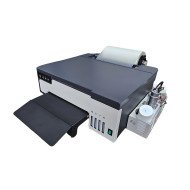
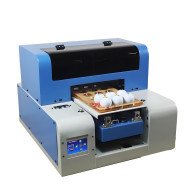
The journey from utilizing an A4 Smart UV Flatbed Printer as a prototyping tool to integrating it into a mass production environment exposes intricate technical and operational challenges. A high-growth printing business aiming to scale throughput rapidly must contend with print speed limits, substrate handling automation, and repeatability consistency on a relatively small-format UV flatbed platform. The A4 Smart UV Flatbed Printer, designed primarily for flexible, high-detail output on substrates up to A4 size, is often tasked beyond its nominal scope when deployed en masse. Operational bottlenecks arise in the form of printhead wear under continuous cycles, ink curing rates, heat dissipation mechanisms, and precise substrate registration to meet industrial-grade tolerances.
Consider a medium-sized signage print shop transitioning from limited batch production to a multi-shift operation. The demand for rapid turnaround with zero quality compromise highlights the printer’s capacity constraints. The small print bed dimension (approximately 210 x 297 mm) necessitates frequent substrate reloads, which interrupts the automated workflow and exposes manual labor overhead. Consequently, throughput becomes a function not only of print speed (measured in square meters per hour) but also of substrate changeover time and machine warm-up intervals. The UV curing lamp power and wavelength spectrum must be finely tuned to maximize ink polymerization speed without degrading printhead components or substrate integrity.
Failure to address these bottlenecks with precise process engineering results in unpredictable downtime and variance in print quality, which ultimately impacts customer satisfaction and cost efficiency. This reality calls for a rigorous technical evaluation focusing on hardware endurance, ink chemistry compatibility, and integration of auxiliary automation systems such as robotic substrate feeders and inline drying solutions.
Technical Deep-Dive on Scaling Challenges and Hardware Limits
Printhead Wear and Longevity Under Continuous Operation
The A4 Smart UV Flatbed Printer utilizes piezoelectric drop-on-demand printheads with nozzle diameters typically in the range of 10-20 picoliters (pl). Continuous operation at industrial-scale duty cycles subjects these printheads to mechanical fatigue and potential clogging from UV-curable ink particulates. Assuming an average firing frequency of 20,000 nozzles per second with an active print area of 210 x 297 mm at 720 dpi (dots per inch), the total nozzle firings per hour can be estimated as follows:
Dot count per inch: 720 dpi
Pixels per A4 width: 720 dpi * 8.27 inches = 5960 pixels
Pixels per A4 height: 720 dpi * 11.69 inches = 8420 pixels
Total dots per pass: 5960 x 8420 ≈ 50.2 million dots
Assuming 20,000 nozzles firing continuously, nozzle wear cycles per hour exceed 72 billion droplet ejections.
This extreme usage stresses nozzle membranes and increases clogging risks, demanding maintenance cycles every 200-300 operational hours. Industrial printers mitigate this through self-cleaning cycles and redundancy arrays, which the A4 Smart UV Flatbed Printer supports minimally, constraining long-duration operation.
Ink Curing Dynamics and Thermal Management
UV curing relies on photoinitiators in the ink polymerizing under UV wavelengths, generally between 365-405 nm. The curing lamp power output of the printer, often rated at 40-60 Watts/cm2, determines polymerization speed and adhesion quality. However, higher energy density accelerates print speed but risks heat accumulation on substrates. This can cause warping or ink over-cure, degrading print fidelity. Thermal sensors embedded near the print bed impose feedback control to balance curing intensity and substrate temperature, usually capped below 50°C to prevent deformation of thermoplastics.
Substrate Handling and Automation Integration
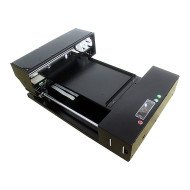
Small format printers like the A4 Smart UV Flatbed Printer often lack integrated automation for substrate feed, requiring manual placement or external robotic arms for mass production. Throughput calculations must factor in loading/unloading downtime. If manual changeover takes 90 seconds per A4 sheet and print time per sheet is 4 minutes, maximum throughput caps at approximately 8-10 sheets per hour per printer under manual operation, insufficient for scale.
Raw Data Comparison Between Small Flatbed and Industrial Wide-Format UV Printers
| Specification | A4 Smart UV Flatbed Printer | Industrial Wide-Format UV Printer |
|---|---|---|
| Maximum Print Area | 210 x 297 mm | Up to 3200 x 1600 mm |
| Print Speed | Approx. 4-6 m2/hour | 15-25 m2/hour |
| Printhead Nozzle Count | ~20,000 | ~60,000-100,000 |
| Ink Curing Power | 40-60 W/cm2 | 80-120 W/cm2 |
| Automation Level | Low (manual or semi-automated) | High (integrated conveyors, feeders) |
Material Compatibility and Micrometer Precision Challenges
Maintaining precise Z-axis control within ±10 microns is essential for UV flatbeds to ensure consistent dot placement and focus across substrates varying from glass to corrugated plastics. The smaller table size of the A4 model simplifies mechanical accuracy but demands recalibration after handling multiple substrate types. The flatbed's rigidity and linear guide quality directly influence print positional repeatability – critical when scaling up batch runs to avoid cumulative registration errors.
Scenario Analysis of Business Use-Cases Impacted by Key Specs
1. Boutique Customization Shop Scaling Art Prints
The A4 printer suits boutiques focusing on high-detail, low-volume, personalized art prints. The downside emerges when orders increase, as throughput caps and manual substrate handling limit scalability. Printhead wear demands frequent maintenance, raising costs.
2. Industrial Prototype Sampling for Product Design
Prototyping small plastic components with UV printing benefits from the printer’s micron-level precision. Rapid iteration is possible, but the inability to automate substrate feeding stalls mass sampling schedules.
3. Print-on-Demand Promotional Goods Manufacturer
This use case demands both speed and automated workflows. The A4 Smart UV Flatbed Printer must be supplemented by robotic handling and additional units to meet multi-thousand piece orders. The total cost of ownership increases due to maintenance and labor.
Expert FAQ on Subtle Technical Aspects
Q1 Why is nozzle clogging more severe in UV-curable inks?
UV inks polymerize rapidly when exposed to ambient light, precipitating partial curing inside nozzles if not carefully managed by sealed capping stations and frequent purging cycles.
Q2 How does substrate reflectivity affect UV curing?
Highly reflective substrates scatter UV light, reducing the effective curing dose and necessitating longer exposure or modified ink formulations to ensure full polymerization.
Q3 What maintenance strategies optimize printhead lifespan?
Scheduled ultrasonic cleaning, nozzle health monitoring software, and controlled humidity environments extend operational life by mitigating particulate buildup and membrane fatigue.
Q4 How critical is the flatbed’s mechanical rigidity for micron accuracy?
Any flex or vibration in the bed or carriage induces micro-shifts exceeding pixel size, causing color misregistration and blurring, especially at ultra-high dpi settings.
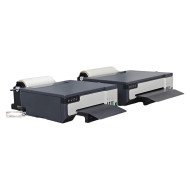
Q5 Can multiple A4 Smart UV Flatbed Printers be networked to scale throughput?
Yes, but requires advanced print workflow software and synchronization systems to coordinate print queues and minimize downtime across units.
Strategic Verdict on the Technology Trajectory
The A4 Smart UV Flatbed Printer epitomizes a niche balance between high-precision output and limited throughput capacity. Its small form factor and piezo printhead technology position it well for prototyping and boutique production but create inherent scaling challenges for mass production workflows. Future iterations will likely emphasize enhanced automation integration, improved ink chemistries for faster curing at lower thermal impact, and modular printhead arrays for redundancy and maintenance minimization. While the raw capabilities of the hardware remain notable, unlocking greater operational efficiency for scalable business owners hinges on systematic hardware-software co-optimization and ecosystem development.