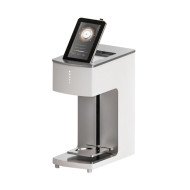
Performance Limits and Practical Throughput of Economical Latte Coffee Printers
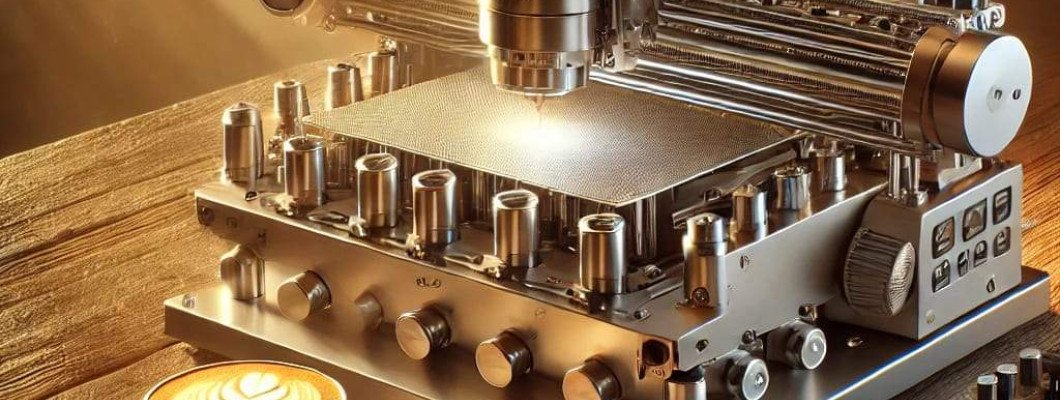
The Industrial Reality Behind Economical Latte Coffee Printers
In a high-volume café environment, introducing an economical latte coffee printer presents a complex engineering and operational challenge. The printer must consistently produce high-fidelity latte art while maintaining throughput to match peak consumer demand. Café managers aiming to integrate such printers often confront the bottleneck of print speed versus quality, complicated further by ink stability and thermal management issues inherent in food-safe inkjet systems. The nuanced balance between resolution, printhead lifespan, and coffee temperature preservation directly affects the practical utility of these devices.
For instance, a shop serving 200 drinks per peak hour must reconcile the printer’s capped pixel-per-second throughput with the necessity of maintaining milk foam temperature within a narrow 57°C – 65°C window to preserve crema texture. A printer rated at 300 dpi resolution may struggle to achieve detailed art without extending printing time beyond the holding time of the milk foam texture, resulting in diminished consumer experience. Moreover, the ink formula's rheology and particle size distribution determine nozzle clogging frequency, impacting uptime and labor costs.
These printers also face variability in the substrate – the coffee surface – which is dynamic and irregular due to milk froth inconsistencies and cup shape variation. A simplified printer design optimized for flat, stable substrates risks degradation in print quality and speed when confronted with these real-world conditions, leading to operational bottlenecks often overlooked in marketing materials.
Printhead Mechanics and Thermal Constraints
The architecture of the printhead is critical for managing the precision ink droplet ejection needed for latte art. Economical models typically employ piezoelectric or thermal bubble inkjet technologies. Piezoelectric printheads deliver droplets in the 15-30 picoliter (pl) range, allowing finer control for micron-level precision, but are costlier and require complex driver electronics. Thermal bubble heads generate droplets of approximately 20-50 pl by vaporizing ink chambers momentarily, a cost-saving measure but inducing ink thermal stress and potential degradation.
Thermal management within printheads affects both reliability and print quality. The energy input per nozzle pulse, typically measured in millijoules (mJ), must balance the droplet velocity (around 8 m/s) and thermal energy transferred to the ink, especially considering food-grade ink sensitivities. Excessive heating causes viscosity changes, altering droplet volume and leading to inconsistent print patterns. This effect compounds over continuous high-throughput operation, accelerating printhead wear and increasing maintenance intervals.
Resolution, Speed, and Throughput Trade-offs
Latte printers emphasize resolution in dots per inch (dpi), where standard economical models operate between 150 and 300 dpi. Higher dpi yields more detailed art but exponentially increases droplet counts per print frame. With a fixed nozzle count (e.g., 128 nozzles per color channel) and maximum firing frequency (up to 20 kHz), total throughput (measured in square centimeters per minute) becomes constrained.
A hypothetical calculation underlines this: printing a 10 cm x 10 cm latte art area at 300 dpi requires roughly 11811 x 11811 dots (approx. 139 million dots). Even with multi-nozzle arrays firing concurrently, this exceeds the printer’s native throughput bandwidth, necessitating trade-offs such as reduced dpi, scaling down print area, or accepting longer print cycles that impair customer wait times.
Ink Chemistry and Food Safety Compliance
Food-grade inks must meet stringent safety regulations, including FDA or EU food contact standards. These inks utilize natural pigments or approved dyes dispersed in aqueous or oil-based carriers, often augmented with stabilizers to minimize agglomeration. Ink viscosity typically ranges between 2-4 cP at operating temperature (~25°C), optimized for smooth jetting.
However, ink particulate size critically impacts nozzle fouling rates and print consistency. Particles over 1.5 microns can cause clogging in nozzles 20-30 microns in diameter. Achieving stable dispersion requires ongoing quality control during manufacturing and precise filtration before filling print cartridges. Frequent maintenance cycles to clean printheads increase operational downtime and labor requirements.
Infrastructure Integration and Maintenance Realities
Integrating these printers into café workflows demands addressing power, cleaning, and data connectivity. Power consumption peaks typically reach 40-60 Watts during active printing phases, requiring thermal dissipation solutions within compact chassis to avoid overheating. Additionally, the inclusion of automated cleaning cycles to avoid clogging interrupts operational uptime up to 15 minutes per day.
Networking capabilities often rely on low-latency Wi-Fi or wired Ethernet protocols to receive print jobs from point-of-sale systems. Latency and packet loss can introduce printing delays or errors, underscoring the need for robust embedded firmware and error recovery routines.
| Specification | Economical Latte Printer (Thermal Bubble) | High-End Industrial Latte Printer (Piezoelectric) |
|---|---|---|
| Droplet Volume (pl) | 20-50 | 15-30 |
| Maximum Resolution (dpi) | 150-300 | 300-600 |
| Printhead Firing Frequency (kHz) | 10-20 | 20-50 |
| Power Consumption (Watts) | 40-60 | 100-150 |
| Maintenance Interval (cleaning cycles per day) | 2-3 | 1-2 |
Scenario Analysis for Business Use
High-Volume Café Chain
Given a chain serving 1000+ drinks daily, the economical printer’s speed limitations risk creating queues during peak hours. Lower resolution and required cleaning intervals translate to reduced throughput and increased labor costs for printhead maintenance. The inability to scale print area without sacrificing speed impacts branding consistency across outlets.
Specialty Artisan Coffee Shop
Artisan shops prioritize print quality and substrate versatility. The economical printer’s maximum 300 dpi and thermal inkjet technology limits color depth and micron precision, impairing creative design fidelity. Additionally, variability in milk foam density causes frequent print errors, necessitating operator intervention and increasing downtime.
Event-Based Mobile Coffee Service
Mobility requires a compact, low-power printer with quick setup. The economical latte printer’s moderate power consumption and simplified infrastructure ease deployment, but short maintenance intervals and slower throughput reduce event scalability, especially if prints require intricate detail or large batch sizes.
Expert FAQ
Q1 What is the primary factor limiting print speed in economical latte coffee printers?
Printhead nozzle count and firing frequency combined with thermal inkjet physics limit droplets per second, directly affecting maximum throughput.
Q2 How does ink viscosity variation impact droplet formation?
Viscosity changes alter droplet volume and velocity, causing shifts in print pattern accuracy and possible nozzle clogging.
Q3 Why are thermal bubble printheads prone to faster wear compared to piezoelectric heads?
Thermal bubble heads repeatedly heat ink, causing thermal stress and accelerated material fatigue in the nozzle chambers.
Q4 Can substrate variations in milk foam be compensated by printer algorithms?
Algorithms can partially adapt firing patterns based on sensor input, but irregular foam topology often exceeds correction capabilities, impacting print fidelity.
Q5 What maintenance protocols optimize uptime for these printers?
Scheduled nozzle purging, filtration of ink supply, and controlled environment temperature reduce clogging incidence and extend printhead life.
Strategic Verdict on Technology Trajectory
Economical latte coffee printers present a balanced compromise between cost, print quality, and throughput. While their thermal bubble printhead technology and moderate resolution suffice for low- to mid-volume applications, inherent physical constraints restrict scaling for high-demand hospitality environments. Future advancements in piezoelectric micro-actuators, ink rheology optimization, and real-time substrate sensing hold promise to narrow performance gaps. Nonetheless, infrastructural integration challenges and maintenance requirements continue to temper deployment strategies, necessitating comprehensive operational planning beyond initial CAPEX considerations.