Lifecycle Maintenance Costs and Printhead Physics Define Smart Mini Selfie Coffee Printer Viability
The Industrial Reality
Integrating a Smart Mini Selfie Coffee Printer into a commercial or artisanal coffee environment presents nuanced challenges in lifecycle maintenance costs and printhead physics that directly affect operational uptime and total cost of ownership. Unlike conventional label or document printers, this device operates in a high-moisture, complex substrate environment involving coffee foam with dynamic surface tension and temperature variables. The hardware must sustain micron-level precision while preventing nozzle clogging, ink degradation, and mechanical wear under repeated cycles. Consider a mid-volume coffee shop scenario where 200 beverages are decorated daily with photographic precision. Each printhead cycle faces thermal stress from 60-70 °C surfaces, rapid drying ink chemistry needing stable droplet formation at 5-10 picoliters (pl), and abrasive pigment particles that accelerate wear. Without strict lifecycle maintenance regimes calibrated to these parameters, printhead failure and quality degradation become inevitable, leading to costly downtime and consumable waste.
Operational bottlenecks arise primarily from printhead maintenance intervals requiring cleaning cycles and ink system flushes, often underestimated in initial procurement models. Furthermore, the unique substrate—the frothy, uneven coffee surface—introduces variability in droplet adhesion and color fidelity, necessitating adaptive firmware algorithms to compensate for inconsistencies. Failure to address these technical challenges results in accelerated component depreciation and compromised output, undermining the projected ROI and usability in high-throughput environments.
Printhead Physics and Ink Chemistry Fundamentals
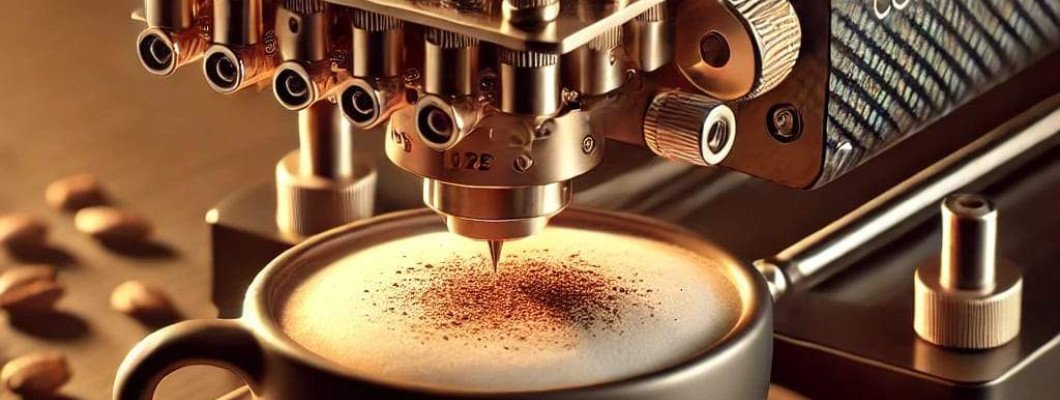
The printhead mechanism of the Smart Mini Selfie Coffee Printer likely employs piezoelectric or thermal inkjet technology. Given the specialty of edible ink and high-resolution output (expected sub-100 μm droplet diameter), piezoelectric printheads with multi-nozzle arrays are preferred for precision. Piezoelectric actuators generate pressure pulses ejecting droplets sizing between 5 to 10 pl. This droplet volume ensures sufficient resolution, typically correlating to 600 dpi or higher. The physics of droplet formation involves precise control of waveform voltage, nozzle geometry (typical aperture diameter 20-40 μm), and fluid dynamics governing ink viscosity (optimal range 4-8 cP).
Ink chemistry must balance pigment concentration for color density against drying time and substrate interaction. For coffee surface printing, the ink requires rapid curing upon contact—drying in less than 1 second at 60 °C surface temperature to prevent diffusion or smudging. The challenge increases as aqueous or edible inks tend to have higher surface tension parameters (~40-50 mN/m), risking inconsistent droplet spread and adhesion on frothy substrates. Specialized surfactants and humectants stabilize droplet size and prevent clogging by inhibiting evaporation within nozzles between print cycles.
Maintenance Costs and Lifecycle Implications
Lifecycle maintenance costs emerge from several interdependent factors: printhead replacement frequency, consumable ink usage rates, cleaning fluid consumption, and labor hours for preventative upkeep. Printhead hardware, as a key wear component, may have a rated lifecycle of 1-3 million actuations under optimal conditions; however, in coffee printing, contaminants such as residual oils and sugars accelerate nozzle degradation.
Assuming an average print of 200 units per day, each requiring 2,000 droplets, total droplet output per day reaches 400,000. Over 30 days, this totals 12 million droplets, roughly quadruple the typical single printhead lifecycle rating, necessitating multiple replacements annually. Cleaning cycles add unscheduled downtime; estimated at 15 minutes per 100 prints, this equates to roughly 30 minutes daily lost, impacting throughput.
Cost Comparison Table
| Parameter | Standard Document Printer | Smart Mini Selfie Coffee Printer |
|---|---|---|
| Printhead Lifespan (Million Droplets) | 4-6 | 1-3 |
| Ink Viscosity (cP) | 3-5 | 4-8 |
| Typical Print Temp (°C) | 20-35 | 60-70 |
| Maintenance Downtime (Minutes/100 Prints) | 5-10 | 15 |
| Nozzle Diameter (μm) | 30-50 | 20-40 |
Hardware Comparisons and Physical Constraints
Compared to industrial label and photo printers, the Smart Mini Selfie Coffee Printer operates under harsher environmental constraints. The thermal load from hot coffee surfaces and inks that must dry within seconds require materials with high thermal fatigue resistance. Printhead chassis often incorporate ceramics or coated stainless steel to mitigate corrosion from moisture and sugars.
From a mechanical perspective, the device must maintain micron-level positional accuracy (expected <10 μm lateral precision) on non-rigid substrates. Piezoelectric elements face piezoelectric material degradation accelerated by temperature cycling, necessitating frequent recalibration or component swaps. Additionally, the firmware-driven compensation for substrate variability requires high-speed data processing and closed-loop sensors to adjust droplet timing and positioning dynamically.
Firmware and Operational Limits
Firmware algorithms must compensate for droplet misfires, substrate unevenness, and closed-loop feedback from optical sensors. This complexity can introduce bottlenecks, as high-speed print cycles (typically 10-15 seconds per print) may slow due to recalibration routines. Thermal sensors embedded in the printhead assembly monitor nozzle temperatures to prevent overheating; exceeding thresholds stops printing to avoid permanent damage.
Scenario Analysis
High-Volume Coffee Chain: A chain expects 500 decorated lattes daily. The short printhead lifecycle and cleaning times create operational bottlenecks, making multiple redundant units necessary. Downtime reduces throughput; thus, investment in automated maintenance protocols and consumable stockpiles becomes critical.
Artisan Specialty Cafe: Lower volume (~50 prints/day) with premium pricing allows for detailed color fidelity and substrate experimentation. This scenario benefits from firmware customization and slower print rates, extending printhead lifespan and minimizing maintenance costs.
Event Catering Service: Mobile setups require robust thermal management and quick turnaround. Frequent transportation induces mechanical stresses; maintenance focus shifts toward rapid printhead swap capabilities and ink system sealing against vibration-induced contamination.
Expert FAQ
What precise droplet volume range optimizes print resolution on coffee foam?
Optimal droplet volume ranges between 5-10 pl balancing pixel density (~600 dpi) and substrate adhesion without excessive diffusion.
How does thermal cycling affect piezoelectric printhead longevity?
Repeated temperature fluctuations induce micro-cracking in piezoelectric materials, reducing actuation efficiency and increasing failure rates over time.
What cleaning protocols minimize nozzle clogging in an edible ink environment?
Automated daily flush cycles with surfactant-enhanced cleaning fluids and nozzle purging after idle periods under 30 minutes are recommended to prevent sediment buildup.
Can firmware compensate for irregular coffee substrate textures in real time?
Yes, advanced firmware uses optical sensors and adaptive timing to recalibrate droplet ejection, though this adds processing overhead and modestly reduces print speed.
What is the main contributor to hidden operational costs?
Maintenance downtime and premature printhead replacements due to accelerated wear from sugar residues and thermal stress are primary hidden cost drivers.
Strategic Verdict
The Smart Mini Selfie Coffee Printer exemplifies a technically sophisticated device with constrained operational envelopes due to specialized substrate and environmental factors. Lifecycle maintenance costs driven by printhead physics and ink chemistry represent critical limiting variables for deployment at scale. Future iterations must focus on enhanced material durability, faster cleaning automation, and firmware advances for dynamic substrate adaptation to improve asset longevity and operational efficiency. Without these refinements, the technology risks relegation to niche artisanal use rather than mass commercial throughput applications.