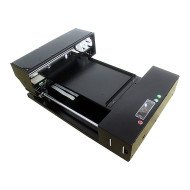
Infrastructure Integration Challenges with Multifunction Artificial and Natural Flower Printers Examined Clinically

The Industrial Reality of Integrating Flower Printing Technologies into Existing Production Environments
Introducing a multifunction artificial and natural flower printer into an operational industrial facility poses complex integration hurdles that extend beyond the superficial appeal of its multifunctionality. Industrial-scale facilities accustomed to conventional printing or botanical processing systems face distinct technical and infrastructural challenges. For instance, the printer’s need to handle both synthetic and organic substrates demands an adaptive workflow that can mitigate contamination, humidity variances, and mechanical stress—factors that standard production lines are ill-equipped to accommodate without considerable modification.
Consider an existing flower packaging operation structured around high-speed conveyor belts optimized for dry products. The integration of a printer capable of applying intricate designs or customizations onto natural flower petals or synthetic counterparts requires rethinking the transport mechanism. Mechanical handling must now preserve petal integrity and print precision simultaneously. This often necessitates the installation of vibration dampening systems and precision robotic arms capable of submillimeter positional accuracy.
Moreover, the printer’s thermal output and ink deposition processes introduce operational concerns impacting climate control systems and air filtration. For example, inks with volatile organic compounds (VOCs) applied onto natural flowers necessitate enhanced ventilation to comply with workplace safety standards, complicating HVAC load balancing and energy consumption forecasts. Legacy electrical infrastructure might also require upgrades to support the printer’s power demands and ensure electromagnetic compatibility with other machinery.
Evaluating Hardware and Operational Constraints in Multifunction Flower Printing Systems
At the hardware level, multifunction artificial and natural flower printers use precision printheads capable of ejecting picoliter-volume droplets with resolutions exceeding 1200 dpi. This microscale accuracy is essential for realistic petal textures and color gradients. However, the printhead nozzle diameter, typically ranging between 20 and 50 micrometers, is prone to clogging when printing on irregular organic surfaces coated with natural oils or moisture. Implementing automatic nozzle cleaning cycles adds complexity to the control systems and raises downtime considerations.
Comparing piezoelectric versus thermal inkjet mechanisms illustrates trade-offs critical for industrial application. Piezoelectric heads offer longer lifespan and compatibility with a wider range of ink chemistries, including UV-curable and solvent-based inks desirable for durable synthetic petals. Thermal inkjets, while cheaper, suffer accelerated wear and increased thermal load—problematic in continuous production environments with high uptime requirements.
Quantitative Analysis of Printhead Stress and Lifecycle
Assuming a piezoelectric printhead with a rated lifecycle of 1 billion actuations, operating at 10 kHz pulse frequency during an 8-hour shift yields:
10,000 pulses/sec × 28,800 sec = 288 million actuations per shift
This suggests a theoretical printhead replacement cycle just over three shifts under continuous operation, which is unrealistic. Real-world duty cycles reduce usage with intermittent cleaning and idle periods, but the analysis highlights the necessity for printhead redundancy or modular swapping capabilities to avoid costly downtime.
Ink Chemistry Compatibility and Substrate Adhesion
Ink formulations for natural flower petals must balance adhesion without damaging delicate organic matter or accelerating decay. Water-based inks are environmentally sound but often lack durability on synthetic substrates, whereas solvent-based inks exhibit strong adhesion with increased VOC emissions and health risks. UV-curable inks offer rapid curing and high durability but require integrated curing stations and raise thermal load, complicating integration into temperature-sensitive workflows.
Thermal Management and Electrical Load Considerations for Industrial Environments
Multifunction flower printers incorporate multiple heating elements to maintain ink viscosity and facilitate curing, combined with cooling systems to protect sensitive substrates. In an industrial rack environment, these devices typically consume between 1.5 kW and 3 kW per unit under active printing conditions. Thermal dissipation must be managed to avoid localized heat accumulation, which would degrade both synthetic and natural materials.
Modern printers incorporate sensor arrays monitoring ambient temperature, humidity, and electrical input stability. Integration with facility management systems enables predictive maintenance and operational optimization. However, synchronization protocols and data interoperability standards—often proprietary—challenge smooth integration with existing SCADA or MES systems, necessitating custom middleware or additional IT resource allocation.
Comparative Table of Two Multifunction Printer Integration Approaches
| Parameter | Standalone Unit with Autonomous Control | Fully Integrated Line-Mounted Unit |
|---|---|---|
| Installation Complexity | Low - Plug and play with dedicated power and network | High - Requires control system integration and mechanical retrofitting |
| Operational Flexibility | Moderate - Can be redeployed between lines | High - Optimized for specific workflow with minimal manual intervention |
| Maintenance Accessibility | High - Easy access for printhead swapping and cleaning | Moderate - Integration limits rapid access, may increase downtime |
| Throughput Impact | Moderate - Separate process step may add cycle time | Low - Seamlessly embedded reduces bottlenecks |
| IT Infrastructure Demands | Low - Standalone networking and minimal data exchange | High - Requires integration with MES/SCADA, real-time monitoring |
Scenario Analysis of Multifunction Flower Printer Application Cases
High-Volume Floral Packaging Facility
A high-volume facility producing custom artificial bouquets requires a printer capable of handling synthetic petals at speeds approximating 500 units per hour. Integration challenges center on continuous printing reliability and fast printhead replacement. The standalone printer model eases initial rollout and testing but increases manual handling, impacting throughput. Operational bottlenecks emerge from extended cleaning cycles due to solvent-based inks, demanding adaptive scheduling and redundancy planning.
Artisan Natural Flower Customization Studio
This boutique operation prioritizes color depth and substrate fidelity for natural petals. Thermal management and gentle substrate handling govern printer selection. The fully integrated line-mounted unit offers precise humidity and temperature control but requires significant capital investment and IT system upgrades. The trade-off is a reduction in manual errors and enhanced reproducibility critical for high-value customized products.
Environmental Compliance Focused Manufacturer
In regions with stringent VOC emission regulations, the manufacturer opts for water-based inks despite adhesion challenges. Integration emphasizes enhanced air filtration and solvent recovery systems. The printer’s control systems must be optimized for ink rheology variability induced by fluctuating ambient humidity, complicating automated printhead maintenance and increasing the demand for sensor-driven feedback loops.
Expert FAQ Addressing Advanced Integration and Operational Queries
Q1 What are the most critical electrical compatibility issues when adding multifunction flower printers?
Issues include ensuring proper grounding to avoid electromagnetic interference, matching voltage and phase requirements to avoid power spikes, and accommodating inrush currents during printer startup that can impact other line devices.
Q2 How does substrate variability affect printhead calibration and maintenance?
Substrate porosity, moisture content, and surface texture cause variations in droplet spread and adhesion, requiring dynamic calibration algorithms. Increased nozzle wear or clogging frequency on organic substrates necessitates more frequent maintenance cycles.
Q3 Can predictive maintenance algorithms extend printhead lifespan?
Yes, by analyzing sensor data on nozzle firing patterns, ink viscosity, and environmental conditions, predictive models can schedule cleaning and replacements preemptively, minimizing unplanned downtime.
Q4 How are VOC emission controls integrated with printer operation?
VOC control systems are usually linked to real-time air quality sensors and can adjust printing speed, ink curing intensity, or activate filtration units dynamically to maintain compliance without manual intervention.
Q5 What data interoperability challenges arise between multifunction printers and MES?
Challenges include protocol mismatches, proprietary firmware limiting data exchange, and inconsistencies in timestamping or event logging, which complicate root cause analyses or production traceability.
Strategic Verdict on Current and Future Integration of Multifunction Flower Printers
Multifunction artificial and natural flower printers represent a technically sophisticated convergence of precision printing and botanical substrate handling, demanding an equally advanced integration framework. The complexity of aligning mechanical handling, thermal management, chemical compatibility, and IT infrastructure posits significant barriers for straight retrofit into existing industrial systems. However, emerging trends in sensor integration, predictive maintenance, and modular design promise to reduce these barriers progressively.
Future iterations will likely emphasize open protocol standards for seamless MES/SCADA interaction and more resilient printhead materials tolerant to diverse ink chemistries. Thermal and environmental controls integrated directly into printer enclosures may alleviate facility HVAC impacts, enabling deployment in sensitive environments. Despite high upfront integration demands, the multifunction printer technology trajectory signals increasing feasibility for broader adoption in both high-throughput and artisanal flower printing applications.