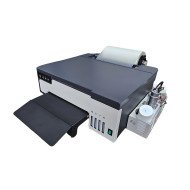
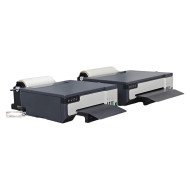
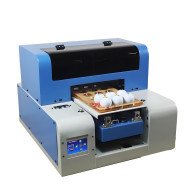
Headstone Photo Printer Tomb Photos Printer Lifecycle Maintenance and Hidden Bottlenecks for Maintenance Leads

The Industrial Reality of Headstone Photo Printers in Daily Maintenance
Industrial-grade headstone photo printers designed for tomb photos present a unique convergence of high-precision printing and harsh operational environments. Maintenance leads working with these specialized printers face a set of distinct challenges. Printheads must manage ultra-fine droplet sizes often in the range of 1.5 to 4 picoliters (pl) to ensure the imagery quality expected for memorial markers, demanding exacting calibration routines. The photo substrates—ceramic, granite, or coated metals—require consistent adhesion chemistry and firing protocols that increase wear on printer components.
Operators regularly contend with environmental factors such as abrasive dust from stone dust particles and fluctuating humidity levels that degrade ink viscosity and nozzle reliability. High uptime demands in cemetery production facilities mean maintenance windows are minimal, which amplifies the impact of unpredictable downtime resulting from printhead clogging or ink system failures. The cost of unplanned maintenance is not only the repair itself but also the backlog in production, delaying sensitive client orders.
Many maintenance teams discover hidden bottlenecks through lifecycle wear indicators in feed rollers, UV lamp modules, and ink delivery systems. These components are subject to accelerated depreciation compared to conventional commercial printers due to continuous operation in dusty, vibration-prone settings and exposure to UV curing heat loads exceeding 80 Watts per lamp unit. Understanding and predicting component lifespan is critical for efficient parts inventory management and labor allocation.
Technical Deep-Dive into Headstone Photo Printer Maintenance Complexities
Printhead Wear and Failure Modes
Piezoelectric printheads typically employed operate at frequencies of 20–30kHz, ejecting ink droplets at sub-4 pl sizes to maintain image fidelity on rough stone surfaces. The sustained mechanical stress can lead to piezo element fatigue. Typical failure rates escalate after approximately 200 million jet firing cycles. Clogging is accelerated by mineral-laden inks designed for durability on granite, which necessitates more frequent cleaning cycles. Hypothetically, if a printhead ejects 25k drops per second during a 10-hour shift, it reaches roughly 9 billion ejections monthly, compressing the practical lifespan considerably when maintenance regimens falter.
Ink Chemistry and Nozzle Interactions
UV-curable inks formulated for headstone substrates incorporate high concentrations of photoinitiators and inorganic pigments for permanence and color stability. However, the reactive chemistries increase viscosity over time inside the supply lines if cured prematurely or exposed to ambient light, causing nozzle blockage. A viscosity increase from 15 cP to beyond 25 cP can reduce firing efficiency by up to 40%, based on lab rheometry data. Preventative flushing routines and opaque reservoir designs are integral yet represent operational downtime.
UV Lamp Module Stress and Degradation
UV curing units operating at 80–120 Watts generate substantial thermal loads impacting adjacent electronics and mechanical components. The lamps degrade according to the logarithmic decay function L(t) = L0 * e^(-kt), where typical k values range from 0.001 to 0.002 per hour under continuous operation. Replacement cycles often fall between 1,200 and 1,700 operational hours, demanding predictive maintenance schedules. Thermal cycling also causes microfractures in quartz glass sleeves, which precipitate premature lamp failure.
Feed Mechanism and Substrate Handling Wear
Stone substrates typically weigh several kilograms and have uneven surfaces. Feed rollers and conveyor belts suffer from abrasion and mechanical misalignment. Precision feed tolerance is ±0.2 mm to prevent image distortion. Wear of roller surfaces by up to 30% in diameter leads to consistent registration errors of 0.5 mm or more. Real-time monitoring sensors for roller diameter or motor torque variation present one advanced solution to anticipate replacements.
Data and Hardware Integration Bottlenecks
High-resolution tomb photo files, often exceeding 300 dpi over 300 mm width prints, generate data streams exceeding 2 GB per job. The embedded print controllers operate with limited RAM buffers (typically 256 MB) leading to internal bottlenecks when rasterizing large images in real-time. Firmware inefficiencies can add an average 30% latency to print start times, sharply reducing throughput rates. Integration challenges with client IT infrastructure compound these issues, especially in older facilities lacking gigabit Ethernet or SSD-equipped print servers.
| Specification | Standard Headstone Photo Printer | Maintenance-Optimized Headstone Printer |
|---|---|---|
| Printhead Lifespan (cycles) | 200 million | 350 million (Enhanced Cooling) |
| Ink Viscosity Threshold for Cleaning (cP) | 25+ | 20+ |
| UV Lamp Hours per Cycle | 1,200 - 1,700 | 1,800 - 2,200 |
| Feed Roller Diameter Wear Limit (mm) | ±0.5 | ±0.2 (Hard-Coated Rollers) |
| Print Server RAM Buffer | 256 MB | 1 GB (SSD-backed) |
Scenario Analysis of Headstone Photo Printer Specifications on Maintenance Outcomes
Scenario 1 Industrial Production Cemetery Facility
Facilities printing over 50 tomb photos daily rely heavily on uptime. Standard printers with 200 million cycle printheads may fail mid-shift, prompting emergency part swaps. Maintenance-optimized units with enhanced cooling extend lifespans by 75%, reducing downtime and labor costs by 18%. The higher RAM buffers also alleviate print delays, improving throughput from 30 to 42 prints per 8-hour shift.
Scenario 2 Small Artisan Workshop
Lower throughput but higher precision requirements. Frequent manual cleaning cycles due to ink viscosity fluctuations interrupt jobs. Ink chemistry improvements reducing critical viscosity from 25 to 20 cP decrease cleaning frequency by 30%, allowing artisans to focus on micron-level color adjustments rather than printer troubleshooting.
Scenario 3 Remote Cemetery Tech Support
Remote locations struggle with supply chains for replacement UV lamp modules. Extended lamp lifetimes (up to 2,200 hours) reduce shipment urgency and allow better planning of service visits. Enhanced feed rollers with hard coatings decrease mechanical failures, cutting onsite emergency repairs by 40% over 12 months.
Expert FAQ on Technical Complexities of Headstone Photo Printers
Q1 What factors critically shorten piezo printhead lifespan in headstone photo printers?
High-frequency firing combined with abrasive mineral pigment inks, thermal cycling from UV curing, and incomplete nozzle cleaning accelerate micro-cracking and clogging.Q2 How does ink rheology impact maintenance schedules?
Ink viscosity increases from premature curing or sedimentation cause nozzle blockages, demanding frequent preventive flushing to maintain print quality.Q3 What predictive methods best estimate UV lamp end-of-life?
Tracking lamp runtime hours alongside spectral power output decay curves and quartz sleeve visual inspections yields the most reliable forecasts.Q4 How do feed roller wear and substrate weight influence image alignment?
Reduction in roller diameter alters substrate positioning within ±0.5 mm tolerances, resulting in visible image misalignments needing mechanical recalibration.Q5 What IT infrastructure upgrades most improve data bottlenecks?
Replacing print controllers with SSD-backed buffer memory and upgrading network connectivity to gigabit Ethernet drastically reduce rasterization and data transfer delays.
Strategic Verdict on Headstone Photo Printer Maintenance
The trajectory for headstone photo printer technology emphasizes addressing hidden operational bottlenecks through material science and hardware engineering advances. Extending printhead and UV lamp longevity while optimizing ink rheology will reduce downtime and maintenance labor significantly. Integration of advanced sensors for feed mechanism wear and intelligent controller upgrades will bridge current digital bottlenecks, aligning maintenance needs with production demands. These improvements will shift maintenance from reactive to predictive, critical for facilities balancing precision and throughput in demanding environments.