Hard ROI and Asset Depreciation Analysis for A3 Roll DTF Printer in Scalable Business Operations
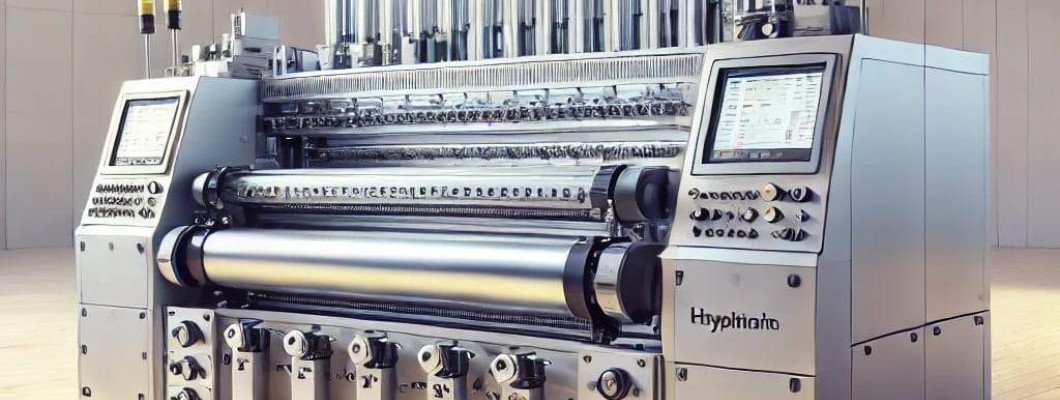
The Industrial Reality of Implementing A3 Roll DTF Printers in Production Lines
For scalable business owners managing throughput and labor costs, the integration of an A3 Roll Direct to Film (DTF) printer presents a complex challenge beyond surface-level productivity gains. The printer's ability to sustain high-volume print runs at consistent quality directly impacts operational efficiency and capital utilization. Industrial environments demand detailed assessment of asset depreciation and real return on investment (ROI), not just vendor-stated print speeds or media compatibility metrics.
Consider a mid-sized print shop expanding its apparel customization capacity. The printer, rated for 300 mm/s at 600 dpi, theoretically achieves 50 prints per hour on standard polyester film rolls. However, actual throughput depends heavily on downtime related to film breakages, printhead clogging, and post-print curing cycles. Each stoppage introduces hidden labor costs that reduce effective output. Furthermore, depreciation must be calculated based on intensive use cycles—often exceeding vendor assumptions—leading to accelerated wear on critical components such as piezoelectric printheads and UV curing lamps.
This scenario illustrates that the ROI calculation extends beyond initial capital expense. Real-world asset longevity and maintenance frequency shape the total cost of ownership (TCO), influencing financial planning for scalable business operations. Identifying these elements is essential to avoid operational bottlenecks that can erode profitability even with a technically capable printer.
Technical Deep-Dive into Asset Depreciation and Operational Factors
Printhead Life Cycle and Replacement Cost Dynamics
Piezoelectric printheads in A3 Roll DTF printers typically have a rated lifespan of 1 billion actuations. At a resolution of 600 dpi and 300 mm/s speed, actuation frequency depends on nozzle count and ink droplet size (commonly 6-10 pl). Assuming a 512-nozzle head firing at 8 kHz, printhead usage can be mathematically estimated:
Actuations per second = 512 nozzles * 8000 Hz = 4,096,000 actuations/second
Given this, continuous operation for one hour yields approximately 1.47 x 10¹⁰ actuations, exceeding standard printhead life. This necessitates printhead changes every 2-3 months under heavy use, with costs averaging $6000 per head replacement — a significant operational expenditure impacting asset depreciation curves.
Film Feed Mechanism and Roll Handling Stress Points
The transport system employs stepper motors with precision gear trains to advance polyester film rolls in increments as small as 0.1 mm for exact layer alignment. Mechanical wear on these components is accelerated at higher roll weights, especially beyond 5 kg per roll. The gearboxes have a rated lifetime of 20,000 cycles under nominal load, but increased tension from heavier rolls reduces this to approximately 12,000 cycles, doubling maintenance frequency.
UV Curing Lamp Heat Output and Thermal Management Requirements
Maintaining print integrity requires thermal curing at 60-75°C immediately post-print. The UV lamps, rated at 80 W/cm, generate substantial heat flux. Without adequate ventilation and heat dissipation—calculated through Fourier’s Law for steady-state conduction—ambient temperatures inside the printer chassis can reach 95°C, accelerating electronic component degradation. Effective cooling systems add to power consumption, typically increasing operational power draw from 1.2 kW idle to 2.1 kW during peak operation.
Comparative Analysis of Two Asset Utilization Strategies
| Specification | High-Throughput Continuous Use | Moderate Use with Scheduled Downtime |
|---|---|---|
| Printhead Replacement Frequency | Every 2 months (~$36,000 annually) | Every 4 months (~$18,000 annually) |
| Gearbox Maintenance Cycle | Every 6 weeks | Every 3 months |
| Average Power Consumption | 2.1 kW peak | 1.5 kW average |
| Annual Depreciation Rate | 35% | 22% |
| Effective Throughput | 80% nominal due to maintenance | 90% nominal due to scheduled checks |
Production Speed Versus Quality Trade-offs
Operating at maximum speed (300 mm/s) risks ink oversaturation and film distortion, reducing final product quality. Slowing print speed to 200-250 mm/s increases drying efficacy and printhead reliability but lowers hourly throughput by 20-30%. This trade-off impacts throughput versus asset longevity, crucial for sustained ROI in scalable factories.
Scenario Analysis Demonstrating Business Impact of A3 Roll DTF Printer Specifications
Scenario 1 High-Volume Apparel Customization Facility
With high print volume demands (1000 units/day), the facility prioritizes throughput. Frequent printhead replacements and gearbox servicing increase maintenance costs but deliver consistent output. Depreciation accelerates, requiring budget adjustments for recurrent capital expenditure.
Scenario 2 Small to Medium Enterprises Balancing Quality and Cost
Focusing on batch production with moderate volume (400 units/day), operators choose slower print speeds and regular downtime schedules. This reduces maintenance rates and extends printhead life, optimizing TCO and minimizing unexpected downtime.
Scenario 3 Print Services with Mixed Substrate Runs
Businesses printing on varied substrates need flexible settings, often switching speed and curing parameters. Increased adjustments increase error margins and maintenance events, complicating asset depreciation forecasting and demanding sophisticated operational planning.
Expert FAQ on A3 Roll DTF Printer Operational Costs and Asset Management
What physical factors most critically influence printhead lifespan under continuous use?
Ink viscosity, droplet size frequency, and operating temperature are primary influences. Elevated temperatures increase piezoelectric material wear, while high-frequency actuation accelerates mechanical fatigue.
How does film tension variation impact mechanical component longevity?
Uneven tension leads to premature bearing wear and gear misalignment, causing increased friction losses and eventual stepper motor strain failures.
Can predictive maintenance models effectively reduce unexpected downtime for DTF printers?
Yes, integrating sensor-based monitoring of printhead temperature, ink usage, and motor amperage allows early detection of degradation signs, optimizing maintenance schedules and reducing asset depreciation spikes.
What are the measurable effects of operating printers beyond manufacturer recommended print speeds?
Overspeeding increases nozzle misfiring rates, ink bleeding, and elevates component thermal stress, all cumulatively shortening printhead and transport assembly lifespans.
How can operational energy consumption be optimized without compromising throughput?
Implementing dynamic curing lamp power control and adaptive print speed modulation based on environmental conditions reduces average power draw while maintaining print quality.
Strategic Verdict on the Role of A3 Roll DTF Printers in Scalable Businesses
As businesses pursue scalable production, A3 Roll DTF printers offer technically viable throughput capabilities but necessitate granular operational understanding to manage depreciation and hidden costs. Strategic deployment hinges on optimizing printhead utilization rates, mechanical component maintenance cycles, and thermal management to balance output with asset longevity. The future landscape of scalable printing will increasingly depend on integrating predictive analytics and modular hardware upgrades to maintain efficiency while controlling TCO.