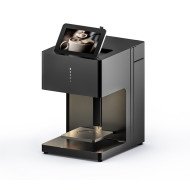
Evaluating Maintenance Realities and Printhead Physics of the Color Version Latte Coffee Printer
The Industrial Reality of Maintaining Precision Coffee Printing
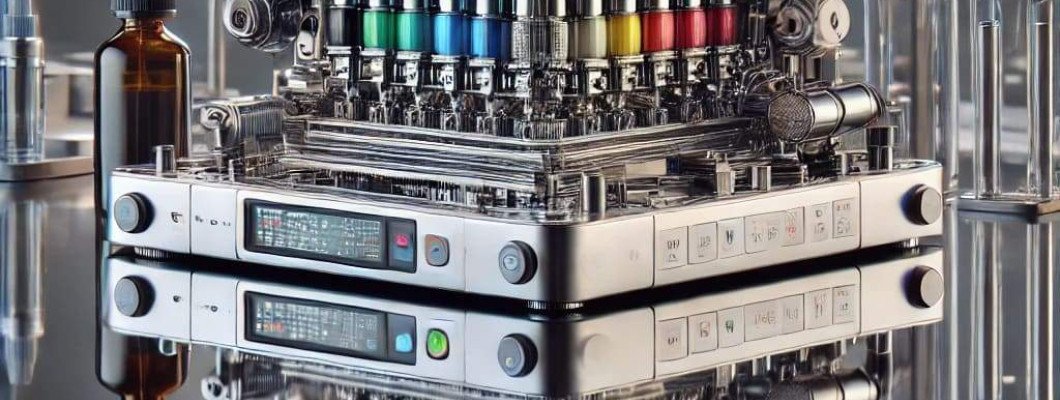
The deployment of the Color Version Latte Coffee Printer in a high-volume café environment exposes several critical challenges inherent to daily maintenance and printhead reliability. Unlike conventional beverage dispensers, this specialized device integrates advanced piezoelectric printhead technology and pigment-based edible inks requiring exacting chemical stability. Operators must navigate a high-wear environment where residual milk proteins and coffee oils accumulate rapidly, risking nozzle clogging and print degradation. The thermal sensitivity of the printhead assembly necessitates meticulous temperature control to prevent microfracture in piezo crystals, directly affecting droplet ejection precision. Furthermore, routine cleaning cycles impose downtime that conflicts with peak service hours, underscoring the tension between operational uptime and quality maintenance. Failure to uphold stringent maintenance schedules can cause irreversible damage to the printhead array, leading to costly replacements often priced upwards of 20% of the initial hardware investment. This establishes a maintenance bottleneck in facilities aiming for sustained throughput.
Compounded by the chemical complexity of multi-color edible inks, the printer's fluid supply system requires continuous monitoring for particulate sedimentation and viscosity shifts due to environmental factors like humidity and temperature. The interaction between fluid dynamics within microfluidic channels and printhead nozzle geometry presents a persistent risk of partial clogging, reducing color fidelity and micron-level precision. Employing ultrasonic cleaning or solvent flushes introduces additional handling risks, including potential degradation of polymer components in ink delivery tubes. These conditions demand the deployment of advanced diagnostic tools capable of assessing nozzle health real-time, such as drop volume sensors and acoustic emission detectors, to preempt failure modes.
Printhead Physics and Daily Uptime Challenges
The Color Version Latte Coffee Printer utilizes a proprietary printhead matrix comprising 128 nozzles per color, with droplet ejection volumes calibrated to 10-15 picoliters (pl). The printhead operates near 25 kHz pulse frequency to maintain rapid image rendering within a 500 mm/s carriage speed. At this level of precision, the Reynolds number governing droplet formation processes remains in the transitional laminar-turbulent regime, demanding tightly controlled fluid viscosity around 2.5 mPa·s and surface tension near 30 mN/m. Variations in these parameters significantly impact meniscus stability and drop satellite formation, degrading print quality below the critical 300 dpi resolution threshold.
Additionally, the volumetric flow rate (Q) must be carefully synchronized with the piezoelectric actuator's displacement volume to optimize droplet size consistency. The equation Q = n × V_d × f (where n = number of nozzles, V_d = droplet volume, f = firing frequency) estimates fluid demand at approximately 48 ml/min per color channel under peak operation. This necessitates robust ink reservoir and pump systems capable of precise modulation. Premature drying of ink at the nozzle face, accelerated by ambient temperature spikes, can induce ink crystallization, further complicating maintenance efforts and increasing the risk of printhead failure.
Comparative Analysis of Printhead Maintenance Protocols
| Aspect | Color Version Latte Coffee Printer | Industrial Inkjet Printer (Reference) |
|---|---|---|
| Nozzle Count per Color | 128 | 256 |
| Typical Droplet Volume (pl) | 10-15 | 15-30 |
| Operational Pulse Frequency (kHz) | 25 | 40 |
| Maintenance Interval (hours) | 100-120 | 200-250 |
| Cleaning Method | Automated solvent flush + manual ultrasonic cleaning | Automated solvent flush with in-line filtration |
| Printhead Replacement Cost | Approx. $1,200 | Approx. $2,500 |
Ink Chemistry and Fluid Dynamics Specificities
The edible inks formulated for the Coffee Printer diverge significantly from industrial pigment-based inks, featuring a unique colloidal suspension of colorants in a milk-compatible aqueous solution. The colloidal particle size distribution peaks at approximately 500 nm to avoid nozzle blockage while preserving chromatic vibrancy. Ink rheology is non-Newtonian with shear-thinning behavior crucial for printhead compatibility yet complicated by temperature-dependent viscosity fluctuations from 20 to 35 °C. This necessitates inline thermal regulation, typically maintaining the fluid temperature at 28 ± 1 °C to stabilize flow rates and droplet formation consistency.
The interaction between ink chemistry and printhead materials also impacts maintenance cycles; minor ink component absorption into silicone seals can cause material swelling, resulting in micro-leaks or altered flow resistance. Proactive selection of chemically resistant polymer compounds in tubing and seals mitigates these risks but adds to the replacement parts cost structure.
Hardware Comparison Impact on Uptime and Scalability
Scaling from boutique artisan cafes to medium-sized coffee chains requires a holistic understanding of the interplay between printhead durability, maintenance regimes, and throughput demands. The integrated printer architecture of the Color Version Latte Coffee Printer emphasizes compactness and precision over raw speed, with a maximum print area limited to approximately 100 mm diameter per cup. This translates to an effective time per print cycle between 12 and 18 seconds, including fluid refilling and automated nozzle cleaning. In contrast, industrial inkjet printers repurposed for food applications can offer faster cycle times but at significantly higher capital and maintenance costs.
The balance between print resolution (300 dpi target), color layering precision, and operational uptime defines the real-world performance envelope. Facilities must prioritize scheduled maintenance during low-demand periods to mitigate production bottlenecks. Access to detailed diagnostic telemetry, including nozzle firing success rates and ink flow consistency metrics, improves uptime management but requires skilled maintenance staff. Thus, operational scalability hinges more on human technical expertise than on raw hardware throughput capabilities in this category.
Scenario Analysis of Business Use-Cases
Scenario One: High-Volume Urban Café
A high-volume urban café serving 500+ specialty beverages daily faces significant pressure maintaining the Color Version Latte Coffee Printer’s uptime. Given the average 15-second print cycle, the maximum throughput caps at 240 prints per hour, necessitating multiple units to meet demand. Regular maintenance interrupts and printhead warm-up times further reduce effective uptime to approximately 85%. Thus, the maintenance lead must optimize cleaning schedules, balancing solvent flush frequency against clogging risk. Ink chemistry sensitivities to environmental humidity common in metropolitan areas require conditioned storage and handling, adding operational complexity.
Scenario Two: Boutique Artisan Coffee Shop
An artisan establishment prioritizing color depth and micron-level precision benefits from the printer’s high-resolution output and multi-color capabilities. However, slower turnover times and lower production volumes reduce stress on printhead maintenance but increase the relative impact of downtime. Operator training on fluid handling and nozzle diagnostics directly affects print quality and maintenance costs. Here, ROI rests on differentiated product aesthetics rather than throughput.
Scenario Three: Medium-Scale Event Catering Service
Scenario catering for events demands rapid setup and teardown. Printhead reliability and rapid cleaning cycles correlate directly with service success. The weight of maintenance equipment and ink logistics become central to operational decisions. The catering team must carry diagnostic tools and replacement components, adding to logistical burdens but ensuring continuous service. The printer’s relatively modest energy consumption (~120 Watts in active print mode) aids in mobile power management.
Expert FAQ on Advanced Maintenance and Printhead Performance
Q1: What is the impact of ink viscosity deviation on droplet formation stability?
Even minor viscosity increases above 3.0 mPa·s can disrupt the meniscus formation, causing irregular droplet sizes and satellite droplets that degrade print fidelity.
Q2: How does piezoelectric actuator aging affect print quality over time?
Piezo materials degrade under thermal cycling, leading to decreased displacement amplitude, which reduces droplet velocity and size uniformity, necessitating printhead replacement after approximately 1,000 hours of active use.
Q3: Can ultrasonic cleaning compromise the structural integrity of nozzle plates?
Excessive ultrasonic exposure risks microfractures in the glass or ceramic plates; protocol limits exposure to under 5 minutes per cycle to preserve integrity.
Q4: How is nozzle blockage detected preemptively?
Acoustic emission sensors detect variations in vibration patterns related to pressure fluctuations during firing, enabling real-time blockage identification before visible print artifacts emerge.
Q5: What alternatives exist to solvent flushing to reduce maintenance downtime?
Advanced in-line filtration and continuous recirculation reduce particulate buildup, though effectiveness is limited by the non-Newtonian nature of the ink and proteinaceous deposits from milk residues.
Strategic Verdict on the Technology Trajectory
The Color Version Latte Coffee Printer exemplifies a niche convergence of precision piezoelectric printhead technology and complex edible ink chemistry tailored for specialty beverage markets. While current hardware advances enable micron-level color print fidelity on complex substrates like latte foam, operational realities expose significant maintenance and uptime challenges that constrain scalability. The evolution of more chemically inert printhead materials, coupled with enhanced inline diagnostics and automated cleaning technologies, will be critical to reducing maintenance cycles and extending printhead lifespans.
Future iterations may integrate AI-driven predictive maintenance and improved thermal management to optimize throughput within constrained café environments. However, broad adoption beyond artisanal or specialized settings remains limited by the need for highly skilled maintenance personnel and the sensitivity of fluid dynamics involved. Operational models favor smaller-scale operators prioritizing product differentiation over high-volume throughput. This positions the technology as a specialized tool within food service printing rather than a mass-market commodity for the foreseeable future.