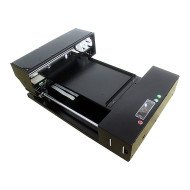
Assessing the Gap Between DIY and Industrial-Grade Headstone Photo Printers

The Industrial Reality of Headstone Printing
The headstone photo printer industry faces unique challenges, primarily due to the need for precision and durability in harsh outdoor environments. Industrial-grade printers, unlike their DIY counterparts, are engineered to produce high-resolution images on materials like granite and marble. These printers must also withstand environmental factors such as temperature fluctuations, humidity, and UV exposure. In this scenario, the objective is to dissect the limitations and advantages of industrial-grade photo printers specifically designed for tombstones.
The Technical Deep-Dive
Precision Output and Resolution
Industrial-grade headstone photo printers achieve resolutions up to 1440 dpi, crucial for rendering detailed portraits and inscriptions on stone. The precise deposition of ink droplets, often as small as 2 picoliters (pl), ensures clarity and longevity of the images.
Substrate Compatibility
These printers can handle various substrates, including granite and marble, due to robust ink formulations and precise thermal controls. Unlike DIY solutions, industrial printers are equipped with advanced substrate handling systems, ensuring even ink distribution and reducing error rates.
Durability and Environmental Resistance
Industrial printers use UV-resistant inks that withstand fading. The encapsulation technology protects against moisture and other environmental hazards, providing a service life of five to ten years under typical conditions.
Operational Efficiency
Industrial models typically feature automated maintenance schedules, reducing downtime. Despite higher initial costs, the total cost of ownership is lower due to reduced labor and maintenance needs.
Cost-Effectiveness Analysis
| Feature | DIY Printers | Industrial Printers |
|---|---|---|
| Initial Cost (USD) | 500 - 1000 | 20,000 - 50,000 |
| Resolution (dpi) | 600 | 1440 |
| Durability (years) | 1-2 | 5-10 |
| Annual Maintenance (hours) | 50 | 12 |
Scenario Analysis
Case Study 1: A Small Monument Company
For a small company producing custom headstones, the upgrade from DIY to industrial-grade printers resulted in a 40% increase in output quality, leading to higher customer satisfaction and repeat business.
Case Study 2: Large-Scale Memorial Projects
In large projects, the automated features of industrial printers reduced production time by 30%, significantly impacting project turnaround and cost efficiency.
Case Study 3: Artisan-Driven Custom Designs
Artisans focusing on unique designs found the enhanced resolution and substrate versatility of industrial printers allowed for more intricate engravings, expanding their service offerings.
Expert FAQ
How do industrial printers manage different stone materials?
Advanced substrate detection and calibration systems adjust the printing parameters to accommodate different hardness levels and absorbency of stone materials.
What role do UV-resistant inks play?
UV-resistant inks prevent fading from sunlight, significantly extending the lifespan of printed images.
Why is higher dpi important?
Higher dpi levels ensure finer detail and clarity, essential for replicating photographs and intricate designs accurately.
Are industrial printers more cost-effective in the long run?
While the initial purchase cost is higher, lower maintenance and reduced downtime make them more cost-effective over time.
How do temperature variations affect printer performance?
Built-in thermal management systems maintain consistent performance across a range of temperatures, ensuring reliable operation.
Strategic Verdict
The gap between DIY and industrial-grade headstone photo printers is significant, both in capabilities and long-term value. As technology advances, these printers are expected to become even more specialized, with enhanced automation and material compatibility driving further distinctions. Investing in industrial-grade solutions will likely yield operational efficiencies and superior product quality, positioning companies ahead in a competitive market.