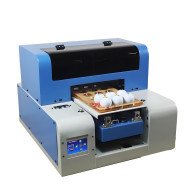
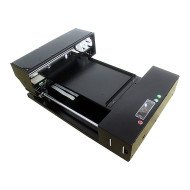
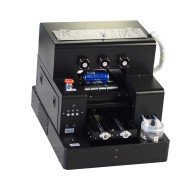
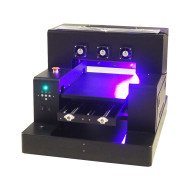
Analyzing the Gap Between DIY and Industrial-Grade Headstone Photo Printers for High-End Artisans
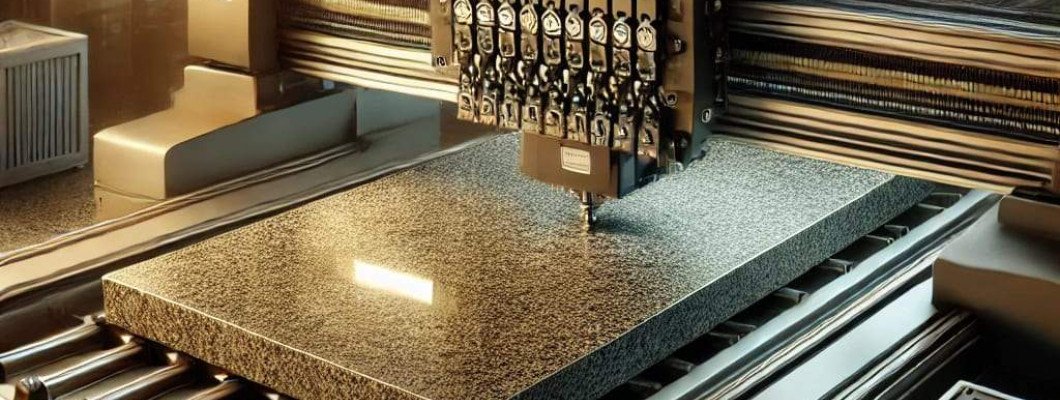
The Industrial Reality of Headstone Photo Printing for High-End Artisans
In the specialized domain of headstone photo printing, achieving micron-level precision and unparalleled color depth presents unique challenges. High-end artisans working with tomb photo printers face a distinct boundary: the contrast between DIY hobbyist equipment and industrial-grade machinery. The specificity required for engraving or printing high-fidelity images on stone substrates means that conventional printing technologies frequently fall short. Unlike standard photo printing on paper or flexible materials, headstone photo printers must contend with the porosity, roughness, and thermal sensitivity of granite, marble, or other stone types. This poses a multifaceted problem involving precision mechanics, ink chemistry, and environmental conditions within the print environment.
For artisan studios scaling their operations, the shift from lower-tier desktop printers toward specialized industrial-grade hardware involves more than just performance metrics. It implicates a slew of factors: micron-level nozzle accuracy, UV stability of inks, abrasion resistance of prints, and the ability to handle thick, irregular substrates without compromising output consistency. The operational environment, including temperature and humidity controls, further complicates reliable print reproduction. High-end artisans must balance throughput with absolute fidelity to image detail, color accuracy, and longevity under outdoor exposure.
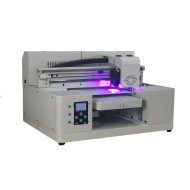
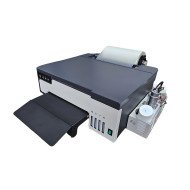
The line between DIY solutions and industrial printers is not merely a question of size or price; it is rooted in the fundamental hardware architecture and process engineering. Industrial-grade printers incorporate advanced printhead technology capable of maintaining droplet size precision often under 10 picoliters, sophisticated substrate transport mechanisms, and closed-loop environmental feedback systems. By contrast, many entry-level or DIY approaches rely on repurposed inkjet or laser printers lacking adequate software control for color profiling or automated substrate handling, yielding inconsistent, lower-quality results.
Maintaining micron-level precision is particularly critical for black-and-white gravure-style images commonly requested in headstone photo printing. Variance beyond 20 microns per print layer results in noticeable blurring or distortion, which is unacceptable in the memorial context. High-end artisans therefore seek printers that support sub-600 dpi resolution with reliable droplet placement algorithms and expanded grayscale levels. This technical demand drives the gap further, delineating industrial-grade machines that can sustain this output within practical production cycles from DIY units limited to occasional, low-volume runs.
Technical Deep Dive into the Headstone Photo Printer's Precision and Versatility
Printhead Technology and Droplet Control
At the core of industrial headstone photo printers is piezoelectric inkjet printhead technology. These printheads can eject ink droplets in the range of 1.5 to 10 picoliters (pl) with nozzle diameters averaging 25 to 40 micrometers (μm). The physics governing droplet ejection involves precise voltage pulses generating mechanical deformation of the piezo element, forcing ink expulsion. Maintaining sub-10 μm lateral nozzle alignment over the printhead array is critical to avoid banding artifacts.
Comparing two printhead models commonly used in industrial printers:
| Feature | Model A: 1024 Nozzle Array | Model B: 2048 Nozzle Array |
|---|---|---|
| Nozzle Diameter (μm) | 32 | 28 |
| Droplet Volume (pl) | 8 | 4 |
| Max Resolution (dpi) | 600 | 1200 |
| Max Print Speed (cm/s) | 30 | 45 |
| Thermal Management (Watts/nozzle) | 0.05 | 0.07 |
Ink Chemistry and Material Compatibility
Ink formulations must be optimized for longevity, UV resistance, adhesion, and substrate compatibility. Industrial printers employ ceramics-based pigment dispersions suspended in UV-curable resin matrices, ensuring rapid curing and resistance to weathering. Ink viscosity is tightly controlled between 10-15 cP to maintain jetting reliability. Additionally, substrate pre-treatment using plasma or corona discharge enhances adhesion on stone materials.
Substrate Handling and Transport Systems
Unlike flexible materials, stone substrates weigh several kilograms and have uneven surfaces. Industrial-grade printers integrate servo-controlled vacuum platens and multi-axis X-Y transport systems with positional repeatability below 10 microns. Load capacity typically supports stone slabs up to 30 kg, with thickness variability up to 50 mm. This contrasts sharply with DIY systems that rely on manual placement, risking misalignment and print inconsistency.
Environmental Controls
Temperature and humidity impact ink curing and printhead reliability. Industrial printers feature enclosed chambers with active climate regulation maintaining 20–25 °C temperature and relative humidity between 40–50%. This environment stabilizes droplet formation physics, reducing clogging and ensuring repeatable color density. DIY units lack such controls, increasing failure rates and color shifts.
Software and Color Management
Advanced RIP (Raster Image Processor) software integrates ICC profiles specific to stone substrates and ink types. It compensates for non-linear substrate absorption and enables up to 16-bit grayscale rendering per color channel. This software-driven precision is essential for delivering smooth tonal gradients and accurate monochrome images, which are hallmarks of high-end artisan output.
Scenario Analysis of Three Business Use-Cases for Headstone Photo Printers
Use-Case 1: Boutique Artisan Memorial Studio
Requirements: Micron-level image fidelity, small batch sizes, diverse substrate types.
The boutique artisan prioritizes color depth and substrate flexibility over throughput. A printer with a 2048 nozzle array and 4-pl droplets enables nuanced grayscale images on varying granite types. However, the studio must accept slower print speeds (~30 cm/s) due to frequent media changes and manual handling. The environmental chamber is essential to maintain consistent curing.
Use-Case 2: Mid-Sized Regional Memorial Manufacturer
Requirements: Moderate throughput, cost-effective maintenance, long printhead life.
This manufacturer balances production volume with operational costs. A 1024 nozzle array printer with 8-pl droplets offers faster print speeds (~45 cm/s) but slightly reduced resolution. Lifecycle maintenance costs increase due to more frequent nozzle cleaning cycles and average ink consumption. However, the automated substrate handling reduces manual labor bottlenecks.
Use-Case 3: DIY Small Memorial Craftsperson
Requirements: Low CAPEX, limited technical infrastructure, sporadic use.
The DIY operator uses repurposed inkjet printers lacking substrate transport mechanisms or climate control. This restricts substrates to polished tiles and low-weight stones below 5 kg. Print resolution below 300 dpi results in lower image fidelity. The lack of closed-loop environmental controls increases ink drying failures and color inconsistencies, adversely impacting output quality and durability.
Expert FAQ on High-Precision Headstone Photo Printing
What is the minimum droplet size required to maintain acceptable grayscale fidelity on stone substrates?
Empirical studies indicate droplet sizes below 5 pl are necessary to render smooth tonal gradients without banding, especially in high-contrast black-and-white images.
How do surface irregularities of stone affect printhead nozzle alignment requirements?
Surface roughness exceeding 25 microns necessitates adaptive Z-axis compensation to maintain focus distance and prevent nozzle strikes, demanding advanced multi-axis control systems.
What ink curing technologies reduce thermal stress on printheads during prolonged operation?
UV LED curing is preferred over traditional mercury lamps due to lower heat output (typically 10-20 Watts per module) and targeted wavelength emission, enhancing printhead longevity.
How does substrate pre-treatment influence ink adhesion and image longevity?
Plasma treatments increase surface energy by 15-20%, substantially improving ink-substrate bonding strength, reducing potential delamination in outdoor weather conditions.
What maintenance protocols best mitigate nozzle clogging in high-density printheads?
Automated cyclic purging with solvent-based cleaning runs every 4-6 hours alongside real-time droplet monitoring significantly extends uptime in industrial settings.
Strategic Verdict on Headstone Photo Printer Technology for Artisans
The trajectory of headstone photo printing technology for high-end artisans distinctly favors industrial-grade machines integrating advanced printhead control, robust substrate handling, and precise environmental conditioning. The technical gap between DIY and industrial systems underscores the necessity for hardware-software co-design and rigorous process engineering. Future iterations will likely incorporate AI-driven printhead diagnostics and adaptive substrate compensation to further reduce manual intervention and improve print consistency. While DIY solutions remain suitable for entry-level experimentation, sustainable high-fidelity memorial production demands investment in specialized industrial platforms. This foundational understanding informs artisan decisions balancing CAPEX, OPEX, and output quality within their operational contexts.