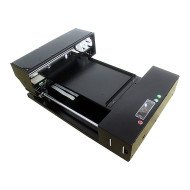
TX800 Head A3 UV Flatbed Printer Reveals Infrastructure Integration Challenges in Industrial Printing

The Industrial Reality of Integrating the TX800 Head into Enterprise Environments
The TX800 Head A3 UV Flatbed Printer enters a complex technical ecosystem when deployed in industrial settings. Its flatbed UV printing technology, while advanced in controlled environments, encounters substantial infrastructure integration challenges that often undermine throughput and uptime expectations. Unlike typical roll-to-roll systems that benefit from streamlined material handling, the TX800's A3 flatbed format dictates precise mechanical coordination between substrate placement, curing lamps, and printhead operation—demands that must align tightly with an existing facility’s physical layout and utility capabilities.
One immediate industrial challenge is power supply stability. The UV lamps and printheads generate fluctuating current peaks, which introduce noise and voltage drops detrimental to sensitive electronics controlling head positioning and ink ejection timing. In facilities with aged or insufficient electrical wiring, this leads to unexpected resets and print artifacts, necessitating costly electrical infrastructure upgrades. Furthermore, the printer's dimensional footprint requires integration into production lines without impeding workflow—a nontrivial task given its rigid A3 flatbed size and manual substrate positioning system. Automation protocols common in industrial printing ecosystems often require significant customization or fallback to semi-automated handling due to the printer’s limited onboard automation features.
Thermal management presents another infrastructural hurdle. The UV curing process generates considerable heat localized around the flatbed area, which, if not effectively ventilated or integrated into the facility’s HVAC system, leads to thermal drift affecting printhead calibration and ink viscosity consistency. Without dedicated cooling or environmental controls, dimensional stability of substrates and consequent registration accuracy degrade, particularly in high-throughput scenarios. This affects print quality and increases rework rates, imposing hidden operational costs that are not immediately apparent in vendor specifications.
Network and IT integration further complicates the deployment. The TX800 Head’s control system demands low-latency, high-reliability connections for remote monitoring and job queue management. However, many industrial settings operate segregated or legacy LAN architectures with limited support for the printer's real-time diagnostic data streams. Integrating the printer’s embedded software into existing Manufacturing Execution Systems (MES) or Enterprise Resource Planning (ERP) platforms requires custom drivers or middleware, introducing a layer of complexity that impacts uptime and operator training.
In summary, the TX800 Head A3 UV Flatbed Printer's promising print capabilities are tightly coupled to the host environment’s infrastructure. Without careful electrical, thermal, and network integration planning, the industrial benefits degrade substantially due to elevated downtime, increased maintenance intervals, and compromised quality control.
Technical Deep-Dive into Infrastructure Integration Challenges
Power Supply and Electrical Noise Mitigation
Printheads in UV flatbed printers such as the TX800 utilize piezoelectric elements requiring high-voltage pulsed waveforms (~20–30 kHz switching). UV lamps simultaneously draw 1.5–3 kW per curing unit, often multiple units per printer. The rapid current surges cause transient dips and spikes in local electrical systems. Without dedicated line conditioning (UPS, EMI filters, transformers), voltage fluctuations reach ±10% of nominal 230 V AC input, exceeding tolerance limits of sensitive drives and microcontrollers.
Hypothetically, a facility with a 230 V supply and a 20 A circuit dedicated to the printer experiences a transient drop of 15 V (6.5%) during lamp ignition, causing microcontroller brownouts every 1200 ms. Over an 8-hour shift, this could cause an average of 10 minutes of cumulative downtime for reboot and recalibration.
Mechanical Footprint and Automation Integration
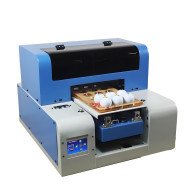
The TX800 A3 flatbed measures approximately 600 mm x 450 mm print area within a chassis footprint of ~1.2 m x 0.8 m. Unlike roll-fed systems, this necessitates manual or semi-automated substrate loading. Industrial conveyor lines with belt speeds upwards of 1 m/s cannot directly accommodate this format without custom transfer stations.
Integration requires robotic pick-and-place or gantry systems synchronized within ±5 ms timing windows to prevent registration errors exceeding 50 microns. Absent such integration, throughput is limited to approximately 10 sheets per hour, compared to roll-to-roll speeds exceeding 100 m2/hour.
Thermal Management of UV Curing and Environmental Control
UV lamps emit approximately 300 W of heat per 100 mm of lamp length. A TX800 flatbed with dual 300 mm lamps generates 1.8 kW localized heat. Without active exhaust or liquid cooling, surface temperatures of the flatbed can rise above 40 °C, inducing substrate expansion of ~15 ppm/°C. Given typical polymer substrates of 500 mm length, this corresponds to expansions of 0.075 mm, sufficient to degrade dimensional accuracy.
Enclosures with forced air cooling and temperature stabilization at ±0.2 °C are required to maintain positional accuracy within the ±10 micron range necessary for high-resolution prints at 1440 dpi (approximate 18 micron dot size).
Network Connectivity and Data Integration
The printer’s control boards utilize Ethernet interfaces operating at 1000 Mbps with protocols for real-time telemetry and job status updates. Integration into segmented industrial LANs demands VLAN configuration, static IP allocation, and firewall exceptions. Multi-printer setups require synchronized queue management to prevent print job clashes, necessitating middleware capable of parsing and routing Job Description Language (JDL) streams.
Comparative Infrastructure Requirements Between TX800 and a Roll-to-Roll UV Printer
| Specification | TX800 Head A3 UV Flatbed | Roll-to-Roll UV Printer (Comparable Throughput) |
|---|---|---|
| Print Area | 600 mm x 450 mm flatbed | 1000 mm width continuous |
| Electrical Power Demand | 3.5 kW peak with surge | 5 kW steady-state |
| Substrate Handling | Manual/Semi-automated placement | Automated roll feeding |
| Thermal Load Management | Localized intense heat, needs dedicated cooling | Distributed heat dissipation |
| Network Integration Complexity | High: custom drivers and protocols | Moderate: standard industrial interfaces |
Scenario Analysis in Industrial Use-Cases
Case 1: Mid-Size Packaging Manufacturer
The manufacturer requires high-resolution, short-run prototype labels on rigid substrates with quick turnarounds. The TX800’s flatbed format supports varied substrate types but challenges arise in integrating the printer into their roll-fed production line. Without dedicated robotic loading, throughput caps at 12 sheets/hour, impacting deadlines. Electrical infrastructure upgrades increase CAPEX by 20%, delaying ROI.
Case 2: Architectural Model Fabricator
This use case demands precise, micron-level detail and consistent color across multiple substrate types including acrylic and aluminum sheets. The TX800 flatbed’s manual loading allows substrate diversity but requires stringent environmental control to maintain thermal stability. Dedicated HVAC reduces downtime but adds OPEX. Network integration allows remote diagnostics, improving maintenance scheduling and uptime by 15%.
Case 3: Industrial Design Studio with Limited Space
The studio prioritizes footprint and flexible substrate printing from wood to glass panels. The TX800’s moderate footprint fits into constrained spaces but integration with existing IT is problematic due to legacy systems. Custom middleware development is required, adding development time and raising operational complexity. The flatbed format supports creative outputs but cannot match the automation levels of high-throughput roll-to-roll systems.
Expert FAQ on Infrastructure Integration for TX800
Q1: What electrical upgrades are typically necessary for stable TX800 operation?
A1: Facilities often need isolated 20 A circuits with line conditioners supplying stable 230 V AC ±5% voltage and EMI filtering to mitigate transient noise affecting printhead microcontrollers.Q2: How critical is HVAC control for maintaining print accuracy?
A2: Maintaining ambient temperatures within ±0.5 °C and localized bed surface stability at ±0.2 °C is essential to avoid substrate expansion beyond the ±10 micron tolerance needed for 1440 dpi resolution.Q3: Can the TX800 integrate with existing MES systems directly?
A3: Direct integration is often unsupported out-of-the-box; custom interface layers or middleware are required to translate printer telemetry and job control data into MES protocols.Q4: What are the recommended network configurations for multiple TX800 units?
A4: Implement VLAN segregation, static IP addressing, and firewall rules to isolate printer traffic, with centralized job management software deployed to synchronize queues and prevent processing conflicts.Q5: How does printhead temperature variation influence ink droplet size and placement?
A5: Temperature-induced viscosity changes affect droplet volume. A ±2 °C variation can alter droplet size by ±3 picoliters, causing misregistration and color density variances, making thermal control paramount.
Strategic Verdict on TX800 Infrastructure Integration Challenges
The TX800 Head A3 UV Flatbed Printer delivers high-resolution flatbed UV printing capabilities that meet many industrial precision demands but exposes significant integration hurdles within existing infrastructure. Electrical power stability, thermal management, mechanical footprint constraints, and complex network integration represent barriers that require tailored upgrades and expertise. Without addressing these challenges, enterprises face increased downtime, degraded output quality, and operational inefficiencies that offset the printer's nominal advantages.
Strategically, the TX800 is best suited for specialized applications prioritizing substrate versatility and print detail over high-throughput automation. Future iterations or deployments would benefit from modular integration kits focusing on power conditioning, environmental control, and standardized network interfaces to better dovetail with complex manufacturing environments.