Tracking Invisible Costs and Operational Complexities of the A3 Roll DTF Printer T-shirt Printing Machine
The Industrial Reality
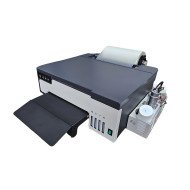
Adopting an A3 Roll DTF Printer for T-shirt production confronts businesses with a nexus of hidden operational costs that extend far beyond the initial capital outlay. Consider a mid-sized garment printing workshop transitioning from manual DTG to this industrial-format DTF technology. While the allure of roll-to-roll operation and direct-to-film print fidelity promises higher throughput and substrate versatility, unexpected complexities surface rapidly. These include elevated electricity consumption due to continuous heat press curing cycles, incremental wear on thermal printheads exacerbated by abrasive pigment inks, and nuanced maintenance requirements that demand skilled technician intervention rather than simple operator upkeep. Such factors cumulatively escalate operational expenditures, challenging profitability and often disrupting projected ROI timelines.
In one scenario, throughput targets aimed at 150 shirts per 8-hour shift faltered due to recurring downtime linked to frequent nozzle clogs—a complication invisible in product datasheets but pivotal in workflow reliability. The necessity for specialized cleaning agents and increased human supervision emerged as significant cost centers, dwarfing anticipated expenses for consumables alone. Further, the energy profile of the heated roller system used for film adhesion can impose substantial incremental loads on facility power infrastructure, necessitating upgrades or operational compromises during peak usage periods. These realities underscore the importance of holistic cost modeling when assessing the viability of integrating A3 Roll DTF printers into production pipelines.
Technical Deep-Dive
Printhead Wear Dynamics and Ink Interaction
The A3 Roll DTF Printer typically employs piezoelectric printheads with nozzle diameters around 12 pl to achieve fine droplet dispersion. However, pigment-laden DTF inks contain polymeric particles that induce accelerated mechanical wear on nozzle plates. The cumulative abrasion effect reduces mean time between failures (MTBF) to approximately 1200 operational hours compared to 2500+ hours for aqueous dye-based inks. This discrepancy necessitates more frequent printhead replacements or refurbishments, each costing between $800-$2500, depending on vendor and technology generation.
Electricity Consumption and Thermal Management
Continuous operation of the thermal curing unit, which maintains film adhesion temperatures between 140-160°C, imposes an average power draw of 2000 Watts per hour. Over a standard 8-hour shift, this equates to approximately 16 kWh, translating to roughly 2.4 USD per day at industrial tariff rates near 0.15 USD per kWh. Factoring in auxiliary fans and control electronics adds an incremental 0.5 kWh per shift.
Substrate and Film Roll Handling Limitations
The maximum roll width capped at approximately 330 mm affects scaling operations. While suitable for A3-sized printing, larger format requirements necessitate multiple passes or equipment reconsideration, impacting throughput and increasing labor touchpoints. Additionally, tension control mechanisms are integral to preventing film wrinkling or misregistration but introduce complexity in mechanical calibration—a maintenance task prone to operator error.
Comparative Table of A3 Roll DTF Printer versus Flatbed DTF Systems
| Dimension | A3 Roll DTF Printer | Flatbed DTF Printer |
|---|---|---|
| Max Print Area | 330 mm width x continuous length | 600 mm x 900 mm fixed |
| Throughput | Up to 150 shirts/8h (with ideal conditions) | Up to 90 shirts/8h |
| Power Draw | Approx. 2.5 kW continuous operation | Approx. 1.8 kW peak, variable |
| Maintenance Complexity | High (roll tension, printhead wear) | Moderate (flat platen cleaning) |
| Consumable Cost | Higher (specialized film rolls, ink waste in frequent cleaning) | Lower (sheet-based film, easier waste management) |
Ink Chemistry and Drying Kinetics
DTF pigmented inks require precursors and adhesives that polymerize upon heat transfer, contrasting with DTG water-based inks. Drying kinetics depend on heat press temperature and dwell time, with optimal ranges narrowly defined between 140-155°C for 15-25 seconds. Deviations reduce adhesion strength or increase film curl, impacting final print durability and necessitating rigorous process control.
Scenario Analysis
High-Volume Sportswear Manufacturer
For businesses targeting 300+ garments daily, the A3 Roll DTF printer offers continuous printing benefits but demands concurrent investment in power infrastructure and automated film handling. Cost savings on labor from roll feed automation are offset by consumable and maintenance expenditures, requiring precise scheduling to avoid bottlenecks in nozzle clog cleaning cycles.
Small Boutique Custom T-shirt Shop
Smaller operators benefit from the printer's compact footprint and ability to maintain high color fidelity on polyester blends. However, the relatively narrow print width limits the design scale, and frequent shifts in substrate types necessitate recalibrations that increase downtime and waste, marginally impacting profit margins.
Mid-Tier Print Service Provider
A service provider balancing custom orders with batch printing faces challenges in maintaining uptime with the printer's maintenance demands. The variable power draw and thermal curing cycle complexity require process automation integration and advanced operator training to minimize operational disruptions.
Expert FAQ
How does printhead nozzle clogging affect operational uptime?
Nozzle clogging reduces print quality and necessitates cleaning cycles that can consume 15-30 minutes per incident. With an average of two clogs per day, total downtime may reach 1 hour, representing over 12% of active printing time.
What are the implications of continuous thermal curing on power budgets?
Continuous 2 kW heat press operation leads to significant power consumption, often requiring dedicated circuits or power management strategies to avoid facility overloads or downtime during peak periods.
How critical is film tension calibration?
Incorrect tension causes film wrinkling and misalignment, degrading print quality and increasing waste. Fine-tuning requires calibrated torque systems and frequent operator verification.
How do the consumable costs compare to flatbed systems?
Roll film consumables typically present higher costs due to specialized coatings and larger volume usage, compounded by increased ink waste during cleaning cycles.
Can the printer handle varied substrate types without significant recalibration?
No. Substrate variation often necessitates different curing profiles and printhead adjustments, increasing downtime and requiring skilled operators to maintain consistency.
Strategic Verdict
The A3 Roll DTF Printer introduces a potent but complex production modality for textile printing. While it achieves throughput improvements and enhanced substrate versatility relative to flatbed alternatives, the intersection of heightened maintenance demands, elevated energy consumption, and consumable costs poses significant challenges to operational efficiency. Future iterations must address printhead longevity and integrate adaptive thermal management to reduce total cost of ownership. For entities considering this technology, rigorous operational cost tracking coupled with workflow optimization is paramount to aligning productivity goals with financial sustainability.