The Operational Bottlenecks of A3 Spot UV Printing Machines in High-Precision Enterprise Environments
The Industrial Reality of Spot UV Printing Under Operational Stress
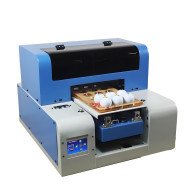
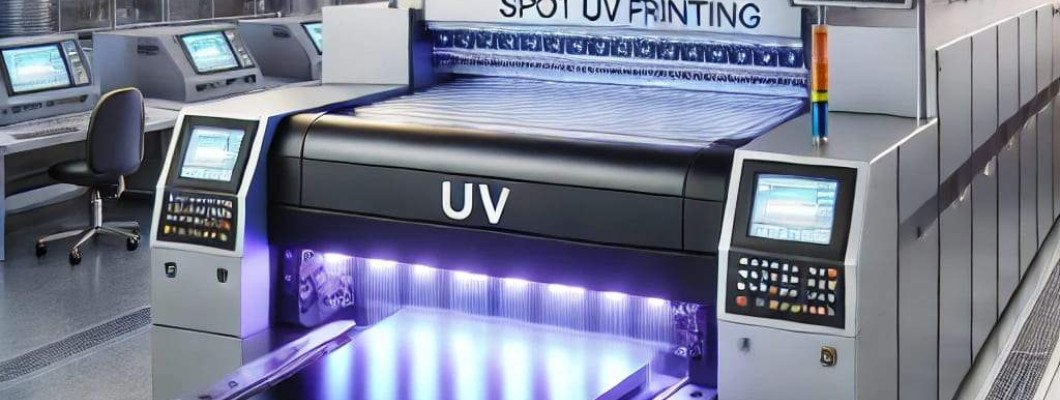
The deployment of A3 Spot UV printing machines within industrial-grade print environments reveals significant operational complexities, frequently underestimated during initial procurement phases. The challenge emerges when integrating the UV coating process into high-throughput workflows where precision, repeatability, and uptime are critical. Operators commonly face bottlenecks such as inconsistent UV curing, substrate warping from uneven coating, and throughput delays caused by drying cycle dependencies. Industrial printers handling variable stock dimensions and finishes are particularly susceptible to operational interruptions stemming from misalignments between coating application speed and UV lamp intensity.
Consider a mid-sized commercial print facility processing average batch sizes of 500 to 1,000 sheets per shift. A suboptimal curing cycle misaligns with the machine's conveyor speed, causing bottlenecks that escalate downtime by 15-20%. The bottleneck effect compounds in multi-step finishing lines where the Spot UV coating stage must synchronize with preceding and subsequent processes such as laminating or embossing. These synchronization issues are often due to a limited integration capability of the UV printer’s control systems with existing industrial automation infrastructure.
Additionally, the machine's operating environment—ambient temperature, humidity, and airborne particulate matter—plays a nuanced role in coating consistency. Spot UV printers, while designed for controlled conditions, face diminished uniformity in open or insufficiently climate-controlled spaces, triggering dry time variability and rework rates as high as 8-10%. These operational realities frame the necessity for analyzing bottlenecks beyond the consumer-grade perspective and into the industrial-grade performance envelope.
Technical Deep-Dive into Operational Constraints
1. UV Curing Kinetics and Coating Uniformity
UV coating curing is governed by photoinitiator reaction kinetics with intensity typically measured in mW/cm2. The A3 Spot UV machine employs mercury vapor or LED UV lamps with nominal intensities ranging from 1000 to 2000 mW/cm2. However, the actual curing energy (E) delivered is a function of intensity (I) multiplied by exposure time (t), i.e., E = I × t, measured in mJ/cm2. In high-speed operations, exposure time is constrained by conveyor velocity, often ≤ 1 m/s, resulting in actual energy delivered falling below the photoinitiator activation threshold (~300 mJ/cm2), causing under-cured spots and adhesion failures.
2. Substrate Deformation Dynamics
The localized thermal gradient induced by UV lamp irradiation introduces mechanical stress within substrates, typically paper or coated card stock between 150-250 gsm. Thermal expansion coefficients (α) for paper range from ~20 to 40 ×10-6 /°C. Temperature spikes of 50-70°C in the curing zone cause transient expansion, warping the sheet by up to 0.5 mm over 300 mm length, compromising registration and print-to-coat alignment precision.
3. Conveyor Speed Versus Curing Energy Trade-offs
Operational throughput is linearly dependent on conveyor belt speed (v). Increasing v reduces dwell time (t), decreasing curing energy exponentially impacts coating integrity. Optimization requires balancing v to maintain E > 300 mJ/cm2. For example, at I = 1500 mW/cm2, maintaining t ≥ 0.2 s demands v ≤ 0.5 m/s. Speeds exceeding these parameters drive quality degradation.
4. Integration Challenges with Industrial Automation
Modern print lines employ PLC or SCADA systems for operational synchronization. The A3 Spot UV printer’s native control interface frequently requires protocol adaptation (e.g., OPC-UA, Modbus TCP) through middleware or custom firmware enhancements. Failure to integrate results in reactive rather than predictive operational states, increasing bottlenecks from unexpected stoppages or misaligned cycle times.
5. Environmental Control and Contamination Mitigation
Particulate contamination on the coating surface causes minute defects exacerbated by high gloss finishes in Spot UV applications. Particles as small as 10 µm introduce surface irregularities affecting visual and tactile quality. Maintaining ISO 14644-1 class 7 cleanliness within the printing area reduces defect rates by approximately 60%. Temperature and relative humidity control, ideally within 20-24°C and 40-50% RH, stabilize coating rheology and drying kinetics.
| Parameter | Consumer-Grade Spot UV Printer | Industrial-Grade A3 Spot UV Printing Machine |
|---|---|---|
| UV Lamp Intensity (mW/cm2) | 500-1000 | 1000-2000 |
| Conveyor Speed (m/s) | 0.2-0.4 | 0.5-1.0 |
| Substrate Thickness Range (gsm) | 100-150 | 120-300 |
| Integration Protocols | Proprietary | OPC-UA, Modbus TCP (Adaptable) |
| Cleanroom Class | Not specified | ISO 14644-1 Class 7 target |
Scenario Analysis Across Business Use Cases
High-Throughput Commercial Print Shop
A commercial print shop running 24-hour shifts prioritizes throughput exceeding 15,000 sheets per day. The A3 Spot UV printer’s bottleneck arises from curing speed mismatches, requiring conveyor speed throttling to 0.5 m/s to maintain spot cure quality, reducing potential throughput by 30%. Integration with upstream digital presses demands frequent calibration cycles, increasing labor overhead.
Specialty Packaging Manufacturer
Packaging producers relying on tactile finishes for brand differentiation face challenges in substrate variability. The thermal expansion impact is magnified in coated paperboard stock (~300 gsm), necessitating slow machine speeds and enhanced environmental controls. The lack of native protocol integration complicates coordination with automated die-cutting lines, creating queue buildups and operational idle times.
In-House Corporate Print Facility
Internal print production typically leverages the machine for limited batch sizes under 1,000 sheets per job. Here, bottlenecks manifest as downtime related to maintenance of UV lamp efficacy and particulate control, directly affecting turnaround time and margin control. Capital expenditure constraints limit environmental upgrade investments, increasing defect rates.
Expert FAQ on Industrial A3 Spot UV Printing
What are the primary failure points in UV curing at industrial speeds?
Under-cured regions due to insufficient energy density, photoinitiator depletion, and non-uniform lamp intensity distribution create adhesion failures and coating cracking.
How does substrate thickness variation influence curing dynamics?
Thicker substrates absorb and dissipate heat differently, causing localized curing inconsistencies and increased warpage risks impacting print registration.
What are viable solutions for integrating A3 Spot UV printers with existing PLC/SCADA systems?
Middleware translation layers supporting OPC-UA or Modbus TCP and firmware customization for real-time status signaling are recommended to achieve seamless line synchronization.
Can LED UV lamps replace mercury vapor lamps without throughput loss?
LED lamps provide spectral specificity and reduced heat but generally offer lower peak intensities, requiring process adaptation including reduced conveyor speed or multi-pass curing strategies.
How critical is environmental control for spot UV coating consistency?
Maintaining standardized temperature and humidity limits alongside particulate filtration is essential to reduce defects and maintain coating surface integrity.
Strategic Verdict on A3 Spot UV Printing Technology in Industrial Contexts
A3 Spot UV printing machines offer a technically capable solution for high-precision coating tasks but reveal intrinsic operational bottlenecks when scaled to industrial output rates. UV curing kinetics impose hard limits on conveyor speed, mandating trade-offs between throughput and coating quality. Integration complexities with industrial automation infrastructure hinder seamless workflow synchronization, inflating labor and operational costs. Environmental sensitivity further constricts performance envelopes, requiring dedicated climate and contamination control investments. Future trends point toward LED UV source optimization and enhanced firmware-based integration capabilities, but present implementations demand rigorous operational discipline and process engineering to mitigate bottleneck effects.