Smart Coffee Printer Machine Performance Versus Operational Limits for Scalable Business Owners
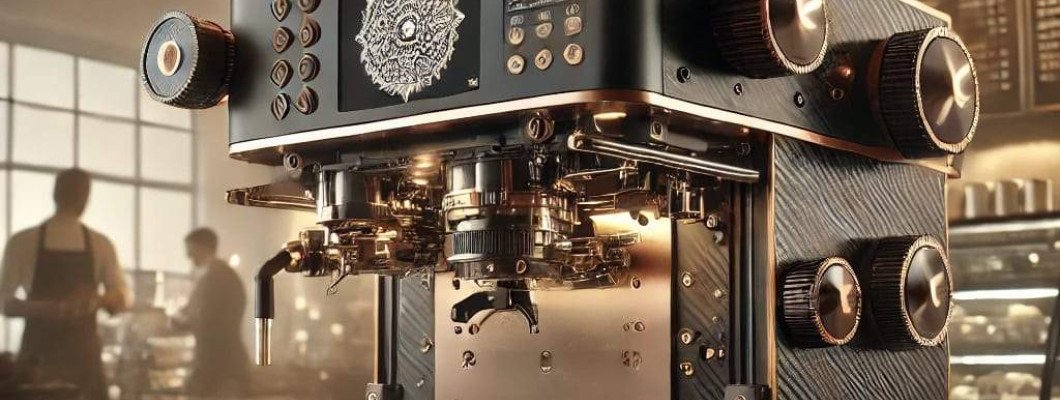
The Industrial Reality of Integrating Smart Coffee Printers at Scale
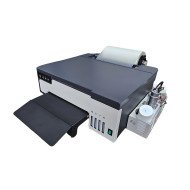
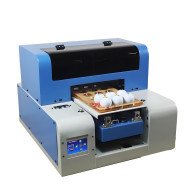
The deployment of Smart Coffee Printer Machines in high-throughput commercial environments surfaces critical operational challenges that directly influence throughput, labor costs, and overall efficiency. Unlike conventional coffee makers, these machines integrate advanced printing mechanisms to deposit precise, customizable crema art on beverages, introducing new mechanical and process constraints that do not align neatly with traditional coffee production workflows.
Consider a bustling café aiming to serve 250 beverages per hour. The Smart Coffee Printer's print cycle—including image processing, printing, and coffee preparation—introduces a latency component absent in standard espresso machines. Factoring in mechanical movement limits, printhead refill cycles, and curing time of the edible ink or foam, the printer’s operational ceiling becomes a bottleneck if not thoroughly analyzed. Additionally, automation synchronization complexity increases labor cost economics, as staff must manage both coffee brewing and print calibration to avoid downtime.
Thermal management within the printer’s electronics and printheads also becomes a concern at scale: continuous operation raises device temperature, impacting printhead longevity and precision, leading to quality degradation over long shifts. The interplay between print resolution requirements, speed, and printer maintenance cycles must be rigorously mapped into operational strategy to maximize asset utility.
Technical Deep Dive into Hardware Capabilities and Operational Boundaries
Printhead Mechanics and Resolution Limits
Smart Coffee Printer Machines typically use piezoelectric inkjet technology adapted for food-safe edible inks or foam deposition. Printhead nozzles operate at diameters around 20-40 microns, delivering droplets sized roughly 5-10 picoliters (pl). The technical challenge is balancing droplet size and firing frequency to maintain high-definition imagery without compromising cycle time. The maximal nozzle firing frequency often peaks near 20 kHz, but practical throughput limits reduce this to 10-15 kHz due to fluid dynamics and coffee substrate absorption.
Thermal Load and Printhead Longevity
Continuous printhead operation generates heat influenced by firing frequency, ambient temperature, and duty cycle. Assuming a 12 W heat dissipation per printhead during peak usage, the thermal resistance of the printhead assembly (~1.5 K/W) leads to a junction temperature increase of approximately 18 °C above ambient. Sustained high temperatures accelerate piezoelectric material fatigue, reducing mean time between failure (MTBF) to approximately 5,000 hours under continuous operation versus rated lifespans of 10,000+ hours in optimized duty cycles.
Cycle Timing Constraints and Throughput Calculations
Assuming a print area of 60 mm diameter on a coffee surface and 600 dpi resolution (dots per inch translates to ~24 dots per mm), a single print requires approximately 45,000 pulses (π * (30 mm)^2 * (24 dots/mm)^2). At 15 kHz firing rate, ideal print time is 3 seconds per cup. Adding preparation and curing time (approx. 12 seconds per beverage) yields a practical output rate of 4.3 beverages per minute or 258 cups per hour, closely aligning with high-demand scenarios but with minimal operational margin.
Data Processing and Software Integration Overheads
High-resolution image processing for dynamic coffee art requires onboard or edge compute resources optimized for rapid rasterization and printhead command generation. Latency analysis shows that basic pattern loading takes 0.5 to 0.8 seconds, with buffer communication overhead around 0.2 seconds, summing up to nearly 1 second of pre-print idle time. This delays print start sequences and influences labor task scheduling.
Maintenance and Consumable Replacement Cycles
Ink or edible foam cartridges require replacement every 2,000 to 3,000 prints, depending on pattern complexity and coverage. Printhead cleanings are scheduled every 500 prints to avoid nozzle clogging, which on average takes 2 minutes of downtime. These scheduled maintenance windows create operational interruptions that scale with throughput demands and impact labor allocation and cost modeling.
| Parameter | High-Resolution Mode | High-Throughput Mode |
|---|---|---|
| Print Resolution (dpi) | 600 | 300 |
| Print Time per Cup (seconds) | 3 | 1.5 |
| Max Cups per Hour | 258 | 516 |
| Printhead Heat Dissipation (W) | 12 | 8 |
| Maintenance Downtime (per 500 prints) | 2 mins | 1 min |
| Ink Consumption (ml per 100 prints) | 15 | 10 |
Scenario Analysis of Business Use-Cases and Impact on Efficiency
Independent Café with Moderate Volume
In an operation targeting 100 cups per hour, the Smart Coffee Printer’s current throughput comfortably meets this demand in high-resolution mode with manageable maintenance schedules. Labor cost impact is minimized as downtime windows can be integrated into standard shift breaks. This scenario prioritizes image fidelity over speed due to customer experience focus.
High-Volume Urban Coffee Chain
Serving 500+ cups per hour requires switching operational modes to high-throughput with reduced resolution. Thermal management strategies such as intermittent cooling cycles or additional ventilation racks are essential to maintain printhead reliability. Labor costs increase due to constant maintenance and monitoring, necessitating careful scheduling to prevent bottlenecks.
Event Catering and Mobile Coffee Services
These scenarios demand flexible deployment with limited infrastructure support. Power consumption constraints and limited operator availability force a balance favoring reliability and low maintenance. Reduced print area or simpler designs speed print times but limit branding or customer engagement potential.
Expert FAQ Addressing Critical Operational Queries
Q1: How does print resolution impact thermal stress on components?
Higher resolution demands more nozzle firings per print area, increasing power dissipation and junction temperature. This accelerates thermal fatigue and requires enhanced cooling solutions.
Q2: Can firmware optimizations reduce print cycle times significantly?
Optimizations around data buffering and nozzle firing sequencing can trim latency by up to 20%, but are limited by physical fluid dynamics constraints.
Q3: What are the failure modes associated with edible ink stability?
Ink drying inconsistencies cause nozzle clogging and pattern distortion. Maintaining humidity and temperature is vital to stable output.
Q4: How does substrate variability (milk foam vs standard crema) affect print quality?
Variable surface tension and texture change ink absorption and droplet spreading, requiring adaptive printhead pressure controls.
Q5: What infrastructure modifications support scaling printer deployments?
Upgrading electrical supply for stable voltage, adding environmental controls for temperature and humidity, and implementing remote monitoring are essential.
Strategic Verdict on Smart Coffee Printer Technology Trajectory
Smart Coffee Printer Machines integrate novel printing technology into beverage service with clear benefits for customization and branding. However, operational constraints in thermal management, print cycle timing, and consumable maintenance limit throughput scalability in high-demand environments. Future iterations will need targeted hardware improvements, such as advanced cooling and higher durability printheads, alongside software enhancements focusing on print cycle optimization and predictive maintenance to align with enterprise-grade throughput requirements. The balance between image fidelity and speed will remain a key operational consideration, especially for scalable business owners prioritizing throughput and cost efficiencies.