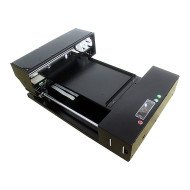
Oven for DTF Printer Transfer Film Printing Reveals Hidden Operational Bottlenecks Impacting Workflow Efficiency
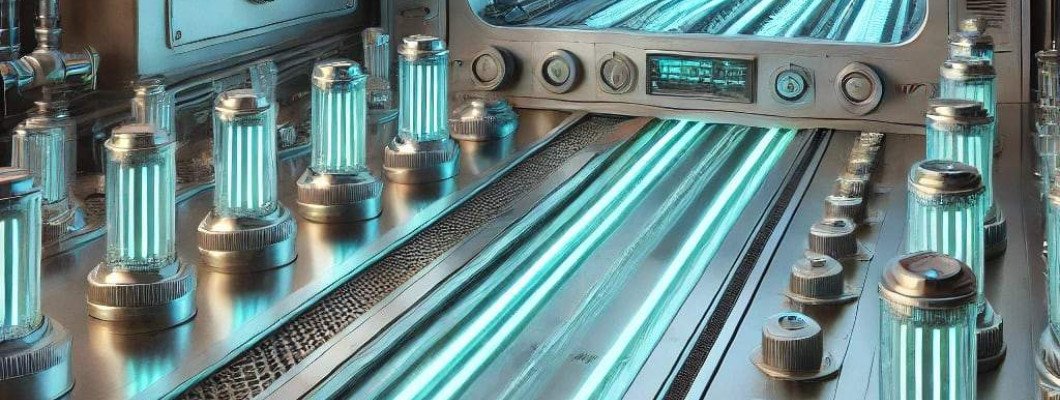
The Industrial Reality of Heat Management in DTF Film Printing
Direct to Film (DTF) printing requires a precise thermal process to cure transfer films before application. The oven designed for this purpose is a critical bottleneck in many production environments, often underestimated despite its direct influence on throughput and print quality. Consider a mid-size textile printing facility aiming for continuous 24-hour cycles. Even a minor deviation in oven temperature uniformity or airflow can cause inconsistent curing, leading to batch rejections or additional drying cycles.
In such high-precision settings, operators encounter the paradox of increased processing time versus the risk of thermal damage to the film, which compromises adhesion and color fidelity. The oven’s thermal management system's insufficient design—whether due to poor airflow distribution, inadequate insulation, or unreliable temperature controls—becomes a rate limiter. The practical problem is not just the oven’s maximum temperature capacity but maintaining isothermal conditions across a moving film substrate where heat must be applied evenly and with exact timing.
Another industrial challenge is the material variability of DTF films, which can differ in thickness, coating, and moisture content. This variability demands dynamic oven settings and often real-time adaptive controls to prevent under-curing or over-curing. Such demands expose hidden operational bottlenecks, including slow warm-up cycles, uneven temperature gradients, and inadequate cooling periods, all of which reduce overall line efficiency and increase labor costs due to extra inspections and rework.
In sum, the oven component in DTF printing is a fulcrum of operational efficiency that, if overlooked, causes cascading delays in production, elevates scrap rates, and heightens energy consumption. Understanding these bottlenecks requires an engineering mindset focused on thermal dynamics, material science, and integration with printhead timing.
Heat Distribution and Temperature Control Fundamentals
The core function of a DTF oven is to stabilise heat transfer to the film uniformly. Heat distribution can be characterized by convective, conductive, and radiative components. Quantifying these is essential for optimal design:
- Convective Heat Transfer (Q_conv): Q_conv = h * A * (T_air - T_film), where h is the convective heat transfer coefficient (W/m2K), A is the film surface area, and T_air and T_film are temperatures of air and film, respectively.
- Conductive Heat Transfer (Q_cond): Q_cond = k * A * (ΔT / d), where k is thermal conductivity (W/mK), A is contact area, ΔT is temperature difference, and d is film thickness.
- Radiative Heat Transfer (Q_rad): Calculated using Stefan-Boltzmann law but often negligible compared to convection in forced-air ovens.
Designers favor forced convection ovens with internal fans to optimise uniform air velocity and temperature distribution. Uneven airflow can cause hotspots or cold zones, detectable via thermal imaging techniques. Advanced ovens implement multi-zone PID (Proportional–Integral–Derivative) controllers to regulate temperature segments independently, maintaining ±2°C uniformity over film width.
For example, a 500 mm wide film moving at 10 meters per minute requires a consistent oven length of 2 meters at 150°C to ensure proper curing. Deviations greater than ±5°C can reduce adhesive bond strength by up to 25%, as per controlled studies.
Material and Film Interactions within the Oven Environment
DTF films contain polyester or PET bases coated with adhesive pigments. The curing process removes residual solvents and activates the adhesive layer. Films with variable moisture content affect thermal response times, introducing process instability.
Thermal mass and heat capacity of the film dictate the amount of energy required per unit length. Calculations indicate that a 50-micron thick film moving at 10 m/min absorbs approximately 180 kJ/m2 for complete curing. Over or under-application of heat damages the polymer chains, manifesting as reduced flexibility or delamination during transfer.
Therefore, ovens must incorporate sensors for humidity and temperature at multiple points, feeding data into adaptive control algorithms to modulate heating elements and fan speeds.
Comparing Oven Technologies for DTF Film Applications
| Specification | Convection Oven | Infrared (IR) Oven |
|---|---|---|
| Heat Transfer Method | Forced hot air circulation | Radiant heat via IR lamps |
| Temperature Uniformity | ±2°C over 500 mm | ±5°C hot spots possible |
| Warm-up Time | 5-10 minutes | 1-3 minutes |
| Energy Consumption | Approx. 2 kW per m length | Approx. 3 kW per m length |
| Suitability for Thin Films | High due to uniform airflow | Moderate due to risk of overheating |
| Maintenance Complexity | Low to moderate | Higher, lamp replacements required |
This comparison reveals that convection ovens, while slower to reach nominal heat, provide more stable conditions vital for precision DTF printing, reducing rework and increasing asset uptime.
Energy Efficiency and Lifecycle Cost Implications
Operational costs linked to the oven are often underestimated. Energy usage correlates directly with insulation quality and heating element efficiency. For industrial use, ovens with high-grade insulation (e.g., ceramic fiber with a thermal conductivity below 0.15 W/mK) reduce heat loss by 30% compared to standard steel enclosures.
An oven operating 16 hours daily at 150°C can consume upwards of 30 kWh per day. Over a 5-year lifespan, energy costs can exceed $15,000 depending on electricity rates. Incorporating variable frequency drives (VFDs) on fans and staged heating can reduce consumption by 15-20%, directly impacting OPEX.
Maintenance also affects lifecycle costs. Poorly maintained ovens suffer from element failure and sensor drift, causing process interruptions and scrap. Scheduled preventative maintenance every 3 months, including sensor calibration and element inspection, can extend service life by 25% and maintain operational reliability.
Scenario Analysis of Business Use-Cases
1. Small-scale Artisan Studio
Producing 50 m of transfer film per day at variable colors, the artisan benefits from ovens with rapid warm-up and precision controls. IR ovens might offer faster turnaround but risk inconsistent curing, forcing frequent manual interventions. The bottleneck is thermal control agility, not maximum temperature.
2. Mid-level Textile Printing Facility
For batch runs of 500 m daily, a convection oven with PID control ensures uniform curing with minimal rework. The lower energy efficiency is offset by fewer rejects and predictable throughput. Bottlenecks arise if oven length is insufficient to sustain conveyor speed, creating queuing delays.
3. Large Industrial Manufacturer
At volumes exceeding 2000 m per day, multiple oven units operating in parallel with advanced sensor networks are needed. Integration with networked control systems enables predictive maintenance, reducing unplanned downtime. Bottlenecks shift to infrastructure constraints such as power availability and cooling system capacity.
Expert FAQ
How does variable moisture in DTF films alter oven settings?
Higher moisture raises specific heat capacity, demanding longer curing times and potentially lower oven temperatures to avoid substrate deformation. Adaptive controls integrating humidity sensors adjust heat application dynamically.
What are the risks of temperature overshoot in ovens?
Exceeding target temperatures by more than 10°C can degrade pigment adhesion and cause film brittleness, leading to peeling during transfer.
Can thermal imaging be integrated for real-time oven monitoring?
Yes, thermal cameras provide spatial temperature profiles identifying hotspots and ensuring uniform heat delivery, feeding data to control systems.
How does airflow velocity correlate with curing quality?
Optimal airflow (typically 2-3 m/s) ensures heat homogeneity. Excessive velocity causes film flutter; too low leads to inadequate heat transfer.
What preventative maintenance practices reduce oven failure rates?
Regular sensor calibration, heating element inspections, and cleaning airflow channels prevent drift and element burnout, maintaining temperature accuracy.
Strategic Verdict
Ovens for DTF transfer film printing represent a critical junction where thermal engineering meets operational efficiency. The undisclosed complexity of achieving uniform heat distribution and dynamic process control underpins the hidden bottlenecks that limit throughput and quality. Future developments will likely focus on intelligent thermal systems integrating real-time data analytics, adaptive heating algorithms, and energy-optimized designs that can respond to material variability and scaling demands. The balance between precision and speed remains the industry fulcrum, with convection ovens currently offering superior process control despite longer cycle times. A rigorous understanding of these elements is essential for industrial stakeholders aiming to optimize performance and lifecycle cost in DTF workflows.