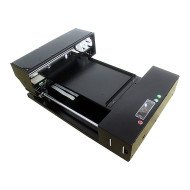
Operational Bottlenecks in A4 UV Cylinder Printing and Phone Case Production
Understanding the Industrial Reality of A4 UV Cylinder Printing
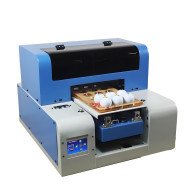
The integration of A4 UV printers specialized for cylinder and phone case printing presents a complex operational matrix that often reveals hidden bottlenecks in production workflows. Despite the relatively compact footprint of A4-sized devices, these printers are tasked with high-precision output on geometrically challenging substrates such as cylindrical surfaces and phone cases with diverse contours. This operational complexity manifests in machine setup times, substrate alignment accuracy, and ink curing consistency under UV exposure. For instance, the cylindrical printing process necessitates precise rotational synchronization to maintain image registration accuracy typically within +/- 0.1 mm tolerance. Any deviation beyond this range causes visible distortion or banding, significantly impacting throughput and quality. Furthermore, the dual-mode operation—shifting between flat phone case plates and cylindrical items—often introduces recalibration delays that cumulatively erode operational efficiency. Understanding and addressing these nuances is critical to maintaining optimal production rates and minimizing downtime.
In practical industrial settings, hidden bottlenecks also stem from the printer's ink delivery and curing systems. UV-curable inks require strict control over viscosity and photoinitiator response to ensure uniform polymerization and adhesion. Variations in ambient temperature and humidity can shift ink rheological properties, introducing printhead nozzle clogging or uneven ink deposition—both detrimental to continuous output. The curing lamps themselves must deliver consistent intensity profiles; any degradation in lamp power or reflector alignment can cause incomplete curing, leading to surface tackiness and increased rejection rates. These operational factors represent invisible yet impactful barriers that reduce yield and inflate labor interventions for troubleshooting and maintenance.
Ink Flow and Printhead Dynamics Affecting Throughput
Analyzing the printhead technology at a micro-level reveals the interplay of ink droplet volume, nozzle firing frequency, and thermal management. The A4 UV printer often employs piezoelectric drop-on-demand printheads capable of ejecting droplets in the 10–30 picoliter range at frequencies up to 30 kHz per nozzle. This theoretically allows for high-resolution prints at 1200 dpi; however, the cylindrical substrate demands synchronous rotational mechanics adjusted to the line frequency of the printer. Any mismatch results in micro-skew artifacts.
Assuming a 50 mm diameter cylinder printing surface, the circumferential length is approximately 157 mm (pi*d), requiring millisecond-level control over the rotation speed to align with linear printhead movement. The printer must manage acceleration and deceleration phases carefully to avoid cumulative errors—a challenge compounded by the limited inertia capabilities of servo motors supporting substrate rotation. If the motor's torque cannot sustain smooth velocity profiles, slippage or stalling can occur, necessitating reprints or manual corrections. Production line efficiency here is limited not by inkjet capability but by mechanical constraints inherent to miniature cylinder printers.
Environmental Factors Impacting Quality and Downtime
UV curing efficacy is tightly coupled with environmental parameters—temperature, relative humidity, and airborne particulates. For example, a variation of ±5 °C in ambient temperature can shift ink drying times by 20-30%, affecting line speeds and print sharpness. Additionally, the presence of volatile organic compounds (VOCs) can interact with photoinitiators, decreasing cross-link density and ultimately print durability.
Operational data suggest that in facilities without climate control, downtime attributed to print quality degradation increases by 15-25%. Moreover, lamp life expectancy, typically 1000–2000 hours for mercury vapor or LED UV lamps, is significantly shortened by fluctuating power supply and heat dissipation inefficiencies. This necessitates more frequent maintenance cycles, raising operational costs and reducing effective uptime.
Infrastructure Integration Challenges for Print Stations
The industrial deployment of A4 UV cylinder and phone case printers often involves integration into existing production lines, requiring compatibility with robotic handling, substrate feeding mechanisms, and centralized control systems. The challenge is that these printers demand rigid rack-and-stack conditions to maintain thermal stability and minimize vibration-induced print artifacts. Their power draw, roughly estimated at 500-700 Watts per unit during peak UV curing phases, demands robust electrical infrastructure with surge protection and uninterrupted power sources to prevent print disruptions.
Networking these devices for real-time monitoring involves proprietary protocols that may conflict with factory automation standards such as OPC UA or MQTT, complicating data gathering for predictive maintenance. Inadequate integration leads to fragmented control, suboptimal scheduling, and increased labor overhead.
Comparisons Highlighting Critical Path Differences
| Parameter | A4 UV Cylinder Printer | Phone Case Printer |
|---|---|---|
| Substrate Handling | Rotational precision ±0.1 mm on 50 mm diameter cylinders | Flat platen with vacuum hold, ±0.05 mm registration tolerance |
| Printhead Frequency | Up to 30 kHz per nozzle | Up to 40 kHz per nozzle for faster coverage |
| UV Lamp Technology | Mercury vapor, 1500 hours average life | LED UV, 2000+ hours, more consistent intensity |
| Operational Cycle Time | ~90 seconds per cylinder | ~45 seconds per flat phone case |
| Maintenance Interval | 120 hours runtime between cleanings | 100 hours, more frequent due to ink chemistry |
Scenario Analysis Demonstrates Use-Case Impact
Scenario One: A mid-sized manufacturing plant printing promotional cylindrical aluminum water bottles faces throughput challenges due to motor synchronization issues, leading to 10% production loss daily. Optimizing motor control algorithms and incorporating real-time feedback enables reduction of print rejection rates by 60%. These gains justify investment in advanced servo drives despite increased capital expense.
Scenario Two: A phone accessory producer focusing on high-volume smartphone case printing encounters frequent nozzle clogging during seasonal humidity spikes. Implementing enclosed humidity control coupled with automated printhead flushing cycles stabilizes print quality, cutting downtime by 35% and lowering ink consumption waste.
Scenario Three: An enterprise integrating both cylinder and phone case printing into a single line struggles with IT infrastructure incompatibility causing delays in predictive maintenance alerts. Upgrading to middleware solutions that translate proprietary printer protocols into standard factory automation language improves response time to machine faults, increasing operational uptime by 18%.
Expert FAQ on A4 UV Cylinder and Phone Case Printers
Q1: How critical is printhead thermal management in maintaining print consistency?
A1: Extremely critical. Piezoelectric printheads operate optimally within a narrow temperature band (~25-30 °C). Deviations cause droplet size variation impacting dot placement accuracy and ink viscosity, requiring integrated thermal sensors and active cooling or heating elements.
Q2: What physics govern the rotational synchronization for cylinder printing?
A2: The key principles involve angular velocity matching between the servo motor and linear printhead advance, maintaining phase lock to prevent image shear. Motor torque must overcome inertial and frictional forces while feedback loops minimize phase lag, modeled mathematically by control systems theory.
Q3: Are LED UV lamps superior to mercury vapor for this application?
A3: LEDs offer longer lifespan and more stable irradiance, improving process consistency. However, LEDs initially have lower peak intensity, which can slow curing speed. The trade-off is between lamp longevity, energy consumption, and curing throughput.
Q4: How does ink chemistry affect maintenance schedules?
A4: UV ink formulations with higher photoinitiator concentration cure faster but can increase printhead nozzle deposits requiring more frequent cleaning. Conversely, inks optimized for reduced clogging may cure slower, impacting line speeds.
Q5: What integration challenges exist for remote monitoring in industrial environments?
A5: Proprietary communication protocols and lack of standardized interfaces complicate data acquisition. Solutions include developing custom middleware or employing edge computing nodes to translate printer data into factory network-compatible formats for centralized monitoring and predictive maintenance.
Strategic Verdict on Addressing Bottlenecks and Operational Efficiency
The technical landscape surrounding A4 UV cylinder and phone case printers underscores that operational bottlenecks arise less from raw print technology and more from peripheral mechanical precision, environmental control, and infrastructure integration. Addressing these hidden barriers requires multi-disciplinary engineering approaches combining advanced servo motor control, printhead thermal management, and robust networked monitoring. Future developments may focus on enhanced automation of calibration routines and ink rheology adapted for variable ambient conditions. Investments in IT infrastructure to bridge protocol gaps will further improve uptime and streamline maintenance. The trajectory of this technology points toward tighter integration with smart factory ecosystems, prioritizing reliability and throughput over incremental print resolution gains. Ultimately, manufacturers must weigh capital investments in advanced control systems against the operational cost savings realized through reduced downtime and improved production consistency.