Lifecycle Maintenance Costs Reveal Hidden Burdens in A3 Spot UV Printing Machines
The Industrial Reality of Maintaining A3 Spot UV Printing Machines
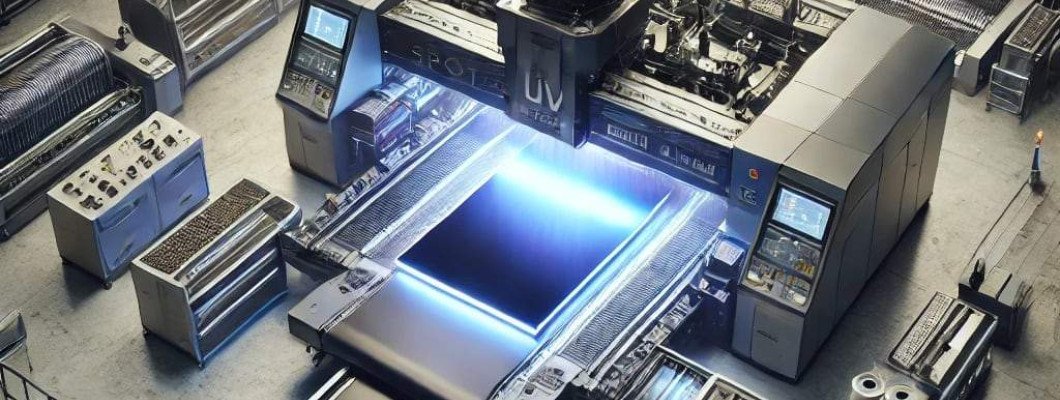
Spot UV printing, particularly on A3-sized substrates, demands exacting precision and material compatibility. While superficially appearing straightforward, the ultraviolet (UV) coating process imposes substantial challenges on maintenance regimes. Operators face continuous degradation of key components such as UV lamps, printheads, and substrate transport mechanisms. The rapid curing process necessitates thermal management to prevent warping or coating defects, but thermal stress concurrently accelerates wear on optical elements and electrical components. Crucially, maintenance budgets are often underestimated as hidden costs accumulate from incremental downtime, replacement frequency, and consumables consumption.
In a typical mid-sized industrial printing facility, a UV coating printer of A3 format runs 10–12 hours daily across diverse substrates ranging from coated cardstock to synthetics. Under such conditions, the lifespan of mercury vapor or LED UV lamps, often between 1000 to 3000 operational hours, demarcates a critical maintenance cycle. Printheads, exposed to abrasive UV coatings and particulate contaminants, experience nozzle clogging and signal degradation, demanding frequent cleaning and eventual replacement. The conveyor and registration systems suffer mechanical wear that skews alignment, reducing coating uniformity. These factors collectively contribute to unplanned downtime—sometimes upwards of 8% annually—significantly impacting overall throughput and cost-efficiency.
Environmental factors like ambient dust, humidity variations, and power fluctuations further complicate maintenance schedules. Failure to implement predictive maintenance or optimized cleaning protocols increases the risk of irreversible hardware damage, leading to steep capital reinvestment. Moreover, since UV coatings induce curing exotherms, the thermal expansion cycles impose micro-stresses on substrates and machine chassis, necessitating periodic recalibration and structural inspection.
Technical Deep-Dive into Lifecycle Maintenance Costs
UV Lamp Degradation and Replacement Dynamics
Assuming an LED UV lamp rated for 2500 hours of continuous use, with a power draw of 150W, the degradation follows a non-linear decay in intensity approximately described by I(t) = I_0 * e^{-0.0004t}, where t is operating hours. At 1500 hours, intensity drops to roughly 55% of initial output, adversely affecting coating cure quality and throughput speed. Frequent premature replacements inflate total cost of ownership (TCO).
Printhead Wear under UV Coating Stress
Piezoelectric printheads employed in spot UV machines eject droplets typically sized 10-30 picoliters (pl). The viscosity (η) of UV coating materials is around 1000-3000 mPa·s, significantly higher than standard inks. This increased viscosity combined with particulate load leads to higher nozzle abrasion rates. Empirical data shows nozzle failure rates increase by 15% annually without dedicated filtration and nozzle cleaning systems. The effective operation window per printhead averages 2000 hours before a 30% clog rate mandates replacement.
Substrate Transport Mechanism Wear
The transport system relies on precision-driven rollers and belt systems. Continuous exposure to sticky UV coatings requires roller surfaces with specific hardness (Shore A 70-80) and chemical resistance. Mechanical wear, quantified by a reduction in surface diameter of approximately 0.05 mm per 1000 operational hours, causes registration errors exceeding 0.2 mm, affecting the micron-level precision of coatings. Realigning and replacing these components adds to maintenance downtime.
Thermal Management and Structural Fatigue
The spot UV curing process results in localized substrate temperatures peaking near 70°C in less than 5 seconds per pass. The cyclic heating-cooling induces thermal expansion coefficients mismatches between steel chassis (~12 x 10^-6 /°C) and polymeric substrates (~50 x 10^-6 /°C), leading to fatigue stresses. Over 1000 heating cycles, microscopic fissures in mounting brackets and fixture mounts appear, necessitating metal stress-relieving interventions.
Consumables and Operational Logistics
UV coatings, typically solvent-free formulations with density of approximately 1.1 g/cm³, require controlled storage at 25 ± 2°C to preserve viscosity and photoinitiator activity. Deviations accelerate polymerization degradation, forcing early disposal. Additionally, waste disposal of spent UV lamps containing trace mercury demands compliance with hazardous material protocols, adding administrative and logistical overhead.
| Maintenance Aspect | Standard A3 Spot UV Printer (Mercury Lamp) | LED UV Lamp Alternative |
|---|---|---|
| Average Lamp Life (hours) | 1000 | 2500 |
| Power Consumption (Watts) | 300 | 150 |
| Replacement Cost (USD) | 350 | 600 |
| Downtime per Replacement (hours) | 4 | 2 |
| Thermal Output (Watts) | 250 | 90 |
Scenario Analysis Explores Practical Impacts on Diverse Business Models
Scenario 1 Mid-Sized Commercial Print Shop
Operating 10 hours daily with mixed jobs averaging 30 A3 sheets per hour, maintenance frequency directly affects throughput. Standard mercury lamps require bi-monthly replacement with 8 hours downtime cumulatively, reducing operational availability by 3.3%. Transitioning to LED lamps halves downtime, improving utilization but increasing upfront costs. Printhead replacement every 4 months and roller alignments quarterly add predictable costs but allow planned budgeting.
Scenario 2 Boutique High-End Artisan Studio
Focus on micron-level spot UV effects for luxury substrates demands stringent alignment and coating uniformity. Downtime impacts cycle times severely due to low batch volumes. Hence, investing in advanced filtration and automated nozzle cleaning to extend printhead life beyond 3000 hours becomes financially justifiable. Thermal management modifications to prevent substrate warping are critical, as are frequent recalibrations that add labor hours but preserve exquisite finish quality.
Scenario 3 Large Enterprise with Multiple Printing Lines
With multiple machines operating in parallel, maintenance schedules staggered across devices minimize aggregate downtime. Centralized consumable storage with temperature and humidity controls optimizes UV coating shelf-life. Predictive maintenance software integrating sensor data from thermal and mechanical stress monitors enables early detection of wear, reducing unplanned failures. Capital expenditure on LED UV lamps is offset by operational savings and reduced hazardous waste handling.
Expert FAQ on Lifecycle Maintenance of A3 Spot UV Printers
Q1: How does ambient humidity impact UV coating performance and maintenance cycles?
A1: Elevated humidity increases surface condensation risk and alters cure kinetics, accelerating nozzle clogging and necessitating more frequent printhead cleaning.
Q2: What are the trade-offs between mercury vapor and LED UV lamps in terms of spectral output affecting coating adhesion?
A2: Mercury lamps emit broader UV spectra, promoting deeper curing but generating more heat; LED lamps offer narrow spectra tuned to photoinitiators, reducing substrate stress but requiring precise coating formulation matching.
Q3: Can integration of automated cleaning reduce maintenance downtime significantly?
A3: Yes, automated cycles reduce manual intervention by 40-60%, which directly correlates to less downtime and prolonged printhead lifespan.
Q4: How does substrate thickness variation affect mechanical wear on transport systems?
A4: Variable thickness demands adaptive tension controls; lack of which causes uneven roller pressure, increasing surface wear and registration errors.
Q5: What are best practices for hazardous waste handling of spent UV lamps in industrial settings?
A5: Compliance with local environmental regulations using certified recycling vendors, secure containment during transport, and documented disposal tracking are mandatory.
Strategic Verdict on Lifecycle Maintenance Realities for A3 Spot UV Printers
The lifecycle maintenance costs of A3 spot UV printing machinery reveal significant operational and capital allocation challenges. Although LED UV lamps offer longer service lives and reduced thermal impact, their higher replacement costs and necessity for matched coating materials complicate adoption. Maintenance planning must incorporate thermal, mechanical, and chemical degradation mechanisms that impact uptime and print quality. Businesses should prioritize predictive analytics and process controls to optimize longevity and minimize unplanned downtime. Without rigorous infrastructure adaptation, hidden operational burdens will erode financial benefits and reduce asset lifespan. This technology trajectory demands continual integration of advanced materials science, precise mechanical engineering, and environmental compliance to maintain industrial-grade output reliability.