Lifecycle Maintenance Costs Determine True Value of A4 UV DTF Printing Machines
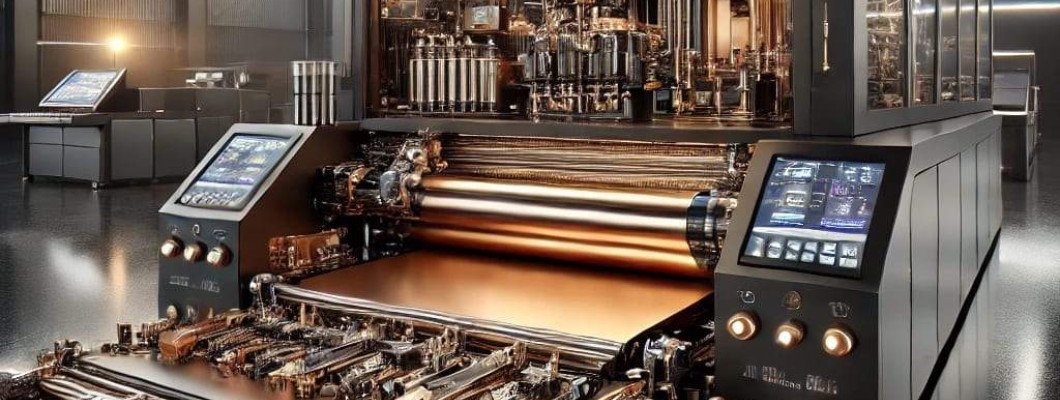
The Industrial Reality of Maintaining A4 UV DTF Printing Machines
The integration of A4 UV Direct to Film (DTF) printing machines in industrial environments brings forward a complex array of ongoing maintenance demands that directly affect operational continuity and total cost of ownership. Unlike conventional printing technologies, UV DTF printers deploy specialized ultraviolet curing combined with precise film transfer processes, which introduces unique wear vectors on critical components such as printheads, conveyance rollers, and UV LED arrays.
Consider a mid-sized print shop specializing in high-mix short-run orders where throughput variability demands rapid machine readiness. The cyclical exposure of UV-sensitive inks to curing lamps accelerates printhead nozzle degradation and optical sensor drift, especially when combined with environmental contamination from particulate matter. Maintenance intervals become a strategic bottleneck: unplanned downtime for printhead cleaning or replacement can cascade into multi-hour production losses, directly impacting order fulfillment timelines.
Additionally, the film feeding mechanism experiences mechanical stress from continuous lamination cycles, where misalignments or roller wear degrade print consistency and lead to increased waste rates. Technical staff must monitor lubrication regimes, roller hardness variations, and UV lamp life metrics — factors often underappreciated during initial procurement decisions. These considerations highlight why lifecycle maintenance costs are not just ancillary expenses but defining elements of machine productivity and financial viability.
Technical Deep-Dive into Lifecycle Maintenance Demands
Printhead Mechanics and Ink Chemistry Interactions
UV DTF printheads operate at nozzle droplet volumes ranging from 8 to 15 picoliters (pl), targeting precise micron-scale ink deposition on polycarbonate films. The UV inks are typically polymerizable oligomers with photo-initiators sensitive to 395-405 nm wavelengths. Repeated curing cycles induce thermal stresses on nozzle plates, accelerating microcrack formation and reducing nozzle ejection consistency.
Assuming an average printhead lifespan of 3,000 operational hours under standard conditions, accelerated usage with continuous 8-hour shifts may reduce this to 2,000 hours or less. This degradation correlates to a non-linear increase in nozzle misfires, averaging a 0.5% failure rate per 100 hours increment past the 2,000-hour mark.
UV LED Array Performance and Thermal Management
UV LED modules in the A4 format operate at approximately 12 W/cm² irradiance with a peak emission at 395 nm. Effective thermal dissipation is critical: thermal resistance above 10 °C/W can cause LED junction temperatures to exceed recommended limits, shortening operational life by 30%. Integrated heat sinks and forced air convection systems must maintain LED temperatures below 55 °C to retain luminance efficiency above 80% for a minimum of 10,000 hours.
Film Feeding and Roller Mechanics Analysis
The polymeric transport rollers are typically constructed from polyurethane with Shore A hardness between 70-80, optimized for grip and low wear. However, abrasion rates measured at 0.03 mm/month under continuous 5 m/min film feed speeds necessitate monthly roller inspection. Misalignment tolerances must remain within ±0.1 mm to avoid print registration errors exceeding 0.15 mm, which are visually detectable defects on finished prints.
Software Calibration and Sensor Drift
Advanced UV DTF machines employ optical sensors for film positioning and printhead alignment calibration. Sensor output drift, typically 0.02 mm per 100 hours of operation, requires scheduled recalibrations every 500 operational hours. Failure to recalibrate leads to cumulative positional errors and increased print defects, estimated at a 3% rise in rejects per month without maintenance.
Comparative Maintenance Cost Table for Printhead Replacement Strategies
| Maintenance Approach | Initial Printhead Cost (USD) | Average Lifespan (Hours) | Downtime per Replacement (Hours) | Estimated Annual Cost (USD) | Operational Impact |
|---|---|---|---|---|---|
| Scheduled Replacement Every 2,000 Hours | 1,200 | 2,000 | 2 | 3,600 (3 replacements) | Predictable downtime, stable print quality |
| Run-to-Failure Replacement | 1,200 | 2,500 | 4 | 2,400 (2 replacements) | Higher risk of quality defects, unpredictable downtime |
Scenario Analysis for Business Use-Cases
Use-Case 1: Rapid-Prototyping Print Service
In prototype environments, turnaround speed is critical. The accelerated maintenance schedule for printheads and sensors can disrupt workflows if not proactively managed. Here, scheduled preventative maintenance with robust inventory of spare parts ensures minimum downtime while preserving print fidelity for client approvals.
Use-Case 2: Small Batch Custom Apparel Manufacturer
This scenario involves mixed-substrate printing and requires consistent color registration. The emphasis shifts toward frequent roller inspections and recalibrations to maintain micron-level positional accuracy. Maintenance costs impact margins, making lifecycle planning key for sustained profitability.
Use-Case 3: High-Volume Industrial Label Printing
High-throughput environments prioritize continuous operation and low OEE (Overall Equipment Effectiveness) loss. Here, advanced thermal monitoring and automation-enabled predictive maintenance for UV LED arrays and printheads become critical. Although CAPEX may be higher, OPEX reductions justify the investment over a typical 5-year equipment lifecycle.
Expert FAQ for Advanced Technical Considerations
Q1: How does ambient temperature variation affect UV LED curing efficiency?
A1: For every 5 °C increase above 25 °C ambient, LED junction temperature rises approximately 3 °C, reducing luminous efficacy by roughly 7%. This necessitates enhanced thermal management or controlled environment enclosures.
Q2: What ink viscosity ranges optimize nozzle longevity?
A2: Optimal UV DTF ink viscosity lies between 12-18 centipoise (cP) at 25 °C. Higher viscosity increases nozzle strain and clogging risk; lower viscosity compromises droplet formation stability.
Q3: Can piezoelectric printheads be effectively used in A4 UV DTF applications?
A3: Yes, piezoelectric printheads offer superior droplet control but require rigorous maintenance to prevent UV ink polymerization on nozzle plates, increasing cleaning frequency.
Q4: How does the film substrate thickness variability impact printhead distance calibration?
A4: Variance beyond ±0.1 mm in substrate thickness can cause out-of-focus print leading to blurred edges and inconsistent UV curing.
Q5: What are the primary failure modes in UV LED arrays under continuous operation?
A5: Common failure modes include phosphor degradation, thermal-induced solder joint cracking, and encapsulant yellowing leading to reduced irradiance and curing inefficiency.
Strategic Verdict on Lifecycle Maintenance Costs
The analysis reveals that lifecycle maintenance costs in A4 UV DTF printing machines are a primary determinant of operational sustainability and overall financial performance. Technical complexities in printhead longevity, UV LED thermal management, and film transport mechanics necessitate deliberate maintenance strategies rather than reactive repairs. Industrial deployments benefit from scheduled maintenance with precise sensor recalibrations and component replacements planned to optimize uptime while balancing consumable expenses. As UV DTF printing technology matures, predictive maintenance leveraging IoT sensor data and AI analytics will increasingly mitigate unplanned downtimes and material waste, pointing to a future where lifecycle costs decline while machine productivity and output quality improve simultaneously.