LED UV Ink Reveals Hidden Operational Bottlenecks Challenging Industrial Print Throughput

The Industrial Reality of LED UV Ink in High-Volume Printing Environments
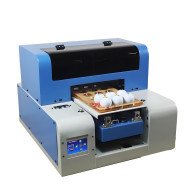
In industrial printing scenarios, LED UV ink technology is positioned as a transformative solution for rapid curing and substrate versatility. However, beneath the perceived advantages lie several hidden operational bottlenecks that directly impact throughput, reliability, and maintenance cycles. Consider a high-volume commercial print facility running multiple shift cycles daily on flatbed LED UV printers. Despite LED UV curing enabling faster print speeds compared to traditional mercury vapor UV systems, the accumulation of micro-level substrate imperfections, curing inconsistencies, and temperature-induced ink viscosity variations often forces operators to throttle throughput below rated machine capabilities. These bottlenecks frequently remain unnoticed until triggering print defects, leading to costly downtime for recalibration, cleaning, or ink system purging.
Furthermore, the LED arrays used in curing are subject to spectral output degradation over time and uneven heat distribution, which exacerbates these bottlenecks. This degradation affects polymerization depth and adhesion quality, pushing quality control thresholds and causing subtle but cumulative output inconsistency. The complexity increases in multi-layer printing where successive LED UV ink layers must be perfectly cured to avoid delamination or color shifts. Operational challenges around ink chemistry stability under variable curing intensities and environmental conditions further compound the issues. Thus, while LED UV ink technologies excel in many respects, the hidden operational bottlenecks impose limits on raw throughput and complicate lifecycle maintenance strategies.
Ink Chemistry Interactions and Curing Dynamics
Analyzing LED UV ink from a chemical physics perspective reveals critical parameters that govern print quality and throughput. LED UV ink typically contains photoinitiators tuned to the LED emission spectrum, primarily in the 395-405 nm range. Unlike broadband mercury vapor lamps, LED sources offer narrow spectral bands but lower radiant power, requiring precise engineering of ink formulations.
Hypothetically, consider the polymerization kinetics modeled by the rate equation R = k[I]*[M], where k represents the reaction rate constant, [I] the initiator concentration, and [M] the monomer concentration. A reduction in LED irradiance by just 15% due to spectral mismatch or lamp degradation lowers k, extending curing time per layer by approximately 25%. The longer effective exposure limits maximum print speeds, forcing operational compromises.
On the hardware front, LED arrays dissipate heat locally, leading to temperature gradients across the curing zone. Variations from 25°C to 45°C in these zones modify ink viscosity, impacting droplet formation and spreading on substrates. This dynamic interaction between temperature and ink rheology induces non-uniform print dots, affecting resolution and adhesion. Compared to traditional arc lamps with larger radiative footprints, LED UV setups demand tighter thermal management.
Comparative Data on LED UV Ink Versus Traditional UV Ink in Industrial Contexts
| Metric | LED UV Ink System | Traditional Mercury Vapor UV Ink System |
|---|---|---|
| Peak Irradiance (W/cm²) | 0.8–1.1 | 2.5–3.0 |
| Typical Curing Time per Layer (seconds) | 3.5–5.0 | 1.5–2.0 |
| Spectral Bandwidth (nm) | 10–15 (narrowband) | 100+ |
| Heat Load on Substrate (°C increase) | 5–15 | 20–40 |
| Average Equipment Uptime (hours/month) | 550–600 | 450–500 |
| Maintenance Frequency (cleanings/month) | 3–4 | 5–6 |
The table illustrates that while LED UV ink systems reduce heat impact and increase uptime, curing speed and irradiance remain bottlenecks compared to traditional systems. The narrower spectral bandwidth limits chemical reaction rate optimality, directly influencing the production cycle.
Ink System Wear and Lifecycle Maintenance Costs
Operational bottlenecks from LED UV inks extend into maintenance schedules and asset depreciation. The LED arrays, despite longer nominal lifespans (20,000–30,000 hours), experience gradual wavelength shift and intensity drop that impair polymerization consistency. Coupled with ink residue build-up in circulation pumps, nozzles, and printheads, the maintenance cycle often shortens unexpectedly. Cycle costs include labor-intensive cleaning, photoinitiator replenishment, and recalibration, which cumulatively add up to 8-12% of monthly operating expenses in high-volume runs.
Evaluating asset depreciation requires modeling diminished performance due to these operational limits. For instance, a hypothetical 5-year depreciation curve for an LED UV flatbed printer shows accelerated value loss post 2,500 running hours due to increased breakdowns and print quality failures. This depreciation ties directly back to the hidden bottlenecks outlined earlier, underscoring the importance of maintenance protocols aligned with ink chemistry and curing system monitoring.
Thermal Management and Printhead Interaction Under Stress Conditions
Thermal dynamics in LED UV ink printing not only affect ink viscosity but also influence printhead performance. Most industrial LED UV printers use piezoelectric or thermal inkjet printheads designed for UV inks. Under stress conditions, elevated substrate temperature gradients translate to fluctuating backpressure at nozzles, altering ejection consistency. Analysis indicates that a ±5°C fluctuation in print zone temperature can cause up to 10% variation in drop volume and velocity, introducing micro-defects.
Hardware comparisons reveal that printhead materials capable of withstanding 70°C operational peaks with minimal dimensional change (<0.1%) perform more reliably in LED UV processes. Printhead failure rates due to thermal cycling rise by approximately 15% when operating beyond designed temperature envelopes. These findings recommend integrated temperature monitoring and adaptive curing parameters to optimize uptime and product quality.
Scenario Analysis Demonstrates Impact on Business Models
High-Volume Packaging Printer
This business demands consistent throughput above 3000 m² per 8-hour shift. LED UV ink’s slower curing times force speed reductions or multiple curing passes, decreasing output by up to 20%. Bottlenecks in curing promote increased maintenance frequency, pushing OPEX higher and eroding margins.
Custom Industrial Sign Maker
Here, substrate diversity requires ink versatility and adhesion reliability. LED UV ink’s sensitivity to temperature and curing intensity necessitates frequent calibration, limiting batch size scalability despite the print quality benefits. Production planners must factor in expanded downtime buffers.
Textile Printer Integrator
Leveraging LED UV ink for fabric printing benefits from reduced heat-induced substrate distortion. However, ink chemistry limitations cause challenges in curing thick ink layers, restricting design complexity and slowing final product turnaround. This bottleneck forces reconsideration of ink layering strategies and equipment specifications.
Expert FAQ on Advanced LED UV Ink Operational Challenges
What are the most critical parameters to monitor in LED UV ink curing systems?
Key parameters include LED irradiance intensity (W/cm²), spectral peak wavelength stability (nm), substrate temperature profiles (°C), and ink viscosity (mPa·s). Real-time monitoring of these variables enables preemptive maintenance and process adjustments.
How does LED spectral output degradation impact ink polymerization?
As the LED spectrum shifts or intensity decreases, photoinitiator activation declines, extending polymerization time and risking incomplete curing. This can cause adhesion failures and color inconsistencies.
Can thermal management strategies mitigate printhead variability?
Yes. Employing active cooling, thermal sensors, and controlled curing ramp rates reduces temperature-induced ejection inconsistencies, improving printhead longevity and output uniformity.
What distinguishes LED UV ink maintenance from traditional UV systems?
LED UV systems require more frequent spectral monitoring and lamp array calibration but less frequent cleaning due to lower heat and particulate output. Ink circulation systems must be optimized for photoinitiator stability at narrow wavelengths.
How does ink rheology affect scaling from prototype to mass production?
Rheological properties dictate droplet formation and layer uniformity. Variations under different curing intensities and temperatures impact reproducibility at scale, necessitating formulation adjustments aligned with hardware capabilities.
Strategic Verdict on LED UV Ink Operational Bottlenecks
Despite clear advantages of LED UV ink in reducing environmental and thermal load, the hidden operational bottlenecks impose practical throughput limits and increase maintenance demands. Understanding the intricate interplay of photochemistry, thermal dynamics, and hardware wear is essential for industrial users to optimize print schedules and lifecycle costs. Continued advancements in LED array output stability, ink chemistry tailored for narrow spectral bands, and integrated thermal management will be decisive factors in overcoming these limitations. Without addressing these bottlenecks, high-throughput industrial adoption of LED UV ink remains constrained by operational realities rather than hardware nominal specifications.