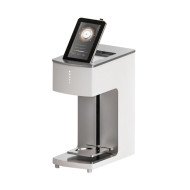
Infrastructure Integration Challenges of Smart Version A4 UV Printer in Enterprise Environments
The Industrial Reality of Integrating Smart Version A4 UV Printers in Server-Centric Enterprises
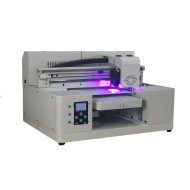
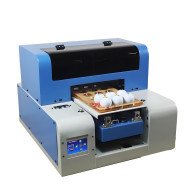
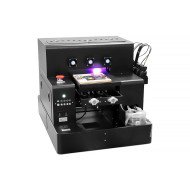
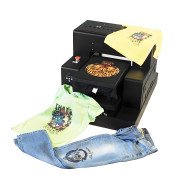
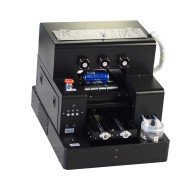
Modern enterprises increasingly rely on the convergence of specialized printing technology and IT infrastructure to optimize operational workflows. The Smart Version A4 UV Printer, marketed as a compact ultraviolet printing device capable of high-resolution output, presents a unique challenge when incorporated into existing enterprise hardware and software environments. Despite its compact footprint, numerous technical obstacles arise when aligning this UV printer’s hardware capabilities with stringent rack density, thermal management, and network compliance standards common to enterprise data centers or production floors.
Consider a geographically distributed manufacturing facility aiming to deploy these printers for rapid prototyping and short-run production of industrial-grade labels and components. The localized print nodes must operate reliably within controlled thermal envelopes and under network security rules that restrict peripheral device communications. Failure to anticipate the printer’s power draw, electromagnetic interference (EMI) emissions, or firmware update protocols can cascade into site-wide compliance violations and unplanned downtime.
Additionally, the integration complexity extends beyond physical installation. Enterprise IT departments must address print job queuing, color profile management, and precision calibration parameters programmatically to maintain throughput. This demands custom middleware or drivers supporting remote diagnostics—factors not always natively supported by compact UV printer firmware optimized for stand-alone use. The discrepancy between industrial-grade server infrastructure and the Smart Version A4 UV Printer’s embedded system architecture embodies a critical challenge: bridging the gap without compromising reliability or operational security.
Hardware Compatibility and Printhead Physics
The Smart Version A4 UV Printer employs UV-curable inks deposited via piezoelectric printheads engineered for micron-level precision on 210 mm × 297 mm substrates. The printhead operation requires precise voltage modulation and high-frequency actuation cycles, generating an instantaneous power demand spike that must be accommodated reliably by power distribution systems in constrained environments.
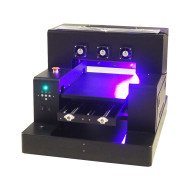
From a physics standpoint, the printer’s curing lamps emit UV-A radiation within a narrow spectrum (typically 365–405 nm), requiring specialized cooling mechanisms. Unlike standard office printers, the UV lamps generate localized heat loads that, if not adequately dissipated, elevate component temperatures beyond manufacturer tolerances, accelerating wear and increasing maintenance frequency.
Power fluctuations or irregular cooling cause printhead misfires, compromising droplet placement accuracy and print uniformity. The embedded firmware attempts to compensate via sensor feedback loops, but these controls are limited by physical hardware constraints and firmware update latency. Industrial IT managers must therefore engineer thermal dissipation solutions and stable power supplies customized to the printer’s dynamic load profile, a non-trivial addition to typical rack-based infrastructure planning.
Network Infrastructure and Security Compliance
Integrating the Smart Version A4 UV Printer into secure enterprise networks introduces risks related to data integrity, firmware authenticity, and access control. Unlike traditional IT assets with mature update and authentication protocols, compact UV printers often lack comprehensive network security stacks. This raises vulnerability flags when printers are connected via Ethernet or wireless protocols within sensitive environments.
Typical security policies mandate device authentication, encrypted communication channels (e.g., TLS 1.3), and rigorous logging for audit trails. However, most UV printer firmware currently supports only basic network function protocols (TCP/IP, HTTP) without enterprise-grade encryption or endpoint management compatibility. This mismatch forces network architects to isolate printer subnets or deploy gateway solutions to shield the internal enterprise domain, adding operational complexity and maintenance overhead.
The inability to push over-the-air updates securely or perform remote wipe functions creates compliance blind spots, particularly in regulated industries such as pharmaceuticals or aerospace. Hence, infrastructure managers face the dilemma of balancing operational accessibility with security robustness—often erring on the side of restricted connectivity that impacts print job scheduling and throughput.
Thermal Management and Rack Density Considerations
Enterprise IT environments prioritize high rack density to maximize compute resources per square meter. The introduction of heat-generating peripherals like the A4 UV printer creates localized thermal spikes that standard hot/cold aisle containment schemes are not designed to manage. The UV curing lamps alone dissipate an estimated 100–150 Watts of focused radiant heat during active cycles, significantly altering the thermal budget.
The printer’s chassis does not conform to standard rack unit dimensions (RU), necessitating custom mounting or floor-based placement that fragments equipment layout. This physical segregation complicates cable management and increases the length of printhead control lines, potentially inducing electrical noise and signal degradation.
Compounding this, the printer’s intermittent high-power operation introduces transient thermal cycles that trigger HVAC systems into reactive modes, increasing overall facility power consumption and operational expenses. Without proactive thermal modeling and environmental monitoring integration, printer deployments risk compromising the optimized airflow designed for critical IT systems. Enterprise maintenance plans must therefore incorporate specialized sensor arrays and adaptive cooling controls to maintain component longevity and consistent print quality.
Firmware and Middleware Integration Challenges
The Smart Version A4 UV Printer firmware is designed primarily for standalone or PC-connected usage scenarios, with a device interface optimized for manual calibration and local job management. This paradigm clashes with enterprise expectations for automated print queue management, centralized configuration, and fault monitoring through IT service management (ITSM) platforms.
Absent native support for networked print protocols such as IPP (Internet Printing Protocol) with advanced feature sets, enterprises rely on middleware solutions to bridge functionality gaps. These middleware systems translate enterprise print requests into the printer-specific command language while handling queue prioritization, load balancing, and error recovery. However, the complexity of maintaining middleware compatibility through firmware updates is often underestimated, leading to instabilities and increased support tickets.
Moreover, the latency introduced by networked print job conversions can degrade throughput and introduce synchronization errors, particularly during high-demand intervals. This contraction between firmware design assumptions and enterprise automation requirements remains a persistent bottleneck. Infrastructure teams must therefore invest in customized software layers and dedicated process monitoring to ensure consistent uptime and print accuracy under demanding operational load.
Comparison of Infrastructure Integration Approaches
| Aspect | Direct Network Integration | Middleware-Driven Deployment |
|---|---|---|
| Deployment Complexity | Low initial setup, limited configuration options | High, requires development and maintenance |
| Security Compliance | Limited encryption, vulnerable to attacks | Enhanced security via gateway controls |
| Print Job Management | Manual or basic queuing | Automated, prioritized handling |
| Firmware Update Control | Manual, risk of version mismatch | Centralized scheduling and rollback |
| Throughput Stability | Variable, prone to bottlenecks | Improved via load balancing |
Scenario Analysis of Business Use Cases
Case 1 Industrial Prototyping Department
This department requires rapid print turnaround for small-batch labels on rigid substrates. Precision and throughput are critical. The thermal management constraints demand dedicated cooling zones near printers. Middleware solutions facilitate seamless print job scheduling within tight production windows, but infrastructure investments increase operational complexity and costs.
Case 2 Decentralized Retail Branding Units
Retail sites leverage the A4 UV printer’s compactness to produce customized promotional materials. Network isolation policies restrict printer access, forcing a manual local workflow that reduces throughput and complicates asset monitoring. Firmware limitations necessitate periodic on-site calibration and maintenance, impacting uptime.
Case 3 Pharmaceutical Packaging Line Integration
Strict regulatory compliance enforces encrypted data transmission and audit trail integrity. The printer’s lack of native secure communication requires deployment behind hardened gateways and extensive middleware logging. Thermal management is critical to avoid production bottlenecks. Deployment prioritizes security and reliability over print speed, influencing production scheduling.
Expert FAQ on Integrating Smart Version A4 UV Printers in Enterprise Infrastructure
How does the intermittent power draw of UV curing lamps affect data center power provisioning?
The curing lamps cause short-term spikes of up to 150 W beyond idle power requirements, necessitating power supplies with sufficient headroom to prevent voltage sag or tripping circuit breakers, especially in dense rack environments.
What firmware constraints limit remote management capabilities?
Firmware typically lacks secure over-the-air update protocols, robust authentication mechanisms, and may not support SNMP or RESTful APIs for status monitoring, complicating integration with ITSM systems.
Can thermal discharges from UV lamps interfere with sensitive IT hardware?
Yes, localized heat emissions can increase ambient temperature by up to 5°C near critical servers if not mitigated, potentially degrading server reliability and accelerating component failure rates.
Are there electromagnetic interference concerns with piezoelectric printheads?
Piezoelectric actuation generates high-frequency electrical noise that can interfere with wireless signals and improperly shielded electronic equipment; electromagnetic compatibility testing and shielding are essential.
How critical is custom middleware in maintaining print job consistency?
Custom middleware enables queue prioritization, error recovery, and device status monitoring, ensuring print job accuracy and reducing downtime, which are otherwise compromised by default firmware limitations.
Strategic Verdict on Enterprise Integration of Smart Version A4 UV Printers
The Smart Version A4 UV Printer embodies a promising compact UV printing technology constrained by infrastructure integration challenges. Enterprises seeking to embed this device within existing server-fronted ecosystems must prepare for significant customization at both hardware and software layers to meet operational, thermal, and security requirements. Without such tailored efforts, deployments risk inefficiencies, compliance infractions, and elevated maintenance demands.
Future iterations of compact UV printers that incorporate enterprise-grade firmware features, standardized network protocols, and modular thermal designs will better align with evolving infrastructure paradigms. Current technology serves niche use cases but remains on the periphery of seamless enterprise integration.