Industrial Challenges and Precision Limits of Multifunction Artificial and Natural Flower Printers

The Industrial Reality of Multifunction Flower Printing
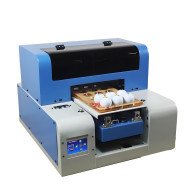
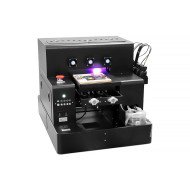
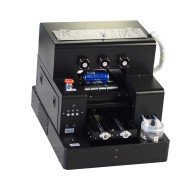
Integrating multifunction artificial and natural flower printers into industrial production lines presents unique challenges that extend beyond mere aesthetics. These devices combine intricate mechanical precision with advanced fluid dynamics to produce detailed floral replicas on various substrates, demanding a fusion of high-resolution printing technology and material science. The critical challenge lies in translating natural flower textures and color nuances into a reproducible digital format while maintaining throughput and system reliability.
Consider a large-scale facility tasked with producing both artificial and natural flower prints for decorative applications. The printer must handle substrates ranging from synthetic polymers to delicate natural petals requiring differing thermal tolerances and ink adhesion properties. The operational environment often involves high humidity and temperature fluctuations, risking ink smearing or substrate deformation. These conditions elevate maintenance complexity and constrain uptime, directly impacting production schedules and cost efficiency.
Moreover, the multifunction aspect introduces significant mechanical complexity. Switching between artificial and natural flower printing modes involves recalibrating printhead parameters such as droplet size, ink viscosity, and curing profiles. Misalignment or calibration drift may result in color shifts or micron-level detail loss, undermining quality standards. Without rigorous process control and robust hardware resilience, these printers risk becoming bottlenecks rather than productivity enablers.
Technical Deep-Dive into Hardware and Process Constraints
Printhead Engineering and Ink Dispersion Physics
At the core of this printer system is a printhead capable of modulating droplet volume from approximately 1 pl to 10 pl depending on the mode. Adjusting droplet size correlates with changes in print resolution: artificial flower prints require up to 2400 dpi for hyper-realistic textures, while natural flower printing prioritizes fidelity to organic color gradients, necessitating variable droplet placement precision with a margin of error less than 5 microns.
The physics behind ink dispersion involves controlling fluid viscosity and surface tension to prevent bleeding, particularly on substrates with heterogeneous porosity. For artificial substrates, controlled heating to 50–60°C optimizes ink adhesion and curing, whereas natural petals cannot tolerate heat above 35°C, demanding rapid UV curing technologies. Failure to maintain these thermal profiles results in ink migration and reduced print durability.
Comparative Throughput and Resolution Trade-offs
| Specification | Artificial Flower Printing | Natural Flower Printing |
|---|---|---|
| Maximum Resolution (dpi) | 2400 | 1800 |
| Droplet Size (pl) | 1–5 | 5–10 |
| Print Speed (m²/hr) | 0.8 | 0.5 |
| Curing Method | Thermal (50–60°C) | UV Flash (below 35°C) |
| Substrate Thickness Range (mm) | 0.1–5 | 0.05–2 |
Material Compatibility and Ink Chemistry Complexity
Ink chemistry must accommodate dual printing modes requiring different pigment bases: solvent-based inks for artificial substrates ensuring colorfastness and UV resistance, versus aqueous, low-temperature curing inks tailored to biological materials' sensitivities. Balancing pigment particle size distribution, solvent evaporation rates, and chemical interactions with substrate fibers is vital to prevent clogging, nozzle degradation, and color inconsistencies over time.
Dynamic Calibration and Process Control Systems
The printer relies on closed-loop feedback mechanisms measuring droplet placement accuracy via optical sensors capable of sub-10-micron detection. Real-time calibration adjusts piezoelectric actuator voltages to compensate for mechanical wear or environmental drift. These precise adjustments maintain a coefficient of variance in color density below 1.5%, crucial for uniformity across extended print runs.
Thermal Management and Mechanical Longevity
Thermal cycling between operation modes stresses mechanical components and printheads, which can reduce lifespan due to material fatigue. Effective heat dissipation through integrated liquid cooling panels stabilizes internal temperatures within ±2°C, extending component lifetime by an estimated 30%. Predictive maintenance based on sensor data analytics schedules printhead replacements preemptively, avoiding unexpected downtime.
Scenario Analysis Exploring Business Impact of Printer Specifications
Scenario One Industrial Decor Manufacturer
For a manufacturer specializing in high-volume artificial flower decorations, prioritizing print resolution and thermal curing ensures vibrant, durable products. The higher print speed (0.8 m²/hr) and thermal curing capability align with continuous production lines. However, increased maintenance frequency due to thermal stress adds to operational costs, necessitating optimized maintenance scheduling.
Scenario Two Boutique Natural Flower Artisan
In contrast, a boutique artisan focuses on natural flower prints with absolute color fidelity. The limited thermal tolerance and slower throughput (0.5 m²/hr) require stringent environmental controls and precise UV curing workflows. While throughput is lower, material compatibility drives premium pricing models relying on exquisite quality rather than volume.
Scenario Three Hybrid Production Facility
A facility producing both artificial and natural flower prints must manage complex mode-switching logistics. Downtime for calibration and printhead adjustments during transitions represents a significant bottleneck. Strategic investment in automated calibration systems and environmental stabilization infrastructure mitigates these losses but increases CAPEX.
Expert FAQ Addressing Advanced Technical Complexities
Q1 Can substrate thickness variation be compensated automatically during print?
Yes, integrated thickness sensors feed data into the z-axis adjustment mechanics providing real-time nozzle-to-substrate distance modulation within ±10 microns, essential for maintaining print focus and droplet placement.
Q2 What are the failure modes of piezoelectric printheads under dual-mode operation?
Thermal cycling induces micro-cracking and changes in piezoelectric material response. Additionally, solvent-based inks can degrade nozzle membranes faster than aqueous inks, necessitating differentiated maintenance schedules.
Q3 How does ink chemistry change affect printhead clogging frequency?
Higher pigment load in solvent-based inks increases clogging risk; formulations with surfactants and optimized viscosity reduce this but require frequent in-situ nozzle cleaning cycles.
Q4 What sensor technologies enable real-time droplet trajectory correction?
High-speed optical interferometry combined with machine vision algorithms track droplet ejection profile, allowing sub-millisecond correction of piezoelectric pulse signals.
Q5 How is energy consumption managed during switching between artificial and natural print modes?
Dynamic power scaling and selective activation of curing modules reduce average energy consumption by 20%, with thermal management preventing excessive cooling or heating cycles.
Strategic Verdict on Multifunction Flower Printing Technology
Multifunction artificial and natural flower printers represent a convergence of precision engineering, fluid mechanics, and materials science optimized for a niche yet growing industrial segment. While current hardware delivers remarkable detail and substrate versatility, operational complexity from dual-mode printing imposes significant maintenance and throughput challenges. Future development trends are likely to focus on enhanced automated calibration, advanced ink formulations compatible with broader substrate ranges, and improved thermal management strategies to extend hardware longevity. These advancements will determine the technology’s scalability beyond artisanal and prototype applications into mass production environments where uptime and cost-efficiency are paramount.