How Hidden Operational Bottlenecks Restrict A3 Roll DTF Printer Performance for Scalable Business Owners

The Industrial Reality of Hidden Operational Bottlenecks in A3 Roll DTF Printing
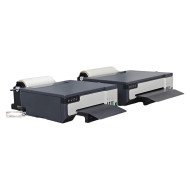
Consider a mid-sized textile printing business that has recently integrated an A3 Roll Direct to Film (DTF) printer intending to scale throughput while maintaining quality standards. Initial enthusiasm quickly gives way to operational challenges. While the raw print speed specifications indicate high output potential, real-world throughput is limited due to periodic film jams, inconsistent ink transfer adherence, and synchronized drying constraints. Labor involvement intensifies around maintenance and substrate preparation stages, offsetting anticipated automation efficiencies.
The operational flow of a roll-fed DTF setup involves several interdependent systems: precise film tensioning, inkjet head micro-droplet placement, hot-melt powder application, and infrared curing. Overlooking subtle bottlenecks in any subsystem propagates delays and quality inconsistencies. For example, uneven powder application resulting from inconsistent film feed speed can trigger reprinting, which inflates material usage and labor hours. This scenario illustrates the intricate balance between hardware capability and workflow design required for scalable throughput.
Scaling production without addressing these hidden bottlenecks risks an exponential increase in downtime and operational costs. The intended low-touch process can degrade into a resource-intensive operation, challenging the core ROI calculations for business owners who prioritize throughput, labor efficiency, and consistent output quality. Such realities must be critically evaluated beyond surface-level print speed claims.
Technical Deep-Dive into Bottleneck Sources and Hardware Limits
1. Film Feed and Tension Control Dynamics
A3 roll DTF printers utilize films typically 297 mm wide (A3 width) fed through precise tension rollers. Maintaining uniform tension is critical: insufficient tension leads to slack and film misalignment, provoking print pixel shifts up to ±0.5 mm, while excessive tension risks film tearing or stretch-induced distortion.
Using a simplified tension model, Tension Force (N) = Film Elastic Modulus (Pa) × Cross-sectional Area (m²) × Strain, precise control needs tension forces within a ±0.2 N window. Film elasticity varies by manufacturer and batch, necessitating adaptive feedback tension control systems. Absence of servo-controlled tensioning commonly results in ±0.5 N baseline variation, which degrades image registration accuracy and raises defect rates.
2. Inkjet Head Microdroplet Placement Accuracy
The printhead technology typically employs piezoelectric nozzles ejecting 6-12 pl droplets at resolutions ranging from 600 to 1200 dpi. Printhead vibration, temperature fluctuations, and ink viscosity shifts produce micron-scale placement errors that can accumulate causing blurred edges or color banding.
Comparative performance data from industrial DTF heads versus lab-grade equivalents show operational accuracy at ±15 µm for industrial units, with sub-10 µm achievable using advanced thermal regulation and mechanical isolation. This gap directly impacts color depth and sharpness, critical for high-value textile applications.
3. Hot-Melt Powder Application and Adhesion Uniformity
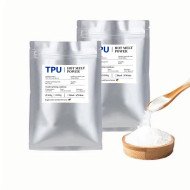
After ink deposition, the hot-melt adhesive powder is applied uniformly via an electrostatic coating station. Variability in film speed leads to powder deposition rate fluctuations, measured between 3-5 g/m² optimally. Deviations beyond ±0.5 g/m² cause adhesion inconsistencies leading to peeling or color smearing post-pressing.
Inline powder mass flow measurement, rarely standard in cost-sensitive models, is crucial to detect and correct deposition anomalies in real time to minimize rework.
4. Infrared Drying and Curing Throughput Limits
The curing process uses infrared lamps delivering 800-1200 W/m to melt the powder and fix pigments. Insufficient infrared power density with respect to film speed forces print runs to slow down or implement multiple curing stages, creating throughput bottlenecks.
Thermographic analysis reveals maximum throughput for typical commercial lamps at approximately 2 m²/h while maintaining 90°C curing temperature on film surface. Exceeding this threshold causes incomplete curing, compromising durability.
5. Integration of Subsystems and Automation Constraints
Synchronizing all subsystems—film feed, inkjet timing, powder application, and curing—is pivotal. Cycle time calculations indicate that if any stage deviates ±5%, backlog in upstream or downstream processes expands exponentially, leading to idle equipment or operator intervention.
This synchronization complexity explains why automated workflows often underperform theoretical capacity, necessitating sophisticated PLC-based control systems with real-time sensor feedback. Budget printer models often have minimal automation, resulting in frequent manual interventions and throughput variability.
Scenario Analysis of Business Use Cases and Bottleneck Impact
Case 1 Large-Scale Apparel Manufacturer
Requirements: Continuous 8-hour print runs at 25 m²/h for small-batch customization. Bottlenecks in powder coating and curing resulted in forced print speed reductions to 15 m²/h, increasing labor costs by 30%. The business responded by retrofitting higher power IR lamps and adding feedback tension control, recovering 85% of throughput potential.
Case 2 Small Design Studio with Variable Substrates
Focus on rapid color shifts and micron precision on delicate fabrics. Printhead placement errors and tension variation caused registration defects in 20% of output. Implementation of thermal regulation and servo tension control reduced waste significantly, although throughput remained low, requiring a balance between quality and speed.
Case 3 Mid-Tier Print Shop Scaling From Prototype to Volume
Facing post-press curing bottlenecks and powder adherence issues during volume runs, unexpectedly high reprint rates eroded margins. Investing in inline powder mass measurement and improved drying chambers optimized output, enabling 40% increase in daily throughput with reduced operator intervention.
Expert FAQ on A3 Roll DTF Printer Bottlenecks
Q1 How critical is film tension feedback control for color registration?
Extremely critical. Without tension control within ±0.2 N, film can stretch or wrinkle causing registration errors exceeding ±0.5 mm, directly impacting multi-color overlay accuracy.
Q2 Can thermal drift in printhead assemblies be compensated in real time?
Advanced models use integrated temperature sensors and closed-loop adjustment algorithms to maintain nozzle firing precision within ±10 µm, but this adds cost and complexity.
Q3 What powder deposition technologies minimize adhesion variability?
Electrostatic powder coating combined with inline mass sensors offers the best control. Gravity-fed or manual powdering methods exhibit ±20% mass flow variability.
Q4 How to balance infrared curing power and film speed?
Calculating thermal energy input (Watts·sec/m²) versus curing temperature thresholds is key. Excess speed reduces curing completeness; increasing lamp wattage or adding multiple IR zones can offset this.
Q5 Are there automation solutions for balancing multi-subsystem bottlenecks?
Yes, PLC systems with integrated sensor feedback loops and algorithmic cycle time balancing can optimize throughput but require significant upfront engineering and capital expenditure.
Strategic Verdict on A3 Roll DTF Printer Bottlenecks and Scalability
While A3 Roll DTF printers promise high-speed, roll-to-roll direct-to-film textile printing, hidden bottlenecks in film tension control, powder application consistency, and curing throughput impose practical limits on scalable throughput. Industrial adoption demands robust automation integration, advanced process controls, and subsystem synchronization beyond baseline hardware specs. Business owners targeting scale must critically analyze these factors and invest in modular upgrades to approach theoretical print speed capabilities without escalating operational costs. The technology’s trajectory will hinge on improved real-time sensor integration and adaptive process control rather than mere mechanical speed enhancements.
| Subsystem | Basic Model Specs | High-End Industrial Specs |
|---|---|---|
| Film Tension Control | Manual or open-loop ±0.5 N variation | Servo closed-loop ±0.2 N variation |
| Printhead Placement | ±15 µm error margin | ±8 µm with thermal regulation |
| Powder Application | Gravity feed, ±20% flow variability | Electrostatic with inline mass sensor ±3% variability |
| Infrared Curing Power | Single zone, 800-1000 W/m | Multi-zone, 1200+ W/m with feedback control |
| Automation Integration | Minimal, manual intervention frequent | PLC with real-time sensor feedback and cycle balancing |