Hidden Operational Bottlenecks in the Smart Mini Selfie Coffee Printer with Clinical Precision
The Industrial Reality of Precision Image Printing on Coffee Foam
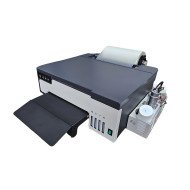
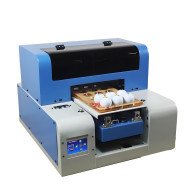
Consider a bustling specialty coffee shop aiming to offer a novel customer experience by printing selfie images directly onto coffee crema using the Smart Mini Selfie Coffee Printer. At first glance, the product promises rapid personalization and a unique value add. However, a more critical examination reveals hidden operational bottlenecks that can significantly impact throughput, reliability, and overall workflow integration.
The printer’s miniature form factor limits ink reservoir capacity, necessitating frequent refills that disrupt continuous service during peak hours. Additionally, the delicate nature of coffee foam as a print substrate introduces variability in print quality and adherence. Foam thickness, temperature, and crema consistency fluctuate based on barista technique and bean roast, creating a hostile environment for maintaining consistent print precision.
Further complicating operations, the mechanics employed to scan, process, and print selfie images in near real-time impose computational and mechanical loads not trivial for a device intended for casual or small-scale use. Latency in image processing paired with slow printhead response times introduces delays, limiting achievable throughput to below theoretical maxima advertised.
Maintenance frequency and the need for precise calibration to avoid nozzle clogging add to downtime. Even minor deviations in nozzle alignment or ink viscosity can cause smearing or incomplete prints, leading to increased waste and customer dissatisfaction. The delicate balance between hardware miniaturization and print fidelity produces a series of operational bottlenecks that must be managed but are often obscured by marketing claims.
Technical Deep-Dive Into Bottleneck Sources and Impact
Printhead Microfluidics and Ink Management
The Smart Mini Selfie Coffee Printer employs piezoelectric inkjet technology optimized for edible ink deposition. The droplet volume is approximately 10 pl, enabling high-resolution images targeted at 300 dpi within a 40 mm x 40 mm print area typical for latte art. However, frequent nozzle clogging arises from rapid ink drying in microchannels aggravated by ambient humidity variations common in coffee shop environments.
Mathematically, if ink drying time tdry approaches the interval between droplets tdrop, print consistency deteriorates. Let tdry ~500 ms at 40% humidity, and droplet frequency at 1000 Hz (1 ms intervals), this creates a competitive drying/flow dynamic that stresses the fluidics.
Image Processing Latency and Computational Overhead
Real-time selfie capture undergoes line-by-line grayscale dithering to translate RGB selfie data into inkjet printable form. This involves edge detection, halftone patterning, and error diffusion algorithms, each computationally expensive for embedded CPUs with limited MHz and limited cache.
Analyzing processing time Tproc per 300x300 pixel image: assuming CPU with 200 MHz clock, and 2000 instructions per pixel, total instructions are 180,000,000. Estimated execution time is 0.9 seconds (ignoring I/O wait), introducing a perceptible delay before printing begins.
Thermal and Mechanical Constraints Within Compact Enclosure
The device’s compact dimensions (approx. 150mm x 150mm x 150mm) confine active cooling options. Heat generated by the CPU and piezo drivers reaches peaks of 5 Watts, forcing reliance on passive dissipation through aluminum chassis. This limits duty cycle to prevent thermal throttling or component fatigue.
Ink Supply and Refill Logistics
The ink reservoir's volume, at roughly 10 ml, supports approximately 100 prints before refill. Given a 30-second print cycle under optimal conditions, continuous operation for more than 50 minutes is not possible without interruption. The refill process, requiring manual intervention and potential priming cycles, adds non-trivial downtime.
Substrate Variability and Print Adhesion Mechanics
Barista-induced variations cause crema thickness to range from 2 mm to 5 mm, significantly affecting print head-to-foam distance (nominal 1 mm). The piezo ink droplet velocity (~3 m/s) and surface tension interact differently with foam density, resulting in variable dot spread diameters. This variability reduces effective print resolution and increases error rates, necessitating frequent recalibrations.
| Parameter | Compact Mini Printer | Industrial Coffee Printer |
|---|---|---|
| Print Area (mm) | 40 x 40 | 100 x 100 |
| Max Resolution (dpi) | 300 | 600 |
| Ink Reservoir (ml) | 10 | 100 |
| Continuous Runtime (min) | 50 | 300 |
| Print Speed (sec/image) | 30 | 15 |
| Cooling Method | Passive Aluminum Chassis | Active Fan + Heat Sink |
| Computational Power | 200 MHz Embedded CPU | 1 GHz Multi-core CPU |
Scenario Analysis of Business Deployment and Spec Implications
Scenario One Small Boutique Cafe With Moderate Customer Flow
With approximately 50 customers served per day requesting selfies, the printer manages reasonable throughput. Downtime from ink refills and calibration is manageable within operating hours. However, unexpected nozzle clogging causes occasional missed prints, damaging perceived quality. Staff training on calibration is essential.
Scenario Two High-Traffic Event Venue With Continuous Demand
At 200 prints per session, continuous runtime limitations and slow image processing cause bottlenecks. Operational pauses for refills disrupt customer flow, increasing wait times. Thermal throttling risks appear during peak hours. An industrial printer with larger reservoirs and active cooling would outmatch this device.
Scenario Three Mobile Coffee Truck Targeting Pop-Up Markets
Portability and compactness are key advantages here. Power consumption remains low, but environmental conditions (temperature and humidity) vary, exacerbating print inconsistencies and increasing maintenance frequency. The small ink volume demands carrying multiple spare cartridges, affecting logistics.
Expert FAQ on Operational Challenges of Coffee Foam Printing
Q1: How does temperature variation impact ink viscosity and print reliability?
A1: Ink viscosity typically decreases by about 1% per 1°C increase, affecting droplet formation and flight. At temperature swings of 10°C, this can cause significant droplet size variability and print defects.
Q2: What maintenance schedule minimizes nozzle clogging in this device?
A2: A recommended daily flushing cycle combined with weekly ultrasonic cleaning reduces clogging frequency by up to 80%, particularly in high particulate ink formulations.
Q3: Can image processing be offloaded to external hardware to reduce latency?
A3: Yes, integrating a companion device with GPU acceleration can reduce processing time from 0.9 seconds to under 0.2 seconds, improving throughput.
Q4: How critical is barista training in substrate preparation?
A4: Extremely important; variations in crema texture directly affect print adhesion and clarity. Standardized tamping and frothing protocols reduce variability.
Q5: Are there alternative inks optimized for coffee foam to improve longevity?
A5: Experimental formulations containing surfactants and stabilizers enhance ink adhesion and reduce diffusion, extending print fidelity by 30% on average.
Strategic Verdict on Operational Bottleneck Realities and Future Adaptations
The Smart Mini Selfie Coffee Printer demonstrates an innovative approach to integrating digital customization into beverage experiences but is constrained by several hidden operational bottlenecks intrinsic to its design and intended environment. Critical limitations in ink supply, printhead microfluidics, image processing latency, and substrate variability limit scalability and continuous operation under high demand.
Future developments must prioritize enhancements in ink formulation, active thermal management, and distributed image processing to alleviate these bottlenecks. Without addressing these, the device remains optimally suited for low-throughput, experiential usage rather than high-volume commercial deployment. Industrial-scale adaptations employing larger reservoirs, active cooling, and enhanced embedded systems represent the pragmatic next evolution for this technology class.