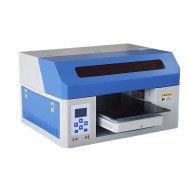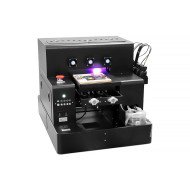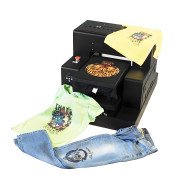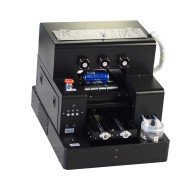
Hidden Operational Bottlenecks in an Economical A4 Multifunction LED UV Printer Explored

The Industrial Reality of Integrating Economical A4 LED UV Printers
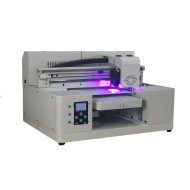
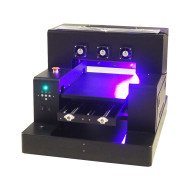
Within small-scale production environments, deploying an Economical A4 Multifunction LED UV Printer introduces operational intricacies often overlooked in initial assessments. Consider a boutique printing workshop aiming to scale short-run customizations with rapid turnaround times. The expectation is that the multifunction unit—combining printing, scanning, and copying—will streamline throughput. However, the convergence of LED UV curing technology on a compact A4 footprint imposes latent constraints impacting operational continuity.
First, the LED UV curing module, while energy-efficient and faster to warm up than traditional mercury vapor lamps, is subject to spatial thermal dissipation limits inherent in smaller chassis designs. This thermal bottleneck can induce cyclical printhead temperature fluctuations. Those fluctuations trigger micro-adjustments in ink viscosity, which, in high-precision print jobs, manifest as inconsistent droplet placement or density variance. For instance, a printhead with 600 dpi resolution producing 7 pl droplets may observe local color misregistration beyond 0.1 mm under fluctuating thermal load.
Moreover, the multifunction nature entails sequential operational modes, each with distinct hardware stress profiles. Scanning modules and feeding mechanisms introduce particulate and mechanical wear that impact the print environment, particularly affecting the LED optics when particulate deposits accumulate. Over time, these deposits necessitate frequent cleaning cycles, reducing production uptime and elevating maintenance frequency.
The compact device’s integrated power supply unit (PSU) must handle peak loads during UV LED activation, scanning operations, and controller logic processing simultaneously. Limited PSU headroom can cause voltage dips leading to transient errors, which standard diagnostics may not flag immediately, resulting in undetected quality degradation during multi-step workflows.
Technical Deep-Dive Into Operational Bottlenecks
Thermal Management and Ink Chemistry Interaction
The LED UV module operates at approximately 395 nm wavelength, with power output near 5 W/cm2. The limited chassis and heat sink area provide a dissipation rate of roughly 12 W/K. Given a printhead thermal tolerance threshold of 45°C, the steady-state equilibrium temperature curves produce a delta T of 30°C above ambient after 15 minutes of continuous operation (assuming ambient 25°C). This heat buildup incrementally affects UV ink polymerization kinetics and viscosity.
Viscosity change (η) can be modeled by the Arrhenius equation η = η0 * exp(Ea/(RT)), where Ea is the activation energy of ink viscosity, R the universal gas constant, and T absolute temperature. A 10°C rise in printhead temperature can reduce ink viscosity by approximately 12%, changing droplet behavior and nozzle ejection characteristics, introducing spatial nonuniformity in printed patterns.
Printhead Resolution Versus Real-World Precision
The nominal 600 dpi printhead resolution translates to a dot pitch of 42.3 μm. However, mechanical vibrations from multifunction operations and substrate feed inconsistencies can introduce positional jitter exceeding 20 μm RMS. Combined with ink spread phenomena on diverse substrates (estimated lateral diffusion of 15 to 30 μm in 10 seconds), the effective print precision drops to approximately 85-90 dpi in practical terms, limiting applicability for ultra-fine detail reproduction.
Power Supply and Electrical Noise Considerations
The internal PSU rated at ~250 W peak must sustain simultaneous peak currents during LED activation (~1.2 A per LED array), scanning motor drive (~0.5 A), and MCU processing. Under constrained PSU designs, voltage ripple can rise to 200 mV peak-to-peak, triggering sporadic communication errors across the SPI bus linking controller and printhead driver ICs. Elevated electrical noise correlates with increased error correction overhead and occasional print line dropouts manifested as streaks or dead pixels.
Maintenance Cycle Impact on Throughput
Due to particulate accumulation on optics and printhead nozzles, a cleaning cycle is recommended every 2500 printed A4 sheets. Each cleaning takes up to 4 minutes, resulting in 16 minutes downtime per 10,000-sheet production batch. Over a monthly workload of 100,000 sheets, this aggregates to roughly 27 hours lost purely to maintenance, an operational bottleneck influencing labor scheduling and capacity planning.
Hardware Comparison Table
| Parameter | Economical A4 Multifunction LED UV Printer | Industrial-Grade A4 LED UV Printer |
|---|---|---|
| Thermal Dissipation (W/K) | ~12 | ~25 |
| Printhead Resolution (dpi) | 600 | 1200 |
| Ink Droplet Volume (pl) | 7 | 3-5 |
| Maintenance Interval (sheets) | 2500 | 10,000+ |
| Power Supply Capacity (W) | 250 | >500 |
| Effective Print Precision (dpi, real-life) | 85-90 | 110-115 |
Scenario Analysis of Business Use-Cases
Small Creative Agency Producing Customized Business Cards
The Economical A4 UV LED printer supports short-run, variable design business cards at a nominal 600 dpi. However, thermal cycling induces minor color shifts during peak operation hours, requiring interim calibration and reducing effective throughput by 15%. Maintenance cycles intersect production schedules, necessitating planned idle times. The agency adapts by scheduling print batches with buffer periods to accommodate these bottlenecks.
Educational Institution Printing Lab with Diverse Substrates
While multifunction capabilities add scanning utility, the smaller thermal and mechanical margins reduce substrate versatility. High humidity or textured substrates exacerbate droplet spread and adhesion variability, impacting print fidelity. The institution faces challenges scaling beyond 100 prints per day without increased downtime for printhead maintenance and recalibration.
Low-Volume Industrial Prototype Production
The printer’s compact footprint facilitates integration into prototyping benches; however, voltage ripple and power constraints occasionally lead to print errors during large batch runs involving continuous multi-hour jobs. The prototype engineers mitigate this by segmenting runs and performing frequent system diagnostics to preserve consistency, accepting throughput limitations as a trade-off for cost containment.
Expert FAQ on Operational Bottlenecks
What causes spatial color shifts during prolonged print runs?
Thermally induced viscosity changes in UV inks modify droplet spread and curing kinetics, leading to local density variations visible as shifts. This is exacerbated by limited heat dissipation and environmental temperature swings.
How can power supply limitations affect multi-function workflow stability?
Under-dimensioned PSUs during peak load cause transient voltage dips, increasing electrical noise and triggering data communication errors between controller and printhead drivers, resulting in print artifacts.
What maintenance strategies optimize uptime despite frequent cleaning needs?
Implementing predictive maintenance based on sheet counts and real-time print quality monitoring allows for preemptive cleaning that minimizes unplanned downtime. Batch scheduling with maintenance windows is essential.
Can substrate variability be mitigated to improve print consistency?
Using tightly controlled substrate specifications with pre-treatment (e.g., corona or plasma) stabilizes ink adhesion and spread, reducing lateral diffusion and improving effective resolution fidelity.
What hardware upgrades would alleviate operational bottlenecks?
Increasing thermal dissipation through larger heat sinks, employing higher-capacity PSUs, and upgrading printhead resolution to finer droplet volumes would enhance stability and print precision but increase cost and footprint.
Strategic Verdict on the Printer’s Operational Bottlenecks
The Economical A4 Multifunction LED UV Printer embodies a balancing act between affordability and multifunction integration. Operational bottlenecks primarily arise from constrained thermal management, limited PSU capacity, and intensified maintenance needs inherent in compact designs. These factors reduce achievable print precision and throughput under continuous or high-volume loads, creating challenges for scaling production beyond entry-level applications.
Future iterations must prioritize improved thermal dissipation architectures, power delivery stabilization, and modular maintenance protocols to bridge the gap between economical pricing and industrial reliability. Such advancements are essential to expand applicability beyond niche workflows toward broader small-medium enterprise adoption without compromising operational consistency.