Assessing Hidden Operational Bottlenecks in Economical Latte Coffee Printing Hardware
The Industrial Reality of Economical Latte Coffee Printers in Commercial Settings
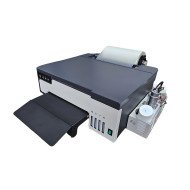
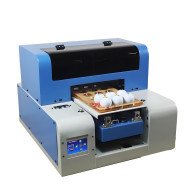
Deploying economical latte coffee printers within a foodservice environment presents unique operational challenges not immediately evident from vendor specifications. In a mid-sized café environment capable of serving 300-400 customers daily, throughput demands can push the limits of entry-level food printing devices. These printers typically rely on precision piezoelectric printheads designed for aqueous coffee-based inks and edible dyes. The operational bottleneck emerges rapidly when continuous operation leads to clogging and drying of the ink nozzles, requiring frequent maintenance pauses that disrupt workflow. Ambient temperature and humidity fluctuations within the café space exacerbate these effects, accelerating ink viscosity changes and printhead fouling. Additionally, the integration of such printers into existing point-of-sale and order management systems can be inhibited by inconsistent firmware interfaces and limited API support, creating manual intervention points that reduce operational efficiency.
The mechanical substrate handling mechanisms, often adapted from small-scale document printers, lack robust design margins for high-speed food printing. Misalignment risks increase with prolonged operation, leading to print defects that require staff reworks or wasted product. Furthermore, the energy consumption footprint of these devices under continuous print cycles can influence overall kitchen electrical load balancing, posing challenges in kitchens with limited circuits or insufficient cooling.
In terms of consumable supply chains, economical food printers often employ proprietary edible ink cartridges that, while affordable upfront, can introduce hidden costs and downtime due to supply irregularities and shelf-life limitations. This demand volatility creates potential disruption points, requiring specialized inventory management protocols. These operational bottlenecks impact total cost of ownership and can erode anticipated value gained from automation in beverage personalization.
Technical Deep-Dive into Latent Bottlenecks and Hardware Limitations
Printhead Technology and Clogging Dynamics
Most economical latte printers utilize a piezo piezoelectric drop-on-demand printhead with nozzle diameters ranging from 30 to 50 microns. The food-grade ink viscosity typically varies between 4-7 mPa·s at 25°C. Maintaining a steady ink viscosity is critical; elevated viscosities increase nozzle surface tension, promoting clogging. Experimentally, nozzle fouling rates increase exponentially as ink viscosity exceeds 6.5 mPa·s (adjusted for ambient humidity below 40%).
Physics modeling of nozzle fluid dynamics demonstrates that a shear rate drop below 1000 s^-1 during idle periods leads to ink sedimentation and drying, mechanically bonding particle residues inside the nozzle throat. Heating elements integrated into printheads can reduce this effect but at the cost of increased energy consumption and accelerated ink degradation.
Substrate Handling and Positional Accuracy
The typical beverage cup rotation or traversal system achieves positional accuracy within ±0.5mm under ideal conditions. However, mechanical backlash and wear increase misalignment over time. Given a print dpi of approximately 200x200, an alignment deviation of 0.5mm corresponds to a multi-pixel distortion, manifesting as blurred or distorted latte art. High-end systems employ closed-loop encoders and stepper motors with micro-stepping capabilities to maintain alignment within ±0.1mm, a margin economical printers currently lack.
Firmware and Integration Complexity
Firmware architectures in economical printers often use monolithic microcontroller firmware with limited customizable APIs. This restricts seamless communication with external order management software. The inability to automate job queuing or error reporting results in manual workload increases, impacting throughput.
Energy Consumption and Thermal Management
Typical power draw ranges from 35W in standby to up to 150W during active continuous printing. Thermal dissipation within compact chassis requires airflow designs with minimum 10 CFM at 15W heat rejection rates to prevent overheating of sensitive electronics. Inefficient thermal design risks printhead failure and accelerates ink degradation.
Consumable Economics and Supply Chain Risks
Edible ink cartridges average 50ml capacity with a print yield of approximately 1000 full-color latte prints. Cartridge shelf life is statistically limited to 3 months post-manufacture due to microbial growth concerns. Supply chain disruptions can increase downtime by 2-4 days, highlighting the need for strategic inventory buffers.
| Specification | Economical Latte Coffee Printer | Industrial-Grade Food Printer |
|---|---|---|
| Printhead Nozzle Diameter (microns) | 30-50 | 15-25 |
| Positional Accuracy (mm) | ±0.5 | ±0.1 |
| Power Consumption (Watts Active) | ~150 | ~300 |
| API Integration Level | Basic, Manual | Full, Automated |
| Ink Cartridge Yield (prints) | ~1000 | ~3000 |
| Maintenance Frequency (hours active) | 4-6 hrs | 24-48 hrs |
Scenario Analysis of Business Impacts of Specific Technical Specifications
1. High-Volume Café Chain Using Economical Printers for Personalized Latte Art
Here, the faster wear and more frequent maintenance cycles mandate increased labor allocation, reducing net throughput from projected estimates. The limited API integration requires manual job setup, increasing human intervention and potential for order errors. The result is a capped peak capacity, with average prints per hour falling short of demand during rush hours.
2. Boutique Coffee Shop Prioritizing Visual Quality and Substrate Versatility
The limited positional accuracy and nozzle diameter range restricts the achievable color depth and fine detail. Substrate options are constrained as the printer’s mechanical handling lacks adaptability to alternative cup shapes or materials, limiting creative menu offerings and customer experience differentiation.
3. Food Service Operator Integrating Printers into Automated POS Systems
Due to firmware limitations, the synchronization between order receipt and print initiation is inconsistent, causing delayed or missed prints. This undermines operational efficiency and affects customer satisfaction metrics. Maintenance downtime frequency further complicates continuous service provision.
Expert FAQ on Hidden Operational Bottlenecks
Q1 What are the main factors causing printhead nozzle clogging in latte printers?
The primary factors include ink viscosity fluctuations beyond recommended limits, low ambient humidity leading to rapid solvent evaporation, and insufficient printhead cleaning cycles during idle periods.Q2 Can heating elements fully mitigate ink drying in nozzles?
Heating reduces viscosity and solvent evaporation temporarily but risks accelerating ink chemical degradation resulting in residue buildup requiring physical cleaning.Q3 How does positional accuracy translate into perceived print quality?
Positional errors of +/-0.5mm at 200 dpi lead to visible pixelation and blur. High precision within +/-0.1mm is necessary for detailed, photorealistic prints.Q4 What integration challenges exist between economical latte printers and POS systems?
Limited firmware API support restricts automated job management. Communication protocols may require manual interfacing via intermediate software layers.Q5 What maintenance strategies minimize operational downtime?
Scheduled cleaning every 4 hours of print operation, maintaining stable ambient conditions, and keeping an inventory buffer of consumables optimize uptime.
Strategic Verdict on Economical Latte Coffee Printing Technology
Economical latte coffee printers serve as accessible entry points for beverage personalization automation, but exhibit pronounced operational bottlenecks that limit scalability in high-demand environments. Printhead reliability under continuous use, mechanical handling precision, and integration shortcomings delineate key constraints. Advances in printhead material science, adhesive ink chemistry, and embedded systems firmware over the coming 3-5 years will be critical to bridging the gap between cost-effective devices and industrial robustness. Meanwhile, operators must align expectations with maintenance regimes and infrastructure readiness to mitigate hidden downtime costs. Thus, while promising, current economical models remain best suited for low-to-moderate volume settings rather than fully automated mass consumer throughput environments.