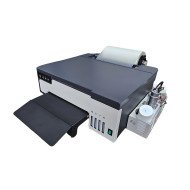
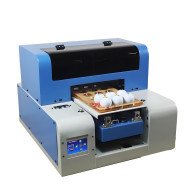
Analyzing The Performance Limits Of A3 Spot UV Printing Machines Under Industrial Stress

The Industrial Reality Behind A3 Spot UV Printing Machines and Their Performance Challenges
Within high-volume production floors, the implementation of A3 Spot UV printing machines introduces a series of precise technical challenges. Operators and engineers face not only the mechanical integration of the UV coating process but also the necessity to maintain throughput without compromising output quality. The technology operates under narrow process windows where temperature, humidity, substrate type, and UV lamp intensity must be tightly controlled. Fluctuations in any of these parameters yield inconsistencies in coating adhesion, gloss uniformity, and curing completeness, which directly affect downstream finishing and overall product integrity.
Compounding these issues is the intricate balance between machine speed and cure time. Increasing throughput demands higher conveyor speeds; however, UV curing lamps require a fixed energy dose expressed in Watts per square centimeter (W/cm2) to polymerize the coating effectively. Run faster than design parameters, and incomplete curing manifests, causing tacky surfaces vulnerable to damage or contamination. Conversely, slowing down reduces productivity and increases energy consumption per unit. This operational bottleneck routinely forces manufacturers into complex trade-offs that affect profitability, floor space allocation, and maintenance scheduling.
Moreover, the print head and coating application system must ensure micron-level control of coating thickness, often within +/- 5 microns, to avoid excessive UV absorption or coating waste. Such precision necessitates precision-engineered components with resilience to wear and obstructive dust or ink residue accumulation. Without stringent preventive maintenance protocols, throughput degradation follows mechanical downtime, threatening just-in-time (JIT) manufacturing processes.
Finally, many production environments contend with substrate variability. Paper stocks, synthetics, and cardboard differ in porosity and surface energy, altering the UV coatings’ wetting and adhesion dynamics. Without adaptive control systems capable of sensing substrate condition changes in real-time and adjusting UV intensity or coating volume, consistent output quality remains elusive. These factors emphasize the multifaceted technical challenge of optimizing A3 Spot UV printers for stable, high-volume deployment.
Technical Deep-Dive Into Hardware Capabilities Versus Real-World Performance
1. UV Lamp Power and Cure Energy Dynamics
The critical parameter governing A3 spot UV curing is the energy dose E delivered, related by the equation E = P × t / A, where P is the lamp power (Watts), t is exposure time (seconds), and A is the illuminated area (cm2). For a fixed lamp power and print width, increasing conveyor speed reduces exposure time, which threatens full cure polymerization. Empirical testing shows a minimum UV energy dose of approximately 250 mJ/cm2 is required to achieve tack-free surface films with typical commercial UV varnishes. Operating below this threshold results in incomplete crosslinking.
2. Printhead and Coating Application Precision
Spot UV machines utilize inkjet or roller coating heads capable of depositing films in the 10-50 micron thickness range. Achieving consistent thickness control depends on actuator resolution and feedback systems. For inkjet heads, nozzle diameters of 30-50 microns with drop volumes of 10-20 picoliters provide repeatable coating dots; however, nozzle clogging and fluid viscosity changes introduce variance. Roller coating systems maintain thickness by mechanical gap settings but suffer from wear-induced drift over time, requiring periodic calibration.
3. Thermal Management and Equipment Endurance
UV lamps generate significant heat during operation, with typical mercury arc or LED arrays consuming between 200-400 Watts each. Thermal dissipation must be managed through heat sinks or forced air cooling to maintain lamp spectral output stability. Excess heat affects both lamp life—commonly rated at 500-1000 hours of effective operation—and printhead electronics. Field data indicates thermal runaway risk increases after prolonged continuous runs exceeding 8 hours without adequate cooling breaks, leading to accelerated component failure.
4. Substrate Variability and Coating Adhesion Physics
Surface energy variations alter the wettability of UV coatings, quantified by contact angle measurements ranging between 30° and 70°. Porous substrates induce deeper varnish penetration, reducing surface gloss and altering curing dynamics due to light scattering. Non-porous substrates require controlled cure intensity to prevent overcuring, which can induce brittleness or cracking. Adaptive systems incorporating inline spectrophotometry and contact angle sensors represent a frontier in solving these variability challenges.
5. Comparative Table of Two Predominant Hardware Approaches
| Parameter | Mercury Arc UV Lamp System | LED UV Lamp System |
|---|---|---|
| Power Consumption (Watts) | 250 - 400 | 100 - 250 |
| Effective Lifespan (Hours) | 500 - 1000 | 10,000+ |
| Startup Warm-Up Time (Seconds) | 60 - 120 | Instant |
| Spectral Output Range (nm) | 200 - 400 | 395 - 405 |
| Thermal Load on Printhead | High - Requires Active Cooling | Low - Passive Cooling Adequate |
| Initial CAPEX | Lower | Higher |
Scenario Analysis Highlighting Use Cases Impacted by Performance Limits
Scenario 1 Manufacturing Variable Quantity Runs with Mixed Substrates
A print shop managing short-run jobs on diverse substrates encounters inconsistent coating adhesion due to manual calibration inefficiencies. Slow changeover and recalibration add downtime resulting in missed delivery deadlines. Insufficient adaptive curing leads to customer complaints from gloss and tack defects. Investment in inline sensor integration and programmable curing zones could mitigate these issues but entails substantial CAPEX.
Scenario 2 High-Volume Packaging Facility Focused on Maximum Throughput
At a packaging conversion facility pushing 1000+ sheets per hour, maximizing conveyor speed directly stresses the UV curing system. Operators must reduce speed periodically to maintain cure quality or accept high scrap rates. Thermal management becomes critical as continuous running causes lamp power fluctuation and printhead overheating. Preventive maintenance cycles must be scheduled rigorously to avoid catastrophic failures but reduce overall uptime.
Scenario 3 Artisan Print Studio Demanding Micron-Level Coating Precision
In a boutique setting prioritizing visual depth and finish quality, operators run the machine below maximum throughput to preserve coating thickness uniformity within tight +/- 5 micron tolerances. This entails extended print times and higher labor intensity but improves product differentiation. The trade-off is increased OPEX per unit but with potential for higher margins due to premium pricing.
Expert FAQ Addressing Complex Technical Concerns
What specific maintenance actions reduce nozzle clogging in high-solid UV varnish applications?
Scheduled ultrasonic cleaning of inkjet nozzles, use of anti-caking additives in varnish formulations, and maintaining stable varnish temperature within 20-25°C minimize viscosity fluctuations and particulate sedimentation that cause clogs.
How does substrate moisture content affect UV curing efficiency?
Higher moisture content (>6%) increases light scattering and lowers surface temperature, reducing polymerization rates and leading to undercured coatings unless compensated by increased UV power or longer exposure time.
Can LED UV lamps fully replace mercury arc systems without performance loss?
LED lamps offer longer lifespan and lower heat but emit a narrower spectral range, which some photoinitiators in coatings require for complete curing. Reformulating varnishes to match LED emission can bridge this gap, but legacy formulations may not cure sufficiently on LED systems.
What are the mechanical tolerances critical to maintaining film thickness precision?
Printhead gap uniformity within +/- 10 microns and substrate flatness deviations below 0.2 mm across the print width are essential to avoid localized coating thickness variation.
How does prolonged continuous operation affect lamp intensity and output consistency?
Lamp intensity degrades gradually due to cathode wear and contaminant buildup, typically reducing output by 10-15% after 500 hours. Lamp diagnostics incorporating real-time intensity monitoring can trigger maintenance before significant quality drift occurs.
Strategic Verdict On The Future Trajectory Of A3 Spot UV Printing Technology
The engineering complexities of A3 Spot UV printing machines underscore a tension between increasing throughput demands and the physical limits of UV curing chemistry and hardware endurance. Incremental improvements in LED UV lamp technology, combined with advanced inline sensor feedback and automation, will define the next generation of systems capable of maintaining high-quality output at elevated speeds. However, legacy mercury arc lamp systems, while operationally mature, are increasingly constrained by thermal management and maintenance costs. The industry’s evolution will hinge upon matching coating photoinitiator chemistry with LED spectra and deploying smarter control architectures that adapt in real time to substrate and environmental variations. This shift promises to reframe operational bottlenecks as manageable parameters but requires substantial capital investment and interdisciplinary engineering integration to realize fully.