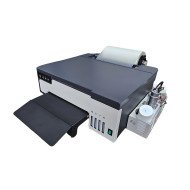
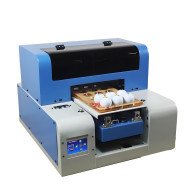
Analyzing Printhead Physics and Ink Chemistry in the Color Version Latte Coffee Printer
The Industrial Reality of Coffee Printer Uptime Challenges
In specialized coffee shops deploying advanced printing technology for latte art, the Color Version Latte Coffee Printer represents a significant leap in precision and aesthetic output. However, this sophistication introduces complex technical challenges that directly affect daily operational uptime. Printhead mechanics in food-grade inkjet systems operate in environments with rapid temperature fluctuations, high humidity, and continual exposure to consumable liquids. This leads to accelerated wear and potential nozzle clogging, particularly when dealing with viscous, pigment-rich edible inks formulated to meet food safety regulations. Maintenance teams face the dual challenge of ensuring hygienic conditions while minimizing printer downtime caused by routine cleaning cycles and unexpected malfunctions.
Furthermore, ink chemistry plays a critical role in operational reliability. Specialized edible inks must balance pigment stability, flow consistency, and rapid drying times. Suboptimal formulation can lead to sedimentation, clogging, and inconsistent droplet ejection, which deteriorates print quality and increases maintenance frequency. Given the high throughput demands in busy outlets, where operational continuity directly affects service efficiency and customer satisfaction, these factors elevate the importance of printhead and ink system engineering.
In practice, maintenance leads report daily uptime averages hovering around 85% under ideal conditions, dropping closer to 70% when contamination or ink degradation occurs. Cleaning cycles often require 10-15 minutes per session, multiple times per day, which translates into substantial operational costs. Understanding the interplay between printhead physics and ink chemistry is indispensable for accurate uptime forecasting, maintenance scheduling, and ensuring consistent micron-level printing precision in edible media.
Understanding Printhead Physics in Edible Inkjet Systems
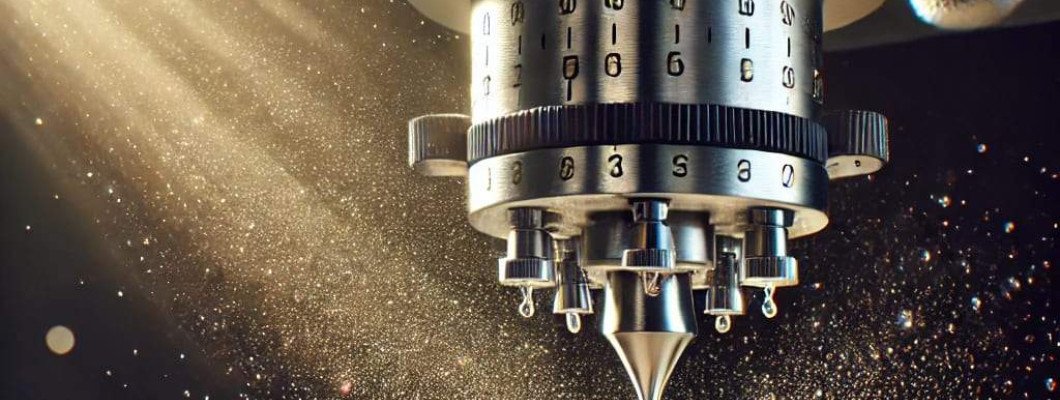
Printhead performance depends primarily on the piezoelectric or thermal actuator technology and nozzle design. The Color Version Latte Coffee Printer likely uses piezoelectric printheads to achieve fine droplet control and color variation at typical resolutions between 300 and 600 dpi. The nozzle diameter, often in the range of 20-40 microns, directly affects droplet volume, typically around 5-10 picoliters (pl), which in turn impacts color blending accuracy and print sharpness.
Piezo actuators are subjected to repeated mechanical strain cycles often exceeding 10 million pulses per month in commercial settings. This strain induces piezo material fatigue, leading to slight variances in droplet size and ejection velocity. In food-based inkjet systems, ink viscosity ranging from 3-7 cP at 25°C imposes additional load on nozzle ejection forces. If ink viscosity rises due to sedimentation or temperature shifts, the droplet formation process becomes less stable, increasing the risk of satellite droplets which degrade image fidelity.
Thermal expansion of printhead components can alter nozzle geometry marginally, impacting uniform droplet ejection. Precise thermal management via integrated heat dissipation structures within the printer is essential to restrict temperature swings within ±0.5°C around the nominal 25°C operating point. Failure to maintain this range can accelerate nozzle clogging and print artifacts.
Advanced Ink Chemistry and Its Impact on Longevity
Edible ink formulation is a balance of pigment particle size, solvent composition, food-safe additives, and surfactants. Pigment particles must be micrometer-sized to avoid clogging, typically under 500 nm to pass smoothly through fine nozzles. The Color Version Latte Coffee Printer's success depends on maintaining stable dispersion to prevent agglomeration, which elevates the risk of nozzle blockage and inconsistent droplet formation.
Solvent systems in edible inks are mostly aqueous but supplemented with propylene glycol or glycerin to regulate evaporation rates and maintain ink fluidity. High evaporation rates result in rapid drying on the printhead surface, causing crust formation that requires frequent cleaning. Surfactants improve wetting on the milk foam substrate but must be balanced to avoid foam destabilization.
From a chemical stability perspective, pigment oxidation or pH shifts during storage and use impact color fidelity and shelf life. In practice, inks stored beyond 7-10 days after opening can exhibit altered rheological properties that degrade print consistency, requiring vigilant inventory management and frequent replenishment.
Printhead Maintenance and Cleaning Cycle Engineering
Maintenance lead data indicates that nozzle clogging is the primary downtime driver. Cleaning cycles employ automated wiping, ink flushing, and ultrasonic vibration in advanced systems. The Color Version Latte Coffee Printer likely integrates scheduled purge cycles activated every 2-4 hours of use or when nozzle failure is detected by built-in sensors monitoring droplet consistency and electrical impedance.
Calculations show that a purge cycle consuming approximately 2 ml of ink and lasting 15 seconds can prevent cumulative clogging but introduces unproductive downtime and ink waste. Thus, optimal scheduling algorithms must balance cleaning frequency with throughput targets. The cost-benefit assessment must consider ink costs, cleaning solution usage, labor, and the opportunity cost of lost printing time.
Data Comparison of Printhead Types and Ink Formulations
| Specification | Piezoelectric Printhead System | Thermal Printhead System |
|---|---|---|
| Nozzle Size | 20-40 microns | 30-50 microns |
| Typical Ink Viscosity Range | 3-7 cP | 1-3 cP |
| Droplet Volume | 5-10 pl | 10-20 pl |
| Maintenance Frequency | Every 2-4 hours | Every 1-2 hours |
| Thermal Sensitivity | Medium, requires heat management | High, printhead heats ink |
| Ink Chemistry Compatibility | Allows higher pigment concentration | Limited by evaporation and heat |
| Clogging Risk | Lower due to gentle ejection forces | Higher due to thermal stress |
Scenario Analysis of Coffee Shop, Event Catering, and Retail Chain Deployment
Scenario 1 Commercial Coffee Shop High Throughput
In a high-volume coffee shop serving 150+ lattes daily, uptime and fast cleaning cycles are critical. The printer's piezoelectric printhead paired with optimized ink with <5 cP viscosity ensures minimal downtime. Maintenance leads must schedule cleaning every 3 hours balancing throughput loss (~15 mins per cleaning) and preventing nozzle clogging. The ability to reliably print micron-level art without sacrificing 30-minute peak hours reduces operational disruptions and maintains customer experience.
Scenario 2 Event Catering Mobile Setup
Portability and rapid deployment require a printhead system tolerant to temperature fluctuations and variable ink storage conditions. The Color Version Latte Coffee Printer's thermal stabilization system is tested in ambient ranges of 15-30°C. Ink formulations with enhanced surfactants minimize foam destabilization despite rapid serving cycles. However, frequent cleaning every 1.5 hours is necessary to maintain consistency, which may reduce printing window per event.
Scenario 3 Retail Chain Automated Kiosk
Automated retail kiosks demand maximized runtime with minimal manual intervention. The choice of piezo printheads and long-life edible inks with over 10-day shelf life extends maintenance intervals. The integration of real-time sensor feedback for nozzle health allows predictive maintenance alerts, minimizing unscheduled downtime. However, the added complexity in printhead monitoring requires capital investment in control systems and software integration.
Expert FAQ on Printhead Physics and Ink Chemistry Maintenance
Q1 What physical parameters most influence clogging frequency in edible inkjet printheads?
Droplet volume, ink viscosity, pigment particle size, and operating temperature range strongly impact clogging. Smaller nozzles and higher pigment loads increase clog risk.
Q2 How does thermal management affect long-term piezoelectric actuator reliability?
Stable operating temperatures reduce piezo fatigue by minimizing mechanical strain variations, enhancing actuator lifespan beyond 20 million cycles.
Q3 What ink chemistry adjustments improve substrate adhesion without foam collapse?
Optimizing surfactant concentration and using glycol-based humectants balance wetting properties with foam stability on milk surfaces.
Q4 Can ultrasonic cleaning extend printhead uptime significantly?
Yes, ultrasonic vibration combined with solvent flushing disrupts pigment agglomerates more effectively than wiping alone, reducing downtime by as much as 20% per shift.
Q5 Are there predictive maintenance models applicable to edible ink printers?
Yes, sensor data on droplet electrical impedance and flow rate can inform machine learning models to predict nozzle failure with lead times of several hours.
Strategic Verdict on Printhead and Ink System Trajectory
Technological advances in the Color Version Latte Coffee Printer highlight the crucial interplay between printhead physics and ink chemistry as the primary vector for improving operational uptime in edible printing applications. Piezoelectric printheads combined with carefully engineered ink formulations currently offer a balanced compromise between print quality, maintenance intervals, and system reliability. Future innovations may explore real-time adaptive cleaning, improved pigment nano-formulations, and integrated thermal management to push uptime beyond 95% in commercial contexts. However, these gains will require multi-disciplinary engineering coordination and rigorous quality control, underscoring the complexity inherent in translating micron-level precision into a robust field-deployable solution.