Analyzing Operational Bottlenecks in A3 Roll DTF Printer T-shirt Printing Machines with Critical Precision
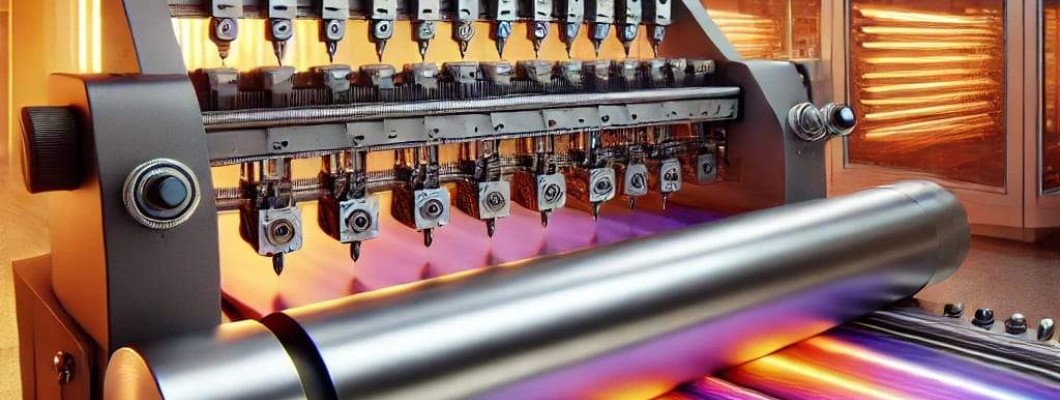
The Industrial Reality of Roll-to-Roll DTF Printing Constraints
In commercial textile printing environments where throughput and operational continuity dictate profit margins, the deployment of A3 Roll DTF (Direct to Film) printer machines introduces a complex interplay of mechanical and process-centric challenges. While these units promise high-resolution, vibrant T-shirt transfers via wet ink deposition onto a PET film substrate, the operational bottlenecks emerge most visibly during sustained roll-to-roll production cycles. Issues such as film tension variability, ink drying lag, and printhead clogging compound in environments subjected to fluctuating ambient temperatures and particulate contamination. This reality demands robust process design not only in hardware but in supporting workflows, as system downtime and throughput throttling directly undermine expected returns.
Consider a scenario where a mid-to-large scale print shop attempts to maximize output using a typical A3 Roll DTF printer. Initial prints meet quality standards, but over a 4-hour continuous run, incremental issues arise: film alignment drifts result in partial misregistration, ink viscosity shifts yield inconsistent dot sizes, and printhead maintenance intervals shorten unexpectedly due to clustering nozzles. These emergent phenomena reduce effective uptime and increase the need for operator intervention, illustrating the hidden costs behind nominal specifications.
Furthermore, integration of the DTF printer into an existing production line exhibits non-trivial challenges in synchronization of drying ovens and post-press curing systems, which can induce bottlenecks when cycle times are mismatched. The A3 form factor, while offering a balance between desktop and industrial scale, still necessitates precise thermal management and film handling strategies not immediately apparent in vendor datasheets.
Understanding Mechanical and Fluid Dynamics Factors Leading to Bottlenecks
The roll feed system in A3 DTF printers operates within a narrow operational tolerance. Film tension T can be expressed as:
T = F / w
where F is the film tensile force (N) and w is the film width (0.297 m for A3). Minor deviations in F induced by inconsistent roller torque or film stiffness heterogeneity propagate to film skew and positional drift on the platen, triggering printhead-to-film misalignment exceeding ±0.1 mm—beyond the pixel resolution threshold for 600 dpi printing. Over time, this misalignment causes cumulative layer registration errors.
Ink rheology constitutes another bottleneck. The UV-curable or plastisol inks commonly employed have specific viscosity windows (typically 15-25 cP at 25°C). Operating outside these bounds leads to inconsistent droplet volume, where drop volume V drop relates to nozzle diameter d and ink viscosity η by the empirical relation:
V drop ∝ d^3 / η
Ink thickening due to ambient evaporation or pigment settling can increase η, reducing droplet volume and affecting color vibrancy and coverage uniformity. This necessitates dynamic maintenance cycles often underappreciated in workflow planning.
Thermal Management and Drying Cycle Synchronization
Drying kinetics are critical in roll DTF printer throughput optimization. The drying oven’s power density P (W/m^2) and dwell time t (seconds) determine drying completeness D, which can be modeled as:
D = 1 − exp(−kPt)
where k is an empirically derived constant dependent on ink chemistry and substrate. Insufficient drying results in ink smearing and print defects, while over-drying can deform the PET film. Matching the dryer cycle time to the printer roll speed S (m/s) through conveyor length L (m) imposes constraints:
L = S × t
A printer running at a speed that exceeds drying capacity creates a bottleneck requiring buffer zones or reduced throughput. The printer’s maximum rated speed is often mismatched with ancillary equipment, underscoring the need for integrated system design.
Comparative Table of Bottleneck Mitigation Strategies
| Parameter | Active Film Tension Control | Passive Film Tension System |
|---|---|---|
| Operational Stability | Maintains ±0.05 N tension range actively via feedback sensors | Static spring-loaded roller system with ±0.2 N variability |
| Printhead Alignment Drift | Reduced to <±0.05 mm due to tension control | Up to ±0.15 mm due to tension fluctuation |
| Maintenance Frequency | Printhead cleaning cycles every 8 hours | Printhead cleaning cycles every 4 hours |
| Throughput Impact | Minimal downtime; consistent 95% uptime | Frequent stoppages; 80-85% uptime |
| Cost Implication | Higher initial cost; lower OPEX | Lower CAPEX; higher labor and material cost due to downtime |
Ink Formulation Challenges and Printhead Interaction
A3 Roll DTF printers frequently utilize piezoelectric drop-on-demand printheads sensitive to particle size and ink chemistry. Ink stability over runs correlates strongly with nozzle health. Particles above 5 μm risk clogging 30-35 μm diameter nozzles. Inks with high pigment load or polymer additives can increase viscosity non-linearly during runs due to solvent evaporation.
The printhead voltage pulse must be optimized to maintain droplet velocity and volume, avoiding satellite droplets that reduce image sharpness. Typical piezo driver voltage ranges from 15 to 40 V with pulse widths of 5-10 μs. Inconsistent ink properties challenge electronic control parameters and can require print profile adjustments mid-run.
Systemic Workflow Bottlenecks through Post-Processing and Heat Press Integration
After printing on the PET film, garments require heat press transfer. The workflow geometric alignment between the printed film roll and the heat press batch size is non-trivial. Batch sizes smaller or larger than print roll increments create inventory staging bottlenecks. Heat press cycle times of 15-25 seconds per garment must be integrated with print run speed to avoid upstream congestion.
Summary of Key Technical Bottlenecks
- Film tension variability causing misregistration beyond ±0.1 mm at 600 dpi
- Ink viscosity shifts affecting droplet volume by ±10% leading to color inconsistency
- Thermal drying mismatch resulting in throughput losses up to 20%
- Printhead nozzle clogging frequency doubling without active tension and ink control
- Post-press integration bottlenecks limiting line throughput by 15-30%
Scenario Analysis of Use Cases Affected by Operational Bottlenecks
High-Volume Custom Apparel Production
A 24/7 print shop serving a sports league requires 1000 T-shirts per day with high color accuracy and durability. Without precise film tension control and synchronized drying, printhead failures force multiple stoppages per shift, reducing effective output to 700-800 shirts. Optimizing operational parameters improves uptime to 92%, equating to a daily gain of 120-140 shirts, impacting revenue significantly.
Small Batch High-Quality Artisan Prints
For boutique studios producing limited runs of complex designs, bottlenecks involving ink viscosity fluctuations create unacceptable color deviations. Here, controlling environmental humidity and ink temperature improves color consistency drastically, outweighing throughput considerations. Print speeds are often reduced by 25% to ensure quality.
Integration in Automated Production Lines
Large enterprises integrating A3 DTF printers into automated roll-to-roll garment handling systems face synchronization challenges. Bottlenecks arise when post-print curing conveyors and heat presses are not calibrated to printer throughput, causing buffer overruns and necessitating costly operational pauses. A 10-15% throughput penalty is typical without dedicated workflow engineering.
Expert FAQ on A3 Roll DTF Printer Operational Bottlenecks
What numerical tolerance in film tension variation causes visible printhead misalignment?
Typically, film tension deviations exceeding ±0.1 N translate to registration errors surpassing ±0.1 mm, which is critical at print resolutions of 600 dpi (42.3 μm per dot). Maintaining ±0.05 N tension limits drift to within pixel dimensions.
How does ink viscosity correlate with droplet volume consistency during long print runs?
An increase in ink viscosity of 10% reduces droplet volume approximately by 10% due to inverse proportionality in nozzle fluid mechanics, impacting color saturation and uniformity. Active ink conditioning systems mitigate this effect.
What role does thermal drying capacity play in defining maximum roll-to-roll print speed?
Thermal drying power density combined with conveyor length defines the drying time window. Insufficient capacity restricts print speeds below mechanical maxima to prevent ink smearing, establishing a de facto bottleneck in throughput.
Why do piezoelectric printheads require frequent cleaning in roll DTF printers?
Particle sedimentation and ink polymerization at nozzle edges degrade ejection consistency. Frequent cleaning every 4-8 hours is essential to maintain droplet size uniformity, especially in high-pigment inks.
How do batch size mismatches between printing rolls and heat press cycles affect production?
Disparities cause inventory staging delays and buffer overflows, forcing slowdowns in printing or post-press processing, often leading to a 15%-30% reduction in effective throughput.
Strategic Verdict on A3 Roll DTF Printing Bottlenecks
The A3 Roll DTF Printer offers a technically compelling middle ground between small-format and industrial textile printing but is intrinsically limited by complex interdependencies in mechanical film handling, ink chemistry, thermal management, and post-processing integration. Near-term improvements are likely to derive from active adaptive controls for film tension, real-time ink rheology monitoring, and enhanced drying system design matched to roll speed. Achieving seamless integration into automated production lines will necessitate holistic workflow engineering. As such, operators must anticipate and mitigate hidden bottlenecks with data-driven process adjustments to realize consistent throughput and quality benchmarks.