Analyzing Hidden Operational Bottlenecks in A4 Flatbed T-shirt Printers for Scalable Businesses
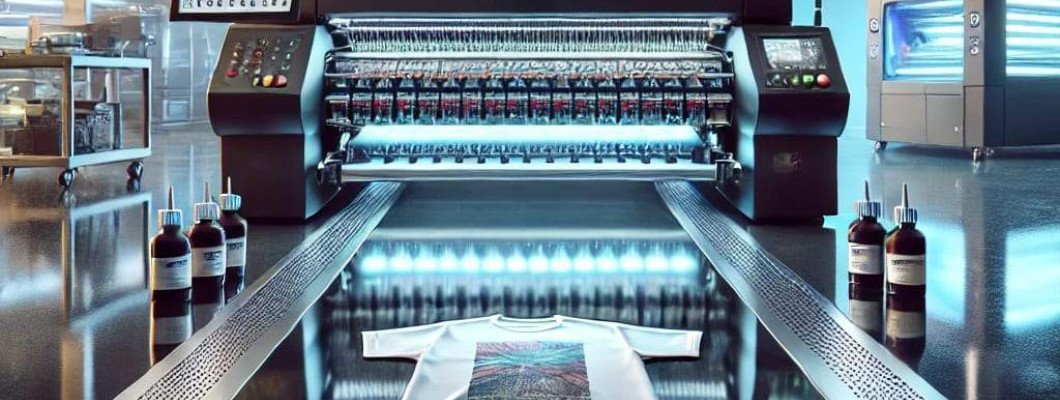
The Industrial Reality of Operating A4 Flatbed T-shirt Printers in Scalable Environments
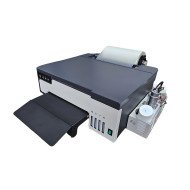
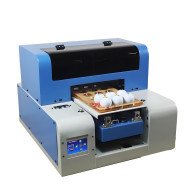
In a mid-sized apparel printing facility, the introduction of an A4 flatbed T-shirt printer promises enhanced throughput and sharper print fidelity. Yet, what often unfolds is a series of operational constraints not apparent in initial assessments. The small flatbed size, precisely 210mm by 297mm, limits simultaneous print area, creating a queueing effect on job scheduling when production demand scales. This bottleneck interacts with the mechanical transport system's acceleration profiles, clamping throughput below theoretical peak rates.
Additionally, the printhead architecture—commonly utilizing piezoelectric elements with droplet sizes ranging between 4pl and 12pl—requires optimization to balance speed and quality. Ink curing cycles, particularly with pigment or plastisol inks, introduce further delays since thermal or UV curing units are typically calibrated for batch processing rather than continuous flow.
Operator intervention frequency due to media alignment, registration errors linked to substrate variance, and ink refill logistics create cascading impacts on effective uptime. While raw hardware specs claim rapid prints per minute, the interplay of these operational factors leads to average throughput rates that deviate significantly from rated performance, especially under high-volume automated workflows.
Printhead Mechanics and Throughput Limitations
A4 flatbed printers frequently employ staggered printhead arrays with nozzle counts between 384 and 768 nozzles, each firing droplets at 8 kHz frequency. Hypothetically, a single printhead with 600 nozzles firing 8,000 droplets per second could theoretically deposit 4.8 million droplets per second. However, print speed is limited by the mechanical motion of the flatbed carriage, typically moving at 400 mm/s horizontally.
Assuming an interpass overlap of 50% to maintain print uniformity, effective print swath per pass reduces to approximately 105mm. Coupling this with drying times averaging 3 seconds per pass, maximum throughput is capped around 10-12 shirts per hour for full-coverage prints, a figure that declines with increased print complexity and substrate variability.
Thermal and Ink Curing Infrastructure Constraints
Ink curing mechanisms, whether thermal or UV, often operate as standalone modules external to the printhead assembly. Thermal curing units demand precise heat profiles between 120°C and 160°C sustained for 30-60 seconds to properly fix pigment inks on cotton substrates without compromising fabric integrity. UV curing lamps require calibrated intensity levels around 150-250 mW/cm2 with exposure times tailored to ink chemistry.
Limited curing unit size forces batch processing, introducing idle time for the printer while prints cure. This time-based bottleneck challenges continuous production cycles from an automation perspective and necessitates buffered staging areas to prevent backlog formation.
Scaling Workflow Impact from Prototype to Production
Transitioning from artisanal to scalable business models requires reevaluation of the A4 flatbed printer’s role. Production facilities must engineer workflow buffers, automated substrate feeders, and inline curing conveyors to mitigate downtime. However, smaller format limits on substrate surface area impede economies of scale typically realized through larger flatbeds or rotary systems.
Optimizing print scheduling algorithms and integrating real-time quality control sensors for media alignment can reduce operator interventions from 15% to under 5% of production time. Nevertheless, these additions increase capital expenditure and operational complexity, introducing a trade-off between throughput gains and maintenance overhead.
Comparing A4 Flatbed Printers Against Alternative Print Architectures
| Specification | A4 Flatbed Printer | Industrial Roll-to-Roll Printer |
|---|---|---|
| Print Area | 210mm x 297mm | Variable, up to 1,000mm wide |
| Max Throughput | 10-12 shirts/hour (full-coverage) | 50-80 shirts/hour |
| Printhead Type | Staggered Piezoelectric Array | Multi-head inline Arrays |
| Ink Curing | Batch thermal or UV | Inline continuous curing |
| Operational Complexity | Medium, frequent manual alignment | High automation, less manual input |
Scenario Analysis for Scalable Business Owners
Scenario 1: Small Batch Diverse Design Production
In businesses prioritizing high design variation with smaller batches, the A4 flatbed printer’s fine print fidelity provides excellent color depth and micron-level control. However, limited batch size and manual interventions constrain hourly throughput.
Scenario 2: High-Volume Uniform Print Runs
For large uniform runs, the flatbed size proves a bottleneck, requiring multiple sequential prints and curing cycles, inflating labor costs and elongating turnaround times. Larger automated printers reduce per-unit time and manual handling.
Scenario 3: Mixed Substrate Versatility
The printer excels when diverse substrates are required, including uneven or small-format garments. Its ability to fine-tune print parameters per piece offsets throughput penalties but mandates high operator skill levels and frequent maintenance.
Expert FAQ Answering Operational Complexities
Q1: How does nozzle health impact print consistency in high-volume use?
Regular nozzle clogging from ink sedimentation reduces uniform droplet size, causing banding and color shifts. Preventative maintenance via automated purging cycles every 4-6 hours is critical.Q2: What physics govern drying times on textile substrates?
Drying integrates convective heat transfer and ink solvent evaporation rates, influenced by airflow velocity and fabric porosity. Excess thermal exposure risks substrate deformation.Q3: How does printhead firing frequency affect droplet placement accuracy?
Higher frequencies demand tighter synchronization with carriage velocity to avoid misregistration. Mechanical vibrations introduce lateral displacement errors above 0.1 mm.Q4: What operational data metrics best predict maintenance intervals?
Key metrics include uptime percentage, frequency of nozzle purge cycles, printhead temperature fluctuations, and substrate feed tension variability.Q5: Can environmental factors alter ink curing efficiency?
Ambient humidity above 60% and temperature variations beyond ±5°C cause inconsistent curing due to altered ink chemical reaction kinetics.
Strategic Verdict on A4 Flatbed Printer Technology Evolution
The A4 flatbed T-shirt printer occupies a niche between artisanal precision and scalable mass production. Its physical size and operational dependencies limit throughput growth under continuous industrial use without extensive workflow automation and maintenance regimes. Future iterations must integrate inline curing, enhanced printhead robustness, and adaptive motion control to bridge current bottlenecks. While still effective for diverse substrate applications and low-to-medium volume, the inherent trade-offs in batch size versus operational complexity won’t fully reconcile without systemic hardware redesign aimed at industrial throughput standards.