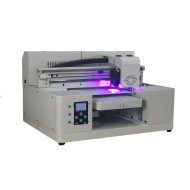
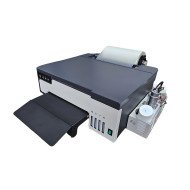
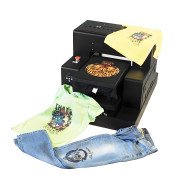
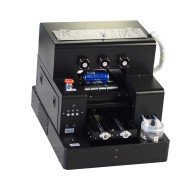
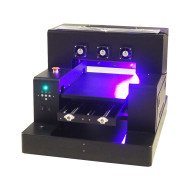
A3 DTG Printer T-shirt Printing Machine Reveals Hidden Operational Bottlenecks Impacting Throughput and Labor Costs
The Industrial Reality of A3 DTG Printer Bottlenecks in Production Environments
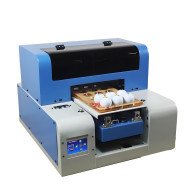
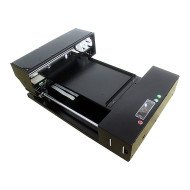
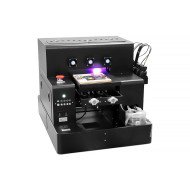
The deployment of an A3 Direct-to-Garment (DTG) printer in a mid-scale apparel manufacturing environment is often viewed as a straightforward upgrade to enhance customization and volume throughput. However, operational bottlenecks inherent to the technology frequently undermine these expectations, especially when scaling beyond prototype runs to consistent batch production. Consider a production floor where the printer is scheduled to output 120 pieces per eight-hour shift. The printer's nominal specification claims a print speed of roughly 2-3 minutes per shirt, projecting a theoretical throughput of 160 to 240 units per shift. Actual operational throughput, however, often falls short due to several hidden process inefficiencies.
One critical bottleneck arises from the drying and curing subsystem. Without integrated inline curing, operators must remove printed garments for separate heat pressing or curing, adding non-trivial manual handling time and increasing the risk of registration errors or print damage. Additionally, the manual substrate loading and unloading cycles further reduce net printer runtime efficiency. Human factors compound these issues, as operator fatigue or imprecise alignment can increase misprints, requiring rework and further delaying output.
Ink management is another underappreciated bottleneck. The high precision piezo printheads utilize inks with specific rheological properties requiring controlled environmental conditions. Variations in ambient temperature or humidity can lead to nozzle clogging or inconsistent droplet size, interrupting print runs for cleaning cycles that cumulatively add several minutes per job. Moreover, the A3 format, while optimal for smaller garments, limits batch size per print cycle compared to larger format printers, necessitating frequent job changes and impacting line balancing.
Technical Deep-Dive into Bottlenecks and Throughput Impact
Printhead Operation and Ink Rheology
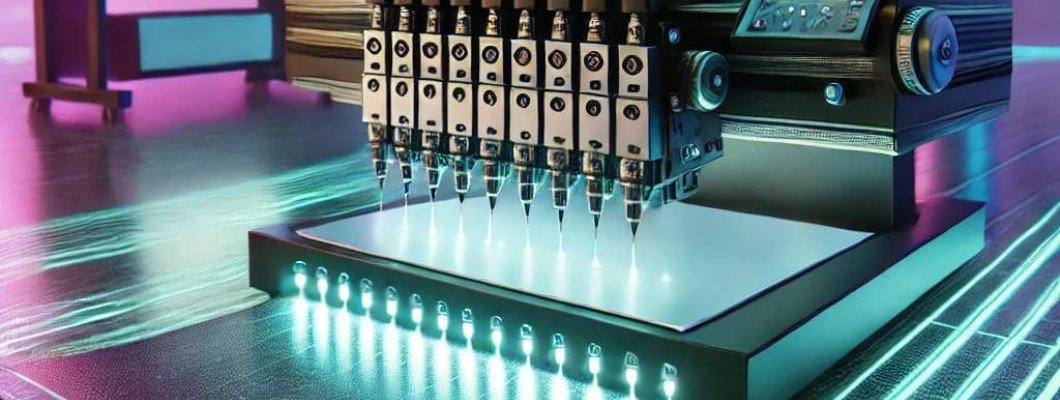
A3 DTG printers commonly use piezoelectric drop-on-demand printheads with droplet volumes ranging from 6 to 12 picoliters (pl). This fine droplet size allows for high resolution, around 1200x1200 dpi, but also increases sensitivity to ink viscosity fluctuations. Ink viscosity typically ranges from 5 to 12 centipoise at 25°C. For example, a 10% deviation above optimal viscosity (10 cP) can increase nozzle shear stress (τ) governed by τ = η (du/dy), where η is dynamic viscosity and du/dy is velocity gradient, leading to a higher risk of satellite droplets and clogging. Consequently, cleaning cycles become frequent, each lasting 2-3 minutes and impacting net uptime.
Cycle Time Analysis
Baseline print time per shirt in high-quality mode is approximately 150 seconds. Additional manual processes include substrate loading (15 seconds), unloading (15 seconds), and curing/heat press (120 seconds off-line). This aggregates to a cycle time of approximately 300 seconds per unit in practice, effectively halving theoretical throughput.
Comparative Analysis Table
| Parameter | A3 DTG Printer | Industrial Large Format DTG Printer |
|---|---|---|
| Max Print Area (mm x mm) | 297 x 420 (A3 size) | 600 x 900 |
| Print Resolution (dpi) | 1200 x 1200 | 1200 x 1200 |
| Droplet Volume (pl) | 6-12 | 8-15 |
| Print Time per Shirt (high quality) | 150s | 200s |
| Curing Integration | External (manual) | Inline automated |
| Daily Throughput (units per 8-hour shift) | ~96-120 (accounting for delays) | ~160-180 (continuous flow) |
Environmental Influences on Ink Stability
Ink shelf life and print quality are highly sensitive to ambient conditions. The ink’s required operating temperature range is typically 20°C-25°C with 40-60% relative humidity. Deviations can cause pigment agglomeration or drying inside nozzles. Maintaining this microenvironment requires HVAC support at approximately 1.2 kW continuous energy draw per printer, adding to operational costs.
Labor Utilization and Workflow Effects
Manual substrate handling and intermittent nozzle cleaning cycles result in operator idle times. Estimated operator touch time per shirt is 45 seconds, but setup and error correction can extend this. On a 100-shirt daily workload, this translates to about 75 minutes of direct operator engagement just on mechanical operations. Labor costs rapidly escalate as output scales, undercutting ROI on capital equipment if not properly accounted for.
Scenario Analysis Highlighting Use-Case Sensitivities
Scenario One - Small Business Custom T-shirt Shop
A small shop focusing on one-off custom prints will value print quality and setup flexibility over throughput. The A3 DTG printer’s high resolution and color depth suit this environment, but manual curing and slow cycle times limit daily output to 50-70 shirts. Labor costs can be contained due to low volume.
Scenario Two - Mid-Scale Apparel Start-Up
For batch runs of 200-300 shirts per day, hidden bottlenecks become critical. The need for separate curing stations and operator intervention reduces throughput by up to 40%. This demands additional labor shifts or secondary equipment investment to maintain schedules and margins.
Scenario Three - Large Garment Manufacturer Integrating DTG
In a large manufacturing line, the A3 DTG printer presents integration challenges. Its smaller format and offline curing necessitate buffer zones and manual transport, increasing floor space and operational complexity. The slow cycle time relative to industrial-scale flatbeds or rotary screen printing constrains line balancing and overall equipment effectiveness (OEE).
Expert FAQ on Operational Bottlenecks and Efficiency
Q1: How critical is environmental control for stable A3 DTG printer performance?
A1: It is essential. Lack of precise temperature and humidity regulation often results in inconsistent droplet formation and nozzle clogging, directly impacting uptime and print fidelity.
Q2: Can inline curing be retrofitted to reduce bottlenecks?
A2: Retrofitting is complex and costly. Most A3 printers lack integrated curing modules; external heat presses remain the norm, necessitating manual labor and workflow adjustment.
Q3: What are the peak maintenance intervals for printhead cleaning?
A3: Under standard operating conditions, cleaning cycles are recommended every 4-6 hours continuously; however, environmental changes may shorten intervals to 2-3 hours.
Q4: How does droplet size variation affect print quality and speed trade-offs?
A4: Smaller droplets enhance detail but increase print time and susceptibility to clogging. Larger droplets speed prints but reduce resolution and color gradient smoothness.
Q5: What strategies minimize operator-induced errors in substrate handling?
A5: Implementing fixturing jigs and semi-automated loading mechanisms can reduce alignment errors and speed substrate exchange, optimizing throughput.
Strategic Verdict on Bottlenecks and Operational Scaling
The A3 DTG printer serves as a versatile entry-level solution for digital textile printing, excelling in high-resolution output for low to moderate volumes. However, its operational bottlenecks rooted in manual curing, environmental sensitivity, and labor dependence impose significant throughput ceilings. Businesses planning scale must critically evaluate workflow integration and labor costs to avoid diminishing returns. Future developments should prioritize inline curing integration, environmental stabilization, and automation in substrate handling to close the gap between theoretical print speed and actual production efficiency. Without such innovations, the A3 DTG printer will remain constrained within niche applications rather than broad industrial-grade scaling.