Operational Bottlenecks in Using AB Films for UV DTF Printer Impact Throughput and Maintenance
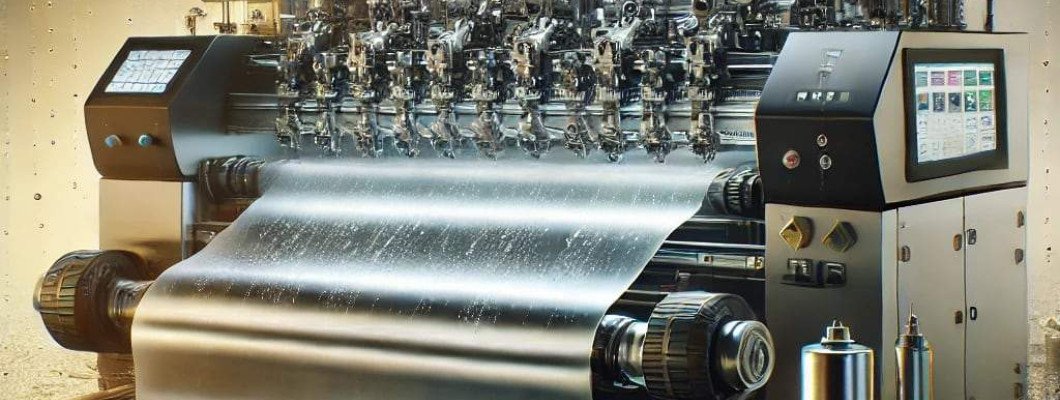
The Industrial Reality of AB Films in UV DTF Printing
Within high-volume digital textile printing, UV Direct-to-Film (DTF) technology has increasingly attracted attention due to its capacity to combine UV ink curing with flexible film substrates. AB Films designed specifically for these UV DTF printers play a pivotal role in final print quality and production efficiency. However, a complex set of operational bottlenecks emerges when integrating AB Films into industrial workflows. These include film handling difficulties, curing inconsistencies related to film thickness variability, and maintenance timelines driven by film residue build-up on printheads and curing units.
Consider a typical high-throughput print shop tasked with running shifts around the clock. The fragility of AB Films, coupled with their sensitivity to environmental conditions like humidity and static charge, leads to jams and misfeeds inside automatic feeders. The interplay between UV curing intensity and film material properties also creates scenarios where incomplete curing results in downstream adhesion failures or reduced washability of finished products. Moreover, continuous production exacerbates wear on printhead components due to film particulate accumulation, increasing unplanned downtime.
Such operational realities challenge throughput targets and, subsequently, cost structures. Production managers must reconcile the apparent material advantages of AB Films with the hidden bottlenecks that affect line speed, yield rates, and preventive maintenance cycles. Ignoring these factors risks overestimating productivity gains and underbudgeting maintenance-related expenses, a pitfall common in scaling from prototype to mass manufacturing environments.
Technical Deep-Dive into AB Films and UV DTF Printer Interactions
Material Properties and Printhead Interaction
AB Films generally have thicknesses ranging from 50 to 120 microns, with elasticity moduli in the 1.5-3 GPa range under UV exposure. This variability can cause slight substrate warping during feeding, increasing the risk of printhead collision or nozzle misalignment. The interaction forces between ink droplets and film surface tension influence droplet spread diameter, typically 80-120 microns, directly impacting print resolution and color fidelity.
UV Curing Dynamics and Film Characteristics
UV ink curing requires energy densities of approximately 500-1000 mJ/cm2 for full polymerization. AB Films possess UV absorption coefficients between 0.7 and 1.3 cm-1, affecting penetration depth and curing uniformity. Uneven energy distribution due to film thickness heterogeneity leads to differential curing, causing surface tack or increased post-cure shrinkage stresses on print layers. These fluctuations degrade adhesion and dimensional stability.
Printhead Wear and Maintenance Cycles
Printheads operating with AB Films experience accelerated nozzle clogging due to film particulates and residual ink accumulation. Empirical data indicates a 15-25% reduction in mean time between cleaning cycles (MTBC) compared to printing on conventional substrates. Preventive cleaning using ultrasonic or solvent flushes every 30-50 operational hours prolongs printhead lifespan but induces frequent downtime that must be factored into production schedules.
Deformation and Handling Challenges During Automated Feeding
Film stiffness and electrostatic charge influence picker roller performance, with slippage rates increasing by up to 18% in dry conditions. Automated feeders require tension control mechanisms finely tuned within a 0.05-0.1 N/mm range to prevent film elongation beyond 0.2% strain, which otherwise leads to registration errors and print defects. Real-time feedback systems integrating capacitive sensors for film position monitoring can mitigate these effects.
Comparative Analysis of Film Alternatives
| Parameter | AB Films for UV DTF | Generic PET Films |
|---|---|---|
| Thickness (microns) | 50-120 | 75-150 |
| UV Absorption Coefficient (cm-1) | 0.7-1.3 | 0.3-0.6 |
| Elastic Modulus (GPa) | 1.5-3 | 2-4 |
| MTBC (hours) | 30-50 | 40-60 |
| Feeder Slippage Rate (%) | up to 18% | below 10% |
Scenario Analysis on Business Use-Cases
High-Volume Apparel Manufacturer
This enterprise requires non-stop production to meet seasonal order volumes. AB Film-driven bottlenecks such as feeder jams and shortened MTBCs force frequent line stoppages, inflating labor costs and delaying deliveries. The operator must invest in enhanced feeder systems and increase spare printhead inventories, impacting CAPEX.
Custom Graphics Print Shop
Precision color layering and micron-level registration are paramount. Film inconsistencies manifest as color shifts and printhead cleaning cycles disrupt tight scheduling. The tradeoff lies in balancing film handling finesse with throughput demands, often resulting in conservative speed settings that constrain daily output.
Prototype Development for Technical Textiles
Here, testing various film formulations including AB Films exposes the integration challenges upfront. Evaluating curing uniformity and mechanical adhesion under accelerated aging conditions informs supplier selection. Operational bottlenecks identified during prototyping reduce costly rework in scale-up phases and fine-tune preventive maintenance regimens.
Expert FAQ on AB Films and UV DTF Printer Operations
How does AB Film thickness variability influence nozzle firing precision?
Thickness deviations cause subtle elevation changes at the print zone boundary, requiring real-time height adjustment. Without compensation within ±10 microns, nozzle misfires or air gaps occur, degrading print uniformity.
What is the impact of UV absorption coefficient on curing speed?
Higher absorption shortens effective curing depth, necessitating slower printhead velocities or higher lamp intensities to ensure full polymerization, directly affecting throughput.
Can printhead residue from AB Films be minimized without compromising print quality?
Optimized ink formulations with lower solids and modified surfactants reduce residue buildup, but may alter print opacity requiring recalibration of ink layer thickness.
What automated features best mitigate feeder slippage for AB Films?
Incorporation of electrostatic neutralizing bars and servo-driven tension rollers with adaptive feedback significantly reduce slippage and misfeeds.
How do environmental parameters alter AB Film operational stability?
Humidity between 40-60% RH maintains film flexibility and static dissipation. Deviations can increase brittleness or static charge, predisposing to handling errors and printhead wear.
Strategic Verdict on AB Films and UV DTF Printer Operational Bottlenecks
AB Films demonstrate unique material properties advantageous for UV DTF printing in terms of surface compatibility and ink adhesion. Nonetheless, their inherent physical variability and interaction with UV curing and printhead mechanics introduce operational bottlenecks that restrict throughput and increase maintenance frequency. Addressing these challenges requires targeted infrastructure upgrades, process control enhancements, and material engineering advances. As production scales, a holistic approach to film handling, curing calibration, and preventive maintenance becomes an operational imperative. Future development should prioritize material standardization and real-time adaptive control integration to reduce operational disruptions and drive sustainable production efficiency.