Lifecycle Maintenance Costs Shaping the Viability of A3 Roll DTF Printers for Scalable Business Owners
The Industrial Reality
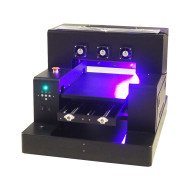
Operational continuity in printing environments hinges heavily on maintenance regimes and asset lifecycle costs. The A3 Roll DTF Printer, positioned between entry-level and industrial-grade solutions, presents a nuanced challenge for scalable print businesses. These printers are often tasked with medium-volume runs where uptime and predictable maintenance dictate financial outcomes. Unlike large flatbed or industrial DTF systems, the roll-based mechanism incorporates continuous feed hardware susceptible to distinct wear patterns, especially in tension rollers, printheads, and ink delivery systems. The interaction of flexible substrates with the roll feed demands precise mechanical calibration to avoid excessive downtime from jams or substrate misalignment. Environmental factors like particulate contamination and humidity variation exacerbate maintenance frequency, stressing printhead reliability and ink chemistry stability. This scenario frames a critical operational crossroad: balancing throughput with recurring maintenance tasks which, if underestimated, inflate operational expenditure and erode margins.
Furthermore, the printer’s consumable components, such as specialized DTF inks and transfer films, impose their own consumption rhythms and storage requirements. Improper handling or suboptimal environmental controls can accelerate component degradation, requiring more frequent replacements and causing cost overruns. Rapid wear on components like the rolling mechanism bearings and printhead nozzles under continuous operation introduces additional maintenance cycles, mandating rigorous scheduling and parts inventory management. Consequently, the A3 Roll DTF printer’s lifecycle maintenance cost profile must be dissected meticulously by scalable businesses to prevent hidden operational bottlenecks from becoming financial liabilities.
Technical Deep-Dive
Printhead Wear and Ink Chemistry Impact
The A3 Roll DTF printer typically employs piezoelectric printheads with nozzle diameters ranging from 16 pl to 35 pl droplet size, optimized for sharp image reproduction on polyester-based transfer films. Ink formulations contain polyester-compatible pigments suspended in specialized vehicles requiring precise temperature and humidity for optimal viscosity. The chemical interaction between ink and nozzle membrane materials influences epoxy degradation rates, dictating replacement intervals. Assuming an average printhead life of 2 million actuations, a continuous operation at 3000 actuations per minute translates to approximately 11.1 hours of printhead lifespan per continuous run, but actual operational patterns reduce this due to cleaning cycles and idle periods.
Rolling Mechanism Stress Calculations
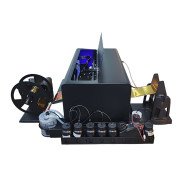
Mechanical stress on the roll feed system is quantifiable by tension forces (F) necessary to maintain consistent substrate feed, governed by F = T / r, where T is torque applied by feed motors and r is roller radius. Excessive torque leads to substrate deformation and potential misfeeds, while insufficient torque causes slippage. Precision tension control uses closed-loop feedback from load cells and encoders, but wear on ball bearings and polymer bushings increases frictional resistance over time, incrementally raising torque demands and accelerating part wear.
Ink Consumption and Cost Efficiency
Ink usage metrics vary by print resolution and coverage percentage. At 600 dpi printing with 100% coverage on A3 substrate (297 mm x 420 mm), approximate ink volume per print cycle is calculated as follows: assuming 16 pl droplets and a 600 x 600 dpi resolution, about 0.45 ml ink is consumed per square decimeter. For an A3 sheet (approx. 1.25 sq. dm), this equals roughly 0.56 ml per print. Daily throughput of 500 prints results in 280 ml daily ink consumption, which impacts ink replacement scheduling and cost projections. Proper inventory management aligned with predictive analytics can reduce downtime and optimize reorder cycles.
Environmental Control and Its Effect on Component Longevity
Humidity levels outside the optimal range of 40-60% relative humidity accelerate printhead clogging and paper curl in transfer films. Temperature fluctuations outside 20-25°C affect ink viscosity, causing inconsistent droplet formation and nozzle blockages. Integrating environmental sensors and controlling ambient conditions with HVAC or dedicated microclimate enclosures prolongs component life and ensures stable output quality.
Comparative Lifecycle Cost Table
| Parameter | A3 Roll DTF Printer | Flatbed Industrial DTF Printer |
|---|---|---|
| Average Printhead Lifespan | 2 Million Actuations (~6 Months at 8h/day) | 5 Million Actuations (~18 Months at 8h/day) |
| Roll Feed Maintenance Frequency | Monthly Bearing Replacement | Quarterly |
| Ink Consumption per Print (ml) | 0.56 ml | 0.50 ml (Less Wastage) |
| Environmental Sensitivity | High; Requires Controlled Humidity | Moderate; Enclosure Controls |
| Typical Part Replacement Cost | Printhead: $1200; Roll Parts: $350 | Printhead: $2500; Flatbed Components: $800 |
Scenario Analysis
Scenario 1 Medium-Volume Customized Apparel Printing Company: A business running 300-500 shirts per day benefits from the A3 Roll DTF's continuous feed but must allocate significant labor hours to routine maintenance. Predictive maintenance based on operational hours reduces unexpected downtime but increases parts inventory costs. The printer's smaller footprint supports space-constrained environments but requires strict environmental monitoring to maintain output quality.
Scenario 2 Start-Up Expanding Production with Budget Constraints: For a growing enterprise targeting higher volume without industrial-scale investment, the A3 Roll DTF printer offers cost-effective throughput. However, without automated maintenance schedules or environmental controls, operational bottlenecks arise frequently, triggering labor cost spikes and inconsistent print quality. The business must invest in training and maintenance protocols upfront to realize ROI.
Scenario 3 Multi-Site Franchise Deploying Uniform Equipment: Standardizing on A3 Roll DTF printers across multiple locations ensures consistent product quality and spare parts logistics. However, variability in local environmental conditions and operator skill levels causes disparate maintenance cycles and asset depreciation rates. Centralized remote monitoring systems can mitigate these issues but require additional infrastructure investment.
Expert FAQ
What is the critical failure mode to monitor in A3 Roll DTF printers operating at high duty cycles?
Printhead nozzle clogging due to ink pigment agglomeration accelerated by infrequent cleaning cycles is the primary failure mode, which results in inconsistent droplet ejection and color shifts. Implementing real-time nozzle health diagnostics is crucial.
How does substrate tension variability impact print registration accuracy?
Uneven tension induces micro-distortions within the transfer film, leading to registration errors of up to 0.25 mm per 10 meters of roll length, necessitating adaptive tension control algorithms.
What maintenance scheduling practices optimize the lifecycle cost of roll mechanism bearings?
Adopting condition-based maintenance using vibration and temperature sensors reduces unnecessary replacements and identifies bearing wear before catastrophic failure, extending bearing life by approximately 20%.
How do changes in room humidity quantitatively affect nozzle drying time?
Humidity changes of ±10% relative humidity correspond to nozzle drying time variations from 10 seconds (optimal) up to 25 seconds (dry environment), impacting cleaning cycle frequency and print speed.
What metrics best predict ink supply chain risk in high-volume scenarios?
Days of supply coverage based on current average daily consumption, combined with supply lead times and temperature sensitivity indices, provide predictive analytics to avoid operational stoppages due to ink shortages.
Strategic Verdict
The lifecycle maintenance cost profile of A3 Roll DTF printers reveals a complex balance between mechanical precision, consumable management, and environmental control. For scalable business owners, recognizing hidden maintenance cycles and environmental sensitivities is essential to sustain throughput without inflating operating expenses. While not matching the robustness or longevity of industrial flatbed alternatives, roll-fed A3 DTF systems provide flexibility and footprint advantages that appeal under specific volume and budget constraints. Moving forward, integrating predictive maintenance analytics, environmental sensing, and automated tension controls will be pivotal in extending asset life and stabilizing cost structures, marking a clear pathway for this technology to mature within mid-tier print manufacturing ecosystems.