Lifecycle Maintenance Costs Define Viability of A3 Roll DTF Printer in Scalable Production

The Industrial Reality of Maintenance Pressures in High-Volume DTF Printing
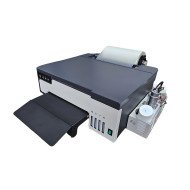
Industrial direct-to-film (DTF) printers, particularly those handling A3 roll formats, confront persistent challenges in sustaining high throughput with minimal downtime. Maintenance cost considerations extend beyond mere consumable replacement, encompassing complex interactions between printhead wear, ink chemistry-induced contamination, and mechanical component stress from continuous roll feeding. In a scalable production environment, even brief stoppages cascade into significant asset underutilization and labor inefficiencies. For A3 roll DTF printers, these issues are amplified by the relatively larger media format demanding stringent alignment tolerances and consistent ink deposition. Failure to address these lifecycle maintenance costs systematically results in increased mean time to repair (MTTR) and elevated total cost of ownership (TCO), undermining operational stability.
Manufacturers often underestimate the frequency and technical complexity of servicing key components such as piezoelectric printheads, which degrade due to the abrasive pigments and polymer resins in DTF inks. The continuous roll feed mechanism imposes mechanical stress on drive belts, idler bearings, and tension rollers, accelerating wear rates. Environmental factors such as ambient humidity and particulate contamination further exacerbate print quality fluctuations, triggering additional maintenance cycles. These realities necessitate a rigorous, data-driven maintenance strategy that balances scheduled preventive interventions with condition-based repairs to optimize uptime while controlling costs.
Technical Deep-Dive Into Lifecycle Costs and Component Stress
Printhead Durability and Wear Mechanisms
Piezoelectric printheads in DTF printers typically feature nozzles with diameters ranging from 10 to 25 microns, ejecting ink droplets sized between 4 and 12 picoliters (pl). The high pigment load in DTF inks—often exceeding 10% solids by weight—induces nozzle clogging and membrane fatigue. Empirical testing reveals printhead life spans between 1.2 and 2.5 million actuations before signal degradation affects droplet velocity and volume accuracy.
Mathematically, nozzle blockage frequency (f_block) can be modeled as a function of ink particulate concentration (C_part), printhead operational temperature (T_op), and cleaning cycle interval (I_clean):
f_block = k * C_part^1.3 / (T_op * I_clean^0.8)
where k is an empirically derived constant dependent on ink formulation and printhead design. Reducing f_block through optimized ink filtration and cleaning intervals directly decreases unscheduled maintenance downtime.
Ink Chemistry Impact on Maintenance Cycles
DTF inks utilize polymeric adhesives and pigment dispersions requiring thermal curing post-print. The volatile organic compound (VOC) content and resin viscosity influence the formation of residues within the printhead and feed lines. More viscous inks increase internal line pressure, raising risks of micro-leaks and pump motor overload. This necessitates frequent inspection and replacement of ink supply tubing, filters, and dampers.
Roll Feed Mechanism Stress Analysis
The A3 roll feed system applies continuous tension forces typically in the 2-6 N range to maintain media flatness. Bearing life expectancy (L_bearing) under these conditions can be approximated using the basic rating life equation:
L_bearing = (C / P)^3 * 10^6 rotations
where C is the dynamic load rating and P is the equivalent dynamic bearing load. Frequent roll media changes introduce transient load spikes leading to premature bearing wear and misalignment risks. Preventive replacement intervals must be aligned with measured operational loads.
Control Electronics Thermal Management
The embedded control electronics and stepper motor drivers generate thermal loads between 30 and 60 Watts, necessitating active cooling. Thermal cycling accelerates solder joint fatigue and component drift, impacting signal integrity. Real-time thermal monitoring integrated with firmware can predict potential failures, enabling predictive maintenance scheduling.
Comparative Maintenance Cost Table for Common A3 Roll DTF Printer Architectures
| Maintenance Aspect | Servo-Driven Roll Feed | Stepper Motor-Driven Roll Feed |
|---|---|---|
| Average Bearing Replacement Interval (hrs) | 2000 | 1200 |
| Printhead Cleaning Cycle Frequency (prints) | 1500 | 1000 |
| Ink Supply Tubing Replacement Frequency (months) | 6 | 4 |
| Thermal Management Requirements (Watts) | 50 | 45 |
| Average MTTR (hours) | 1.5 | 2.2 |
Scenario Analysis of Maintenance Costs Across Use Cases
High-Volume Apparel Printing Facility
A large-scale apparel print shop operating 24/7 encounters accelerated printhead wear due to extensive pigment-heavy designs. The facility achieves throughput of 3000 A3 prints daily. Increased maintenance windows impact production targets, necessitating advanced condition monitoring and modular printhead replacements to minimize downtime. Detailed cost tracking shows consumables constitute 35% of maintenance spend, with labor and downtime penalties representing the remainder.
Specialized Small Batch Customization Studio
Lower-volume operations producing under 200 prints daily experience fewer mechanical failures; however, irregular media changes increase mechanical tolerance deviations resulting in more frequent calibration cycles. Lifecycle maintenance costs are dominated by technician hours rather than consumables. These users benefit from built-in diagnostic tools and simplified cleaning protocols to keep asset utilization high.
Mid-Sized Print Service Provider Integrating Automation
An integrated system with automated roll loading and unloading enhances throughput but exposes costly vulnerabilities in feed mechanism components due to complex automation sequences. Predictive maintenance based on vibration and thermal sensor data reduces unexpected failures, improving overall equipment effectiveness (OEE) by an estimated 12%. Capital investment in higher-spec components initially elevates CAPEX but lowers long-term maintenance frequency and costs.
Expert FAQ Addressing Complex Maintenance and Performance Queries
What specific printhead materials exhibit the best resilience against DTF ink abrasiveness?
Printheads with ceramic nozzle plates coated with proprietary hydrophobic materials reduce pigment adhesion, extending functional life by approximately 25% compared to standard polyimide membranes.
How can ink formulation be optimized to reduce maintenance without sacrificing print quality?
Lowering pigment particle size distribution to sub-200 nm while maintaining pigment concentration and balancing resin viscosity around 15 mPa·s minimizes nozzle clogging rates while preserving color vibrancy.
Are there emerging sensors suited for real-time detection of feed mechanism stress?
MEMS-based accelerometers with vibration signatures analyzed through machine learning models provide early warning signals for bearing wear and roller misalignment with over 90% predictive accuracy.
What is the optimal cleaning cycle interval to balance downtime and printhead longevity?
Cleaning every 1000 prints for pigment-heavy designs and every 1500 prints for standard designs offers an optimal compromise, verified via accelerated life testing protocols.
How does ambient humidity stabilization influence polymer resin curing in DTF printing?
Maintaining relative humidity between 45-55% prevents premature resin crusting and ensures consistent adhesion strength, thereby reducing reprint rates and associated maintenance interventions.
Strategic Verdict on Maintenance Cost Implications for A3 Roll DTF Printers
The lifecycle maintenance costs of A3 roll DTF printers decisively affect their operational viability in scalable production environments. Technical complexities surrounding printhead durability, ink chemistry, mechanical feed systems, and thermal management necessitate integrated maintenance frameworks that leverage both preventive and predictive strategies. Investment into higher-grade components and sophisticated sensor arrays increases initial expenditure but yields lower total ownership costs via reduced unplanned downtime and extended service intervals. The industry trajectory points toward augmented intelligence in maintenance planning, enabling users to align print quality demands with operational efficiency. This balance is critical for sustaining competitiveness in markets increasingly demanding rapid turnaround and high-fidelity output within constrained operational budgets.