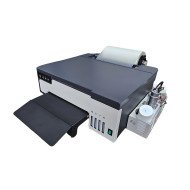
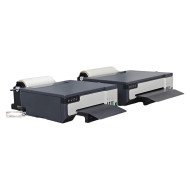
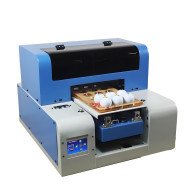
Infrastructure Challenges Limit A4 UV DTF Printing Machine Integration in Enterprise Environments
The Industrial Reality of Integrating A4 UV DTF Printing Machines
Industrial printing environments operate under stringent requirements for network reliability, thermal management, and physical infrastructure compatibility. Introducing an A4 UV DTF (Direct to Film) printing machine into an existing enterprise-grade setup confronts engineers with several nontrivial challenges. These machines, designed to deliver high-resolution ultraviolet-cured prints on flexible films, require precise environmental controls to maintain output quality. The localized heat generated by the UV curing lamps and associated electronics, combined with the sensitivity of printhead components to temperature fluctuations, necessitates robust cooling solutions beyond typical office HVAC standards.
Beyond thermal concerns, the compact footprint of an A4 UV DTF printer often belies the complexity of its power and data interface needs. High-voltage UV lamps demand stable power supplies with minimal electrical noise, while printheads demand low-latency, high-bandwidth data connections to support micron-scale droplet placement precision. Conventional enterprise data racks and power distribution units (PDUs) are not always configured to accommodate these requirements without significant modification.
Moreover, the environmental regulatory compliance inherent to enterprise installations—such as ozone emission from UV curing and waste ink disposal—requires integrated safety measures and exhaust ventilation systems. Attempting to retrofit A4 UV DTF units into shared manufacturing floors exposes latent integration bottlenecks that can compromise production uptime and complicate maintenance cycles.
Technical Deep-Dive into Infrastructure Integration Points
Power Supply Conditioning and Noise Immunity
The UV lamps on an A4 UV DTF machine typically operate at voltages ranging from 230V to 277V AC with a frequency of 50-60 Hz. However, their current draw is not consistent, exhibiting spikes during lamp ignition cycles. Supplying clean, ripple-free power is critical to avoid voltage sags that can interrupt the lamp operation, risking premature lamp failure. Enterprises must consider installing dedicated isolation transformers and uninterruptible power supply (UPS) systems with dynamic load management to meet these demands.
Thermal Management Requirements
UV curing lamps generate thermal loads of up to 500 Watts concentrated in a small volume. This heat must be dissipated to maintain printhead stability. Experimental thermal profiling indicates that without forced convection cooling, localized temperatures near the printhead can rise by approximately 15°C over 30 minutes of continuous operation, exceeding recommended operating ranges of 20-25°C for ink viscosity stability. Implementing liquid cooling or high-efficiency heat exchangers integrated with environmental monitoring sensors can reduce these risks but requires additional physical space and infrastructure support.
Data Interface and Printhead Control Latency
The A4 UV DTF printing process demands droplet ejection precision at the picoliter (pL) level with droplet placement accuracy of ±2 microns. Achieving this precision requires commanding the piezoelectric printhead arrays with sub-millisecond timing accuracy over high-speed data connections. USB 3.0 or dedicated PCIe interfaces are frequently used in prototyping setups but lack enterprise-grade error correction and network management capabilities. Industrial integration favors the use of deterministic Ethernet protocols or dedicated fiber-optic links, which minimizes packet loss and latency jitter, ensuring consistent print quality.
Environmental and Safety Compliance Infrastructure
UV curing emits ozone and potentially harmful volatile organic compounds (VOCs). Enterprises must meet regional safety standards such as OSHA 1910.1020 and EU REACH regulations. This implies installation of air filtration units capable of reducing ozone levels below 0.1 ppm. Additionally, waste ink management requires sealed collection systems integrated with authorized disposal routes to avoid contamination. Failure to comply results in costly fines and operational shutdowns.
Physical Rack and Footprint Constraints
The small A4 footprint (approx. 400 mm x 600 mm) encourages compact placement, yet the machine’s height and access needs complicate rack mounting. Access panels for ink replenishment and routine maintenance require clearance of at least 200 mm on three sides, effectively expanding the required floor space. Placement near other sensitive equipment demands vibration isolation mounts and dust filtration to prevent print defects.
| Infrastructure Element | Standard Enterprise Setup | A4 UV DTF Requirements |
|---|---|---|
| Power Supply | Single-phase 230V with general UPS backup | Dedicated isolation transformer; UPS with quick load response |
| Cooling | HVAC at 22-25°C +/- 3°C | Active liquid cooling or forced convection at printhead level |
| Data Interface | Standard Ethernet 1 Gbps | Deterministic Ethernet or PCIe-based low-latency links |
| Environmental Controls | Standard air filtration | Ozone/VOC filtration units and sealed waste ink management |
| Physical Footprint | Rackmount or benchtop instrumentation | Clearance of 400 mm x 600 mm footprint + 200 mm maintenance access |
Scenario Analysis for Business Integration
Small-Scale Prototype Development Labs
In prototype labs, the A4 UV DTF printer offers high-resolution film printing without large capital expenditure. However, power conditioning and cooling still require engineering input to stabilize print quality during extended runs. The lack of enterprise HVAC controls often leads to print variability due to ambient temperature fluctuations, highlighting a need for localized cooling solutions. Data interface latency is less critical due to lower throughput, easing integration complexity.
Mid-Tier Manufacturing Lines
Mid-tier manufacturers striving to scale small-batch customized labels face integration challenges from both physical space constraints and compliance burdens. The operational costs for installing ozone filtration and liquid cooling must be factored into the total cost of ownership. Printhead control systems require upgrade paths to industrial deterministic networking to maintain quality consistency over higher print volumes. Hence, without infrastructure upgrades, throughput bottlenecks emerge.
Enterprise-Grade Production Environments
When integrating multiple A4 UV DTF units into an enterprise workflow, redundancy and uptime become paramount. Infrastructure modifications including separate power circuits, data network segmentation, and containment hoods for environmental safety are essential. The machine’s physical placement mandates restructuring manufacturing floors to provide adequate access and vibration isolation. Failure to address these facets results in frequent maintenance downtime and reduced equipment lifespan.
Expert FAQ on Infrastructure Integration
What power quality parameters are critical for UV DTF printers?
Voltage stability within ±5% and minimal harmonic distortion below 3% total harmonic distortion (THD) are essential to prevent lamp flickering and electronic component stress.
How can thermal fluctuations impact ink deposition accuracy?
Ink viscosity is temperature-dependent; a 5°C rise can reduce viscosity by approximately 10%, causing droplet size variation and misregistration.
Are standard Ethernet networks sufficient for printhead control?
Standard best-effort Ethernet networks introduce latency jitter unfit for sub-millisecond droplet ejection timing; deterministic networks or direct PCIe connections are recommended.
What environmental controls are legally mandated for UV curing operations?
Regulations require ozone concentration below 0.1 ppm and proper VOC exhaust filtration, alongside waste ink containment to prevent soil and water contamination.
How can space constraints be managed for maintenance access?
Employ modular machine layouts with retractable panels and optimize factory floor plans to ensure minimum 200 mm clearance on critical access points.
Strategic Verdict on the Future of A4 UV DTF Printing Machines in Enterprise Settings
The A4 UV DTF printing technology presents a compelling solution for high-precision film prints but faces significant barriers in existing enterprise infrastructures. Without targeted investments in power conditioning, thermal management, and compliance systems, operational risks escalate, limiting throughput and print reliability. The technology's future hinges on developing integrated hardware and software solutions that simplify installation and maintenance within enterprise environments. Advances in compact liquid cooling, deterministic networking protocols, and modular safety enclosures will be necessary to bridge the integration gap. Until these factors are addressed, the application of A4 UV DTF machines remains best suited to controlled environments with specialized infrastructure support.